Best Engine Flushes for Diesel Engines: Clean and Protect
The right engine flush can help remove sludge, varnish, and deposits from diesel engines, restoring oil flow and protecting vital components. This guide highlights five top options, each backed by distinct formulations and advantages. Whether you drive a heavy-duty pickup, a work truck, or a family SUV, selecting a flush that suits diesel engines and your maintenance goals can improve lubrication, reduce emissions-related concerns, and support longer engine life.
| Product | Brand | Key Benefit | Approx. Pack Size |
|---|---|---|---|
| Liqui Moly Pro-Line Engine Flush | Liqui Moly | Gentle, rapid cleaning; neutral to seals | 500 ml |
| Power Service Diesel Injector & DPF Flush – 64 Ounce | Power Service | Flushes whole fuel system; injector deposits removal | 64 oz |
| TRIAX Pro Engine Flush | Triax | Rapid sludge dissolution; anti-wear protection | 16 oz |
| Motul Engine Clean | Motul | Detergent-based cleaning; supports emissions care | 300 ml |
| XADO Engine Oil System Cleaner | XADO | Deep cleaning; protective revitalizant | 250 ml |
Choosing the right flush depends on engine type, maintenance goals, and tolerance for additives. The products below are evaluated for diesel reliability, compatibility with seals and gaskets, and potential impacts on turbochargers and emissions systems. This article uses objective data and product features to help you compare options for a safer, more efficient oil and fuel system flush.
Liqui Moly Pro-Line Engine Flush

Liqui Moly Pro-Line Engine Flush is designed to clean oil systems in both gasoline and diesel engines with a gentle yet effective approach. Its neutral chemistry is formulated to be safe for seals and other engine materials while delivering a rapid cleaning action. The 500 ml bottle provides enough product to stage a single flush for most passenger-diesel applications and is commonly used before an oil change to help suspend varnish, sludge, and deposits in the crankcase.
In practice, the flush is poured into the engine, the engine idled for a short period, and then drained with the oil. Its focus on neutral interaction with seals reduces the risk of swelling or hardening gasket materials, which is a consideration for older diesel engines. For garages and DIY enthusiasts, Liqui Moly provides a straightforward option that fits into routine service intervals without requiring special equipment.
Power Service Diesel Injector & DPF Flush – 64 Ounce

This Power Service formula targets the diesel fuel system, aiming to flush injectors and diesel particulate filters (DPF) through a single-tank treatment. The 64-ounce size is suited for larger diesel vehicles or frequent maintenance schedules, enabling a thorough clean that can help balance injector flow rates and potentially reduce rough running after a maintenance cycle. It’s engineered to combat stubborn injector deposits, IDIDs, and nozzle coking, helping restore steady idle and smoother combustion.
For fleet operators and heavy-use diesel engines, a robust flush like this can simplify preventive maintenance by reducing the need for multiple treatments. Prospective buyers should consider compatibility with their fuel system materials and any vendor recommendations for the diesel engine type and turbocharger configuration. The product’s emission and fuel-system focus makes it a practical option for many diesel platforms where injector cleanliness is a priority.
TRIAX Pro Engine Flush
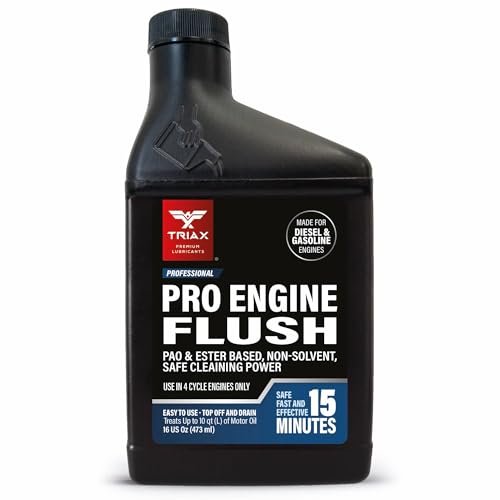
Triax Pro Engine Flush presents a deep-cleaning approach designed to dissolve sludge and carbon deposits while maintaining a protective lubricating film throughout the flush. The formula emphasizes rapid dissolution of deposits from piston rings, bearings, valve trains, and related oil-lubricated areas. The included anti-wear elements aim to safeguard engine components during the cleaning process, an important feature for diesel engines that often endure higher stress and turbocharger loading.
Users may experience improved compression, restored oil circulation, and potential power recovery after a flush, as deposits are cleared and lubrication efficiency is regained. The product’s non-solvent design reduces the risk of aggressive reactions with engine seals, making it a balanced choice for garages and DIY enthusiasts seeking a professional-grade flush with turbo-support considerations.
Motul Engine Clean

Motul Engine Clean uses a detergent-based flush designed to work across gasoline, diesel, turbocharged, naturally aspirated, and hybrid engines. Pouring the product into the oil before an oil change and letting the engine idle helps loosen years of sludge and varnish. It is positioned as a broad-effective solution for everyday drivers and high-mileage vehicles, simplifying the pre-oil-change cleaning routine without requiring significant downtime.
Beyond sludge removal, Motul emphasizes oil-flow improvement and friction reduction by cleaning piston rings, lifters, and turbo oil lines. The result is a potentially smoother idle, steadier fuel economy, and enhanced combustion efficiency. It is particularly attractive for customers seeking an additive that supports ongoing engine health and emission-system care while not requiring extensive disassembly or professional service.
XADO Engine Oil System Cleaner

XADO Engine Oil System Cleaner combines deep-cleaning action with a revitalizant that aims to protect engine health after cleaning. The product claims to remove contamination and sludge while creating a protective barrier for the engine. It is marketed as suitable for a broad range of engines, including those with turbocharging, and is designed to deliver lasting lubricity after the flush. For diesel engines, this combination of cleaning and revitalization can support smoother operation and potentially extend oil-change intervals when used as part of a regulated maintenance plan.
Buying Guide: Key Considerations For Diesel Engine Flushing
- Engine type and materials: Consider seals, gaskets, and turbo components. Select formulas labeled as safe for diesel engines and compatible with common seal materials to minimize risk of leaks or swelling.
- Flush vs additive strategy: Some products are single-use flushes designed to be drained with oil changes, while others act as ongoing additives. Decide whether you want a one-time clean or ongoing maintenance support.
- Deposits and deposits removal: If your engine shows heavy sludge or varnish, prioritize detergents and deposit-dissolving agents proven to work on piston rings, valve trains, and turbo oil lines.
- Compatibility with emission controls: For modern diesels, choose formulas that won’t conflict with emissions systems and that may complement additional cleaners like fuel system cleaners.
- Care with older engines: Older seals or cooler systems may respond differently to certain flush chemistries. A cautious approach with neutral-to-seal formulations can reduce risk.
- Application method and timing: Follow product directions regarding idle duration, oil drain timing, and whether to run the engine before draining. Plan service around a complete oil-change cycle for best results.
- Cost and convenience: Larger volumes may deliver more thorough cleaning for fleet use, while smaller bottles suit individual DIY sessions. Consider availability of compatible dpf-injector-oriented formulas if you drive a high-mileage diesel.
In choosing among these options, align your pick with your vehicle’s diesel architecture, maintenance schedule, and risk tolerance for additives. For fleet managers, prioritizing deposits removal and reliable injector cleaning can help maintain power and efficiency; for daily drivers, a balanced approach that protects seals and preserves oil pressure may be preferable.
Notes: This article presents product features and typical use cases to inform decision-making. Always consult your vehicle’s owner manual and follow local emissions guidelines when performing engine maintenance. The examples above are drawn from publicly listed product attributes and may vary by batch, application, or regional availability.
Additional Considerations
- Emergency compatibility: If your engine recently experienced unusual noises or oil pressure changes, consider consulting a professional before a flush.
- Maintenance integration: Flushing is most effective when paired with a full oil change and a recommended lubricant type for your engine.
- Long-term planning: Regular, scheduled flushes can help maintain peak performance, especially in high-mileage or heavy-use diesel engines.