Best Cracked Block Sealer Solutions for Permanent Automotive Repairs
Cracked blocks and blown head gaskets pose major engine problems. This guide highlights trusted sealers and sealants that can help achieve a durable seal, from engine block repair to gap sealing for homes. Each product is selected for reliability, ease of use, and proven performance. Explore options from automotive block sealants to general purpose sealants that contain robust sealing chemistry.
Summary of Selected Products
| Product | Brand | Use Case | Amazon Link |
|---|---|---|---|
| K-Seal ST3501 Pour and Go Head Gasket Sealer | K-Seal | Permanent repair for blown head gaskets, cracked heads, porous blocks | Amazon |
| K&W 401016 Block Seal Permanent 16 Oz | CRC | Permanent seal for engine blocks, heads, radiators | Amazon |
| Flex Paste White Quart | Flex Paste | Waterproof, paintable sealant for gaps, cracks, and holes | Amazon |
| Akfix PestBlocker Insulation Spray Foam 12 Oz | Akfix | Gap filler and barrier for cracks and holes in walls | Amazon |
| SWRT Window Insulation Tape 2”x33Ft | SWRT | Heavy-duty weather sealing for doors and windows | Amazon |
K-Seal ST3501 Pour and Go Head Gasket Sealer
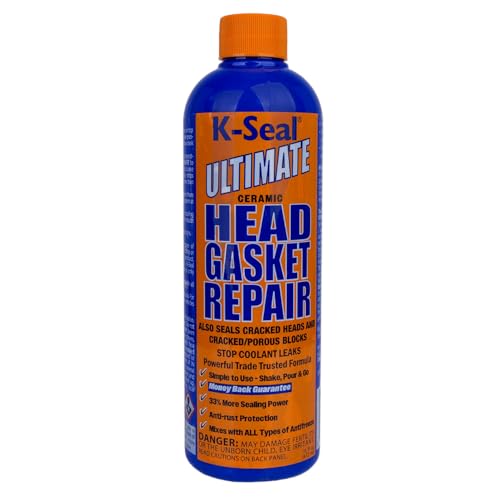
K-Seal ST3501 is a permanent repair solution designed to seal blown head gaskets, cracked heads, and porous engine blocks. The formula claims 33% more sealing power compared to standard versions and can seal leaks up to 0.64mm. It’s marketed as easy to use, requiring no draining or flushing—just shake, pour, and run the engine. For larger engines, two bottles are suggested. This product targets automotive cooling systems and engine sealing without the need for extensive disassembly.
Key features include permanent repair capability, ceramic micro-fibres for sealing, and a simple one-step process. It aims to provide a durable seal in demanding engine conditions and is positioned as a long-lasting fix rather than a temporary stop-gap. While promising, performance can vary based on engine design and leak size, and users should follow product instructions and safety guidelines.
K&W 401016 Block Seal Permanent 16 Oz
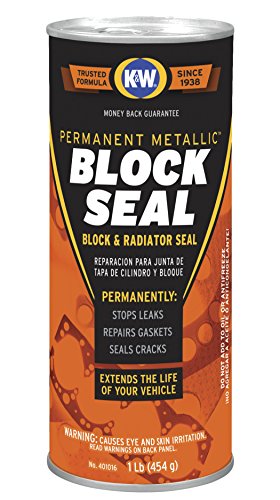
CRC’s K&W 401016 Block Seal is described as a permanent molecular seal with steel-like strength. It seals cracks and holes in cast iron and aluminum engine blocks, head gaskets, freeze plugs, and various radiators and heater cores. The product is marketed for use in all water-cooled diesel and gasoline vehicles. The sealant emphasizes durability and resistance to engine operating conditions, aiming for long-term containment of leaks in critical cooling and combustion areas.
Considerations include compatibility with engine materials, the requirement for correct dosing, and the potential for different outcomes depending on leak size and location. As with all engine sealants, follow the manufacturer’s directions for mixing, application, and safety precautions to minimize risk to the cooling system and engine internals.
Flex Paste White Quart

Flex Paste is a waterproof, paintable putty and spackle sealant designed to fill gaps and cracks in walls, drywall, EPDM, concrete, roofs, and RV repairs. The product emphasizes water resistance, UV stability, and the ability to form a durable, flexible barrier once cured. It’s positioned as a versatile sealant suitable for interior and exterior applications, including underwater settings, and can be painted to match surfaces.
When considering Flex Paste for cracking or sealing applications, assess surface type, exposure conditions, and whether a paintable finish is needed. The product’s flexibility and adhesive properties can help with dynamic gaps, but it’s primarily a sealant for building materials rather than automotive engine blocks. Proper curing time and surface preparation improve performance.
Akfix PestBlocker Insulation Spray Foam

Akfix 895 PestBlocker is an insulation spray foam designed to seal gaps and holes, offering expansion to fill irregular openings and create a barrier against air and moisture intrusion. The product claims resilience in sealing around pipes, outlets, and other entry points, contributing to energy efficiency and robustness of the barrier. It is suitable for residential and commercial gap sealing and may require proper curing time and surface preparation for best results.
When using spray foams for sealing, consider expansion characteristics, surface compatibility, and ventilation during curing. Safety data, ventilation requirements, and cleanup considerations are important for homeowner or professional use. This option focuses more on building envelopes than engine internals, but illustrates the breadth of sealant technologies available for different crack-sealing needs.
SWRT Window Insulation Tape

SWRT Window Insulation Tape is a heavy-duty weather sealing tape designed to block drafts and moisture around doors and windows. The product emphasizes 20-mil thickness for enhanced durability and tear resistance, along with residue-free removal when the season ends. It is positioned as a practical solution for home energy efficiency and weatherproofing, suitable for seasonal window sealing and temporary sealing needs.
In choosing sealing tapes, assess surface compatibility, temperature tolerance, and the length of the sealing project. For long-term exterior use, select tapes rated for UV exposure and weathering. It’s useful for improving thermal comfort and reducing drafts in living spaces.
Buying Guide: Key Purchase Considerations and Comparisons
- Application scope: Automotive engine block sealers (K-Seal, CRC Block Seal) target engine cooling and combustion areas, while household sealants (Flex Paste, Akfix, SWRT) address building gaps, drafts, and moisture control.
- Permanent vs. temporary seals: Engine sealants often promise permanent repairs, but performance varies by leak size, material, and engine design. Building sealants typically offer durable but sometimes reversible solutions depending on removal needs.
- Material compatibility: Engine sealants must work with metal blocks, gaskets, and coolant passages. General-purpose sealants should be matched to surface type (concrete, drywall, wood, metal) and exposure (water, UV, temperature).
- Ease of use: Many products tout simple one-step application (shake, pour, run) for engines, while building sealants may require mixing, curing time, and surface preparation for optimal adhesion.
- Safety and compatibility: Follow product-specific safety instructions, especially for chemical exposures, ventilation, and disposal. Verify compatibility with existing materials to avoid adverse reactions.
- Leak size and location: For block repairs, consider the maximum crack width a product can seal (e.g., 0.64mm for certain gasket sealers). For gaps and drafts, larger or irregular openings may require combination approaches (sealant plus weather-stripping).
- Maintenance and monitoring: Even with a sealant, ongoing monitoring of cooling system integrity or door/window performance is prudent to ensure long-term effectiveness and prevent recurrence of leaks or drafts.