Best Air Conditioners for Van Life: Stay Cool on the Road With These Top Picks
Venturing off the grid or cruising to scenic destinations often means finding reliable cooling that runs on a limited power budget. The following hand-picked options are designed for vans, RVs, trailers, and trucks, offering 12V or battery-powered operation, compact profiles, and quiet performance. Below you’ll find five Amazon-available models that balance efficiency, portability, and durability to help you stay comfortable no matter where your journey takes you.
Summary of chosen products:
| Product | BTU / Heating | Power Source | Notes |
|---|---|---|---|
| Outequip RV Air Conditioner, 12V 10000 BTU | 10,000 BTU | 12V battery-powered | Off-grid cooling, weather-resistant, quick chill |
| RV Air Conditioner, 12V 10000 BTU | 10,000 BTU | 12V battery-powered | Quiet operation, includes heater option |
| 12V RV Air Conditioner with Heat Pump, 11,500 BTU | 11,500 BTU | 12V DC | Off-grid friendly, quiet |
| EF ECOFLOW WAVE 3 Portable AC | 1800W cooling / 2000W heating | 1024Wh battery (external) | Cordless, fast charging, for larger spaces |
| Ivation 6,500 BTU Camper AC | 6,500 BTU | Powered externally (over-the-sill) | Over-the-sill installation, dehumidifier |
Outequip RV Air Conditioner, 12V 10000 BTU

The OutEquip Pro 12V 10,000 BTU rooftop AC is designed for vans, RVs, and off-road setups. It promises rapid cooling, with claimed performance that reaches comfortable temperatures within about 15 minutes. The unit is described as battery-powered for off-grid use, capable of delivering 8 hours of cooling on a 12V 480Ah system and up to 10 hours with a 12V 600Ah battery when parked. Construction emphasizes durability, featuring UV-stabilized ABS materials, a weather-resistant EPDM gasket, and a zinc-coated condenser to withstand challenging environments. This model is positioned for travelers seeking dependable daytime cooling without a generator, particularly in mobile, off-grid scenarios.
Key features and considerations include quick cooling, off-grid battery compatibility, and robust build quality. Potential buyers should assess their battery capacity and solar capabilities to ensure the specified runtime aligns with their typical van-life patterns. Installation considerations, such as roof mounting and compatibility with existing RV systems, should be validated with the seller.
RV Air Conditioner, 12V 10000 BTU (Heater Option)
This 12V rooftop unit offers the same 10,000 BTU cooling as the previous model and adds a 4,500 BTU PTC heater, suitable for mild conditions and smaller spaces. It is described as quiet and weather-resistant, with durable materials for outdoor use. The heater function provides an additional warmth option during shoulder seasons, though it is not recommended as a primary heat source in extreme cold. This flexibility makes it a compelling choice for van owners who experience variable climates and need a combined cooling and supplemental heating solution in a single unit.
Consider the heater’s limits for extreme conditions and plan space accordingly. If you expect frequent cold snaps, pairing with solar or another heat source may be advisable. Installation should confirm compatibility with roof dimensions and wiring requirements for a 12V system.
12V RV Air Conditioner With Heat Pump, 11,500 BTU

This model pushes the cooling capacity to 11,500 BTU while operating on 12V direct power, eliminating the need for an inverter in many setups. It is described as energy-conscious for off-grid travel, compatible with solar arrays and battery banks, and designed for quiet operation via advanced inverter technology. The heat pump adds reversible heating for shoulder seasons, helping maintain comfort without relying on separate heat sources in small spaces. It’s suited for caravans, vans, and trailers where space is at a premium but reliable climate control is essential.
Users should evaluate solar charging capabilities and storage to sustain extended nights without grid power. Noise levels, efficiency, and compatibility with existing mounting configurations should be checked before purchase.
EF ECOFLOW WAVE 3 Portable Air Conditioner

The EF ECOFLOW WAVE 3 is a portable, battery-reliant unit designed for towable and van-based living spaces. It offers 1800W cooling and 2000W heating, with a 1024Wh LFP battery capable of delivering up to eight hours of cordless operation. Quick recharging is possible via AC, EcoFlow alternator, car, or solar, and real-time power monitoring is accessible through an app. This model is particularly appealing for off-grid enthusiasts who want flexible cooling and heating without permanence on the roof. It cools mid-sized spaces (120-180 sq ft) and is designed for easy transport and rooftop or truck-bed security with strap kits.
Consider the trade-off between mobility and runtime: larger spaces will consume more energy, and the external battery setup requires planning for charging, solar input, and space for the battery. The Wave 3 complements other van-life solutions when wired into a solar or hybrid system.
Ivation 6,500 BTU Camper AC
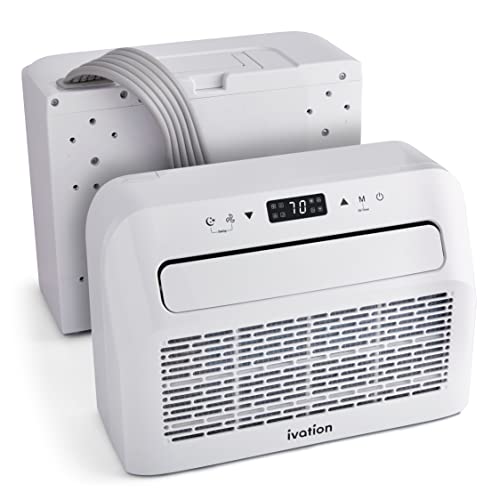
The Ivation over-the-sill camper AC provides 6,500 BTU of cooling, targeted for over-the-window installation while maintaining a quiet interior environment. The design minimizes noise by isolating the compressor outside the main living area. It doubles as a dehumidifier and fan, with a digital display for temperature control, timer, and sleep modes. The unit is ideal for smaller vans or RVs where roof space is limited but window-level installation is accessible and preferred for stability and stability.
Pros include space-saving installation and quieter operation inside the cabin. Consider window fit, exterior clearance, and whether the unit’s cooling capacity aligns with your vehicle size and insulation. Venting and drainage setup should be planned during installation.
Buying Guide: Key Purchase Considerations For Van Life AC
- Power source compatibility: Match the unit’s power needs to your energy plan, whether it relies on 12V battery banks, solar arrays, or external battery packs. For off-grid use, consider units that bundle or pair well with your existing battery capacity and solar setup.
- Space and mounting options: Roof-mounted units save interior space but require roof access and proper sealing. Over-the-sill or portable options can be easier to install but may impact airflow or noise levels. Measure your space and confirm compatibility with existing vents or windows.
- Cooling capacity vs. space: Higher BTU is beneficial in very hot climates or large vans, but efficiency matters for battery life. If off-grid, prioritize models with inverter-based compressors and energy-saving features to maximize runtime.
- Noise and comfort: Look for decibel ratings or user-reported quiet operation, particularly if you sleep in the van. Inverter-driven compressors generally offer lower noise output than traditional units.
- Heating options: If you require warmth in cooler seasons, consider heat pump or integrated heating. Verify that the heater is designed for the intended space and climate, and note that some heaters are supplementary rather than primary heat sources.
- Durability and weather resistance: Outdoor exposure demands UV-stabilized housings, corrosion-resistant components, and robust gaskets to prevent leaks and performance degradation over time.
- Installation complexity and maintenance: Some units demand professional installation, rooftop sealing, or electrical work. Check warranty terms and whether service is readily available in your region.
- Weight and roof load: Roof-mounted units add weight to the vehicle. Ensure your roof structure and suspension can handle the load and that the installation minimizes wind drag and aerodynamics impact.
- Energy management: If relying on solar, calculate daily cooling hours and BTU requirements. Consider pairing with a high-efficiency inverter and smart energy management to optimize runtime and battery health.
Across these options, the best choice depends on your travel style: frequent off-grid excursions benefit from higher BTU capacity with strong battery support, while those who mostly camp near campgrounds may prioritize compact size and ease of installation. For long road trips in hot climates, roof-mounted 10,000 BTU units with good weather resistance and reliable cooling performance frequently strike a balance between comfort, energy use, and durability. Portable or battery-dependent models offer flexibility for shorter stops or tent-style setups, especially when solar or external charging is part of the plan.