Best Rear Suspension Upgrades for Drag Racing
Launching a drag car into quick, stable launches depends on a well-tuned rear suspension. This article highlights five proven rear-suspension components that help optimize traction, reduce axle wrap, and improve consistency on the drag strip. Each product is selected for durability, performance, and compatibility with common drag setups. Read on to compare features and find the right upgrade for your build.
Summary of selected products
| Product | Brand | Key Features | Best For |
|---|---|---|---|
| Competition Engineering C2750 Rear Adjustable Drag Shock | Competition Engineering | Adjustable damping, compact rear shock, lightweight | Dialing in launch stability |
| BMR Suspension Lowering Springs, Rear, Drag Version | BMR Suspension | Vehicle-specific fit, lowering geometry for drag use | Lower stance and traction |
| KYX Racing Aluminum Rear Suspension Arms (RC) | KYX | Aluminum construction, easy install | RC drag applications |
| Universal Drag Race HD Parallel 4-Link Rear Suspension Kit | Speedway Motors | Universal fit, improves pinion angle control | High horsepower applications |
| Hot Racing MTT62DP01 Aluminum Rear Threaded Shock Set | Hot Racing | 6061-T6 aluminum, threaded preload adjustment | Durable, tunable shocks |
Competition Engineering C2750 Rear Adjustable Drag Shock

The C2750 rear adjustable drag shock is designed for drag vehicles needing precise damping control at launch. With a lightweight build and a compact profile, it supports reduced wheel hop and better traction during hard acceleration. Its specification notes—Item Weight 3 pounds and shipping weight 3.3 pounds—indicate a rugged, shipping-friendly component. This shock is suitable for users seeking straightforward, reliable adjustments during setup and testing sessions.
BMR Suspension Lowering Springs, Rear, Drag Version

BMR’s rear lowering springs are tailored for drag usage, contributing to a more aggressive stance and improved weight transfer during launches. The product’s fit type is vehicle-specific, and package dimensions are provided to help with shipping and storage planning. This upgrade focuses on modifying geometry to maximize traction while maintaining ride quality on test passes and street-driven sessions alike.
KYX Racing Aluminum Rear Suspension Arms Upgrades

KYX’s aluminum rear suspension arms are designed for RC drag setups, offering solid construction and easy installation. Made from high-quality aluminum, these arms aim to reduce flex and improve pinpoint alignment under high torques. While marketed for RC use, the robust construction makes them a relevant reference point for users considering lightweight, rigid alternatives in drag-oriented rear suspensions.
Universal Drag Race HD Parallel 4-Link Rear Suspension Kit
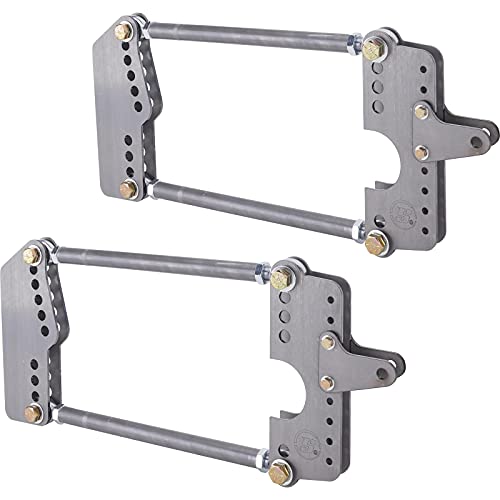
This universal four-link kit improves pinion angle stability under hard acceleration by preserving a parallel relationship between the driveshaft and the axles. It uses 3/4-inch rod ends, 1-inch OD steel tubes, and double-shear brackets to deliver rigidity and long-term durability, making it a strong option for high-horsepower drag builds or kits requiring broad compatibility across chassis types.
Hot Racing MTT62DP01 Aluminum Rear Threaded Shock Set

Hot Racing’s MTT62DP01 shock set uses CNC-machined 6061-T6 components, offering durability and precise damping control. The threaded shock bodies allow easy preload adjustments for tuning as the car handles different track conditions. Replacing stock plastic shocks with this aluminum set enhances stiffness and stability during aggressive launches and high-speed runs.
Buying Guide
When choosing rear suspension components for drag racing, consider these factors:
- Launch stability: Seek products that reduce wheel hop and control weight transfer, such as adjustable shocks or four-link systems.
- Compatibility: Ensure your vehicle platform and chassis design match the product’s fitment and mounting requirements.
- Durability vs. weight: Aluminum components offer stiffness and weight savings, but verify strength for your power level.
- Adjustability: Preload, damping, and mounting adjustments help tune behavior across different tracks and tire compounds.
- Installation scope: Some parts require extensive chassis work; others are direct replacements or universal kits.
- Maintenance: Consider parts with accessible serviceability and readily available replacement components.
In summary, the recommended choices span dedicated drag shocks, lowering springs designed for drag setups, and robust, adjustable hardware for higher horsepower applications. For RC drag projects, certain components can offer insight into rigidity and alignment, though purpose-built parts for full-size vehicles typically provide the best performance and reliability on the strip.