Best Trickle Chargers for Golf Carts: Reliable Chargers to Protect Your 36V and 48V Batteries
Finding the right trickle charger for a golf cart can extend battery life, prevent sulfation, and reduce maintenance headaches. This guide focuses on high-quality options that support typical 36V and 48V systems found in most Club Car, EZGO, and Yamaha carts. Each pick below is evaluated for compatibility, protection features, and ease of use to help American golf cart owners keep fleets and personal carts ready to roll.
| Product | Brand | Voltage Range | Key Benefit |
|---|---|---|---|
| Golf cart Battery Charger, 36V/48V Trickle Charger | YHCHKJ | 36V/48V | Smart 9-stage charging with automatic trickle mode |
| Club Car Charger, 48V 15A | FirstPower Pro | 48V | Upgraded 3-Pin plug, maintenance mode |
| Schauer 48V Golf Cart Battery Maintainer | Schauer | 48V | Fully automatic maintenance with safety protections |
| Suuwer 1.5-Amp Trickle Charger | Suuwer | 12V/8V (lead-acid options) | Four-step charging, versatile for multiple vehicles |
| TRAMROOT 18 Amp Golf Cart Charger | TRAMROOT | 36V | Intelligent charging with temperature compensation |
Golf cart Battery Charger, 36V/48V Trickle Charger

The YHCHKJ charger supports 36V and 48V systems with a 3-Pin Round Plug, compatible with Club Car DS and Precedent carts and many other vehicles. It accommodates Lithium with BMS, LifePO4, and various lead-acid chemistries (AGM, Gel, MF, Flooded, VRLA, SLA). It features a 9-stage smart charging process, automatically adjusting current to extend battery life. Note that it cannot jump-start a deeply discharged battery, but it provides safe, automatic maintenance once charged.
Club Car Charger, 48V 15A Golf Cart Charger

This 48V charger is built for Club Car batteries with an upgraded 3-Pin Round plug for plug-and-charge simplicity. It uses an adaptive charging algorithm to mitigate sulfation in lead-acid systems and includes 5-stage charging with automatic maintenance after full charge. The unit comes with a 16-foot power cable and an integrated cooling fan to reduce overheating during lengthy charging sessions.
Schauer 48V Golf Cart Battery Maintainer
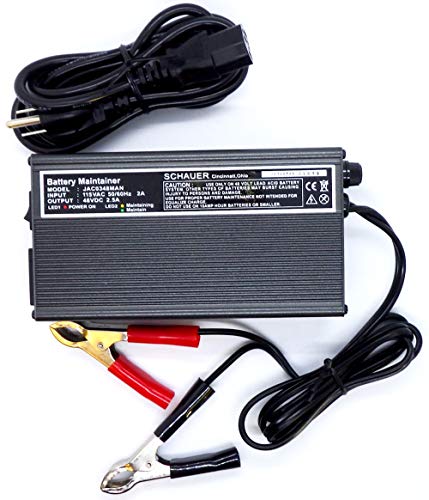
The Schauer maintainer is designed specifically for 48-volt golf carts, offering fully automatic maintenance to prevent overcharge and self-discharge during storage. It features reverse polarity and short-circuit protection and is well-suited for long-term connection in seasonal storage or light-use scenarios. This unit focuses on safety and battery longevity for lead-acid configurations.
Suuwer 1.5-Amp Trickle Charger
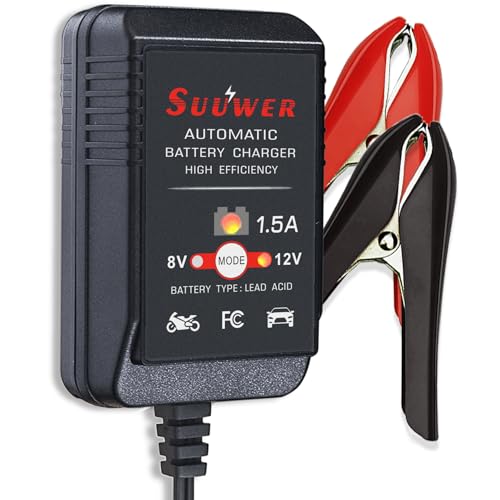
This compact charger provides 8V and 12V outputs with a four-step charging cycle, including absorption and float stages. It is compatible with a range of batteries, including SLA, AGM, GEL, and lead-acid types used in cars, motorcycles, golf carts, boats, and lawn equipment. A 12-foot DC power cord supports flexible installation in various setups.
Car Battery Charger Automatic, 6/8/12/14/16/24V

This multi-voltage charger covers 6-24V lead-acid batteries and supports 6V, 8V, 12V, 14V, 16V, and 24V. It’s versatile for golf carts and other vehicles, with a noted emphasis on 48V/36V EZGO/Yamaha charging configurations. It includes a seven-stage charging process and easy switching between modes, though lithium batteries are advised against using this model.
TRAMROOT 18 Amp Golf Cart Charger

TRAMROOT designs a robust 36V charger for Club Car, EZGO, and Yamaha fleets with crowfoot plug compatibility. It features 18A current, temperature compensation, and automatic shutdown after charging, followed by trickle mode. The rugged aluminum body and IP67 rating suggest solid durability in outdoor environments, with safeguards against overheating and over-voltage.
Buying Guide
Key considerations when choosing a golf-cart trickle charger include voltage compatibility, battery type support, charging stages, automatic maintenance features, and environmental durability. For most 36V and 48V carts, select a model that explicitly advertises compatibility with the vehicle’s plug type (such as 3-Pin Round or crowfoot) and the battery chemistry you use (lead-acid, AGM, Gel, LiFePO4, or others).
Charging stages and intelligence matter. Chargers with 5-9 stage charging, automatic maintenance or trickle modes, and protective features (overvoltage, reverse polarity, short circuit, overheating) help extend battery life and reduce manual monitoring. Temperature compensation can improve performance in variable climates, particularly in hot American summers or cold winters.
Physical build and safety features are important for outdoor storage. Look for models with robust housings, weather resistance (IP ratings), and sufficient cord length to reach outlets without stretching. If your golf cart sits for extended periods, a dedicated maintainer that prevents self-discharge is ideal. For fleets, a charger with reliable surge protection and consistent output across cycles reduces maintenance variability.
Consider future needs as well. If you plan to switch battery chemistries (for example from lead-acid to LiFePO4), verify compatibility or be prepared to upgrade to a charger designed for the new system. Availability of spare parts, ease of plug replacement, and customer support can influence long-term ownership costs.
In summary, prioritize chargers with explicit golf-cart voltage compatibility, reliable trickle and maintenance modes, protective safeguards, and durable construction suited to your climate and storage practices. The selections above provide a range of options across 36V and 48V systems, balancing immediate charging performance with long-term battery care.