Best Shocks for Tundra: Top Upgrades for Comfort and Control
Upgrading the shocks on a Toyota Tundra can dramatically improve ride comfort, handling, and load stability. The models below are designed to address common off-road and highway demands—from lifted builds to daily driving. This guide highlights five well-matched options with diverse valving, monotube designs, and compatibility with typical Tundra setups. Each product section provides key features, installation considerations, and what makes it suitable for different driving styles.
| Product | Brand | Features |
|---|---|---|
| Rough Country 0-3.5″ N3 Rear Shocks | Rough Country | 10-Stage Variable Valving; High Pressure Nitrogen Charged; 35mm Piston |
| TrendsAuto 4600 Front Shocks | TrendsAuto | 46mm Monotube; Logo: 24-186230; Instant Reaction; Digressive Valving |
| TrendsAuto 4600 Rear Shocks | TrendsAuto | 46mm Monotube; Same Digressive Valving; Durable & fade-free |
| Rough Country 2″ Loaded Lifted N3 Struts | Rough Country | Pre-loaded coil; Nitrogen gas charged; 2″ lift ready |
| AUTOSAVER88 Front & Rear Quick Struts | AUTOSAVER88 | Complete kit; Easy installation; Includes coil springs and mounts |
Rough Country 0-3.5″ N3 Rear Shocks

Rough Country’s 0-3.5″ N3 rear shocks are designed for a range of lifted and leveled Tundra builds. The kit emphasizes a high-performance, isolated approach with three key attributes: a 10-stage variable valving system that adapts to changing road conditions, nitrogen charging to reduce oil aeration during aggressive use, and a 35mm piston for consistent damping. The shocks are built to maintain a smoother rear-end ride when towing, hauling, or navigating rutted trails. Suitable for mid-range lift setups, these shocks help balance handling and comfort without compromising stability on uneven surfaces.
Considerations: These are rear-specific shocks. If your Tundra uses a front-end lift or you plan a full front-and-rear upgrade, pair them with compatible front shocks for balanced damping. The 10-stage valving offers a spectrum of firmness, which is helpful for mixed-road use. Installation generally requires standard hand tools and basic suspension knowledge, with attention to correct mounting orientation and alignment after installation.
TrendsAuto 4600 Front Shocks
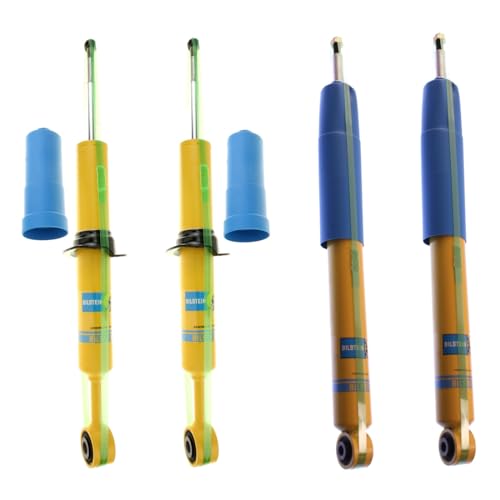
The TrendsAuto 4600 front shocks are built to match stock-height to mildly lifted Tundras with a focus on reliability and daily drivability. The monotube 46mm design uses nitrogen charging to reduce fade as temperatures rise, delivering consistent handling across long highway drives and off-road sections. The digressive valving helps the shock instantly adapt to changing surfaces, providing a stable and controlled ride. These shocks are particularly appealing for drivers seeking a balanced upgrade that improves ride quality and road feel without dramatic changes to ride height.
Considerations: These are designed for stock to moderate lifts, so if you operate a larger lift, verify compatibility with your current coilovers or stock springs. The monotube design typically benefits on-road feel and heat management, but installation should include inspecting mounts and ensuring the shocks are seated correctly to maintain alignment. Budget-minded buyers may appreciate the long-term durability and reduced need for frequent reprising of dampers.
TrendsAuto 4600 Rear Shocks

The TrendsAuto 4600 rear shocks mirror the front’s design, delivering a cohesive monotube damping solution for the rear suspension. With nitrogen charging and the same digressive valving philosophy, these shocks provide fade-free performance under load and unpaved terrain. The 46mm piston area supports strong damping control, helping to maintain tire contact on rough roads and when towing. The result is a more composed ride and improved stability when the payload shifts behind the cab.
Considerations: For best results, install with the matching front shocks to maintain balanced handling. As with any suspension upgrade, alignment and ride-height checks after installation are recommended. If your Tundra regularly faces rough gravel or heavy-duty towing, the rear upgrade can noticeably reduce fatigue and improve comfort on longer trips.
Rough Country 2″ Loaded Lifted N3 Struts

Rough Country’s 2-inch loaded lifted N3 struts are engineered for lifted applications, removing the need for strut spacers. The kit includes a pre-loaded coil and nitrogen-charged damping to improve ride quality, handling, and reduce shock oil aeration. This setup is designed to maintain a factory-like ride despite the higher ride height, improving tire contact and overall stability on varied terrain. It’s a practical upgrade for Tundra owners pursuing a modest lift without a complete suspension overhaul.
Considerations: Lifted applications require careful installation to avoid binding or misalignment. Pre-loaded coils simplify installation, but the overall kit will affect ride height and steering geometry. Ensure compatible springs and control arms are in good condition to maximize performance. Periodic inspection of bushings and mounts helps sustain long-term performance.
AUTOSAVER88 Front & Rear Quick Struts

The AUTOSAVER88 quick struts provide a complete front and rear replacement option for older Tundra models. This kit includes struts, coil springs (if needed), mounts, boots, bumper kit, spring seat, and isolator. The design focuses on easier installation, ensuring compatibility with 2000-2006 Tundra ranges and related variants. This complete assembly can simplify replacement projects and restore original ride height and handling characteristics while replacing worn components in a single package.
Considerations: Check vehicle year and drivetrain configuration to confirm full compatibility. While quick struts simplify installation, installation still requires attention to torque specs and secure mounting. This kit is most advantageous when replacing aging struts and springs together to restore ride quality and vehicle control.
Buying Guide: Shocks For Tundra
- Ride height and lift compatibility: If you run a lift, confirm whether the shocks are designed for that level. Some models (like the 2″ lifted N3 struts) are built specifically for lifted setups, while others are optimized for stock or mild lifts.
- Shocks type: Monotube shocks (46mm or similar) generally offer better heat resistance and fade-free performance under load, while twin-tube shocks can be cost-effective with comfortable street manners. Consider your typical driving mix—on-road, off-road, or heavy towing.
- Valving and adjustability: Variable or digressive valving helps the shocks adapt to changing surfaces. If you frequently drive over varied terrain, a shock with adaptive valving can improve stability and comfort.
- Load handling and towing: For towing and heavier payloads, look for nitrogen-charged designs and robust piston diameters (e.g., 35–46mm) that maintain damping performance under heavier loads.
- Durability and materials: Steel bodies, corrosion protection, and hydraulic oil quality affect life span. Shocks with higher tensile strength and quality seals resist leakage and wear longer.
- Installation considerations: Some kits include coils, mounts, and pre-assembled units. Quick-strut kits save time but may limit repairability or future upgrades compared to separate struts and springs.
- Warranty and support: Check manufacturer warranty duration and coverage for off-road use. A strong warranty indicates confidence in durability and service support.
- Budget and total cost of ownership: Initial price is important, but consider potential replacement frequency, alignment needs, and any additional hardware required for a proper installation.
- Vehicle compatibility: Always verify year, trim, and drivetrain compatibility. Some shocks are tuned for specific models or features (such as TRD packages or 4WD configurations) and may not fit every Tundra variant.
- Maintenance and serviceability: Some designs favor ease of service (monotube units with accessible ports) while others rely on sealed assemblies that require replacement when worn.
Overall, choosing the right shocks for a Toyota Tundra involves balancing ride comfort, payload stability, and the intended terrain. For daily driving with occasional off-road use, a monotube front and rear set with digressive valving offers a blend of comfort and control. For lifted builds or heavy-duty towing, consider lifted or heavy-duty kits with pre-loaded components and nitrogen charging to preserve handling across varied conditions. Always align and inspect installation post-setup to ensure optimal performance and safety.