Best Timing Light for Classic Cars: Accurate Tuning for Vintage Engines
Finding the right timing light for classic cars helps you dial in ignition timing for smoother idle, better throttle response, and improved fuel efficiency. The following selections focus on reliability, daylight visibility, and precise digital readouts to support precise adjustments on older engines. Each option supports 12V systems and both 2- and 4-stroke gasoline engines, making them suitable for a range of vintage vehicles, motorcycles, and small marine applications.
| Product | Brand | Key Benefit | Link |
|---|---|---|---|
| Automotive Timing Light 12V, Inductive Ignition Timing Light Gun | OBDMONSTER | Ergonomic pistol grip, secure sensor clips | Amazon |
| KZYEE KT60 Digital Timing Light | KZYEE | Real-time RPM and advance angle on bright LCD | Amazon |
| THIKPO Digital Automotive Timing Light | THIKPO | High-contrast display, daylight visibility | Amazon |
| AUTOOL Timing Light 12V | AUTOOL | Sliding sensor clips, robust protection features | Amazon |
| Performance Tool W80578 Self-Powered Timing Light | Performance Tool | Self-contained design for easy use | Amazon |
The following sections present five representative timing lights that balance readability, precision, and practicality for classic- and vintage-car maintenance. Each product highlights core features, real-world applicability, and how they help verify ignition timing with confidence.
OBDMONSTER Timing Light With Inductive Pickup
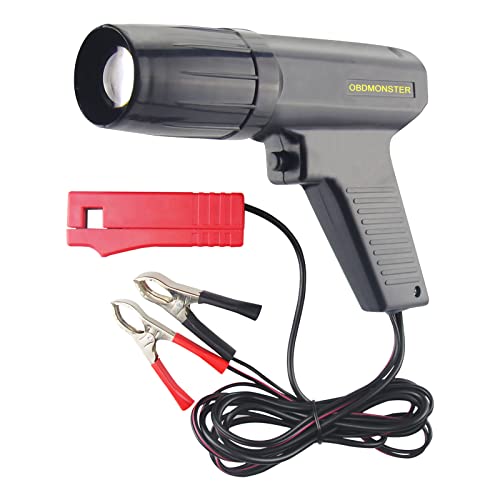
The Automotive Timing Light by OBDMONSTER uses a pistol-style design for comfortable operation and precise control. It supports both 2-stroke and 4-stroke gasoline engines and is easily operable on 12V ignition systems. The red/black sensor clips help distinguish polarity for secure hookups, and the inductive pick-up ensures a slip-free connection during testing. This tool is well-suited for classic cars where reliable, repeatable timing adjustments can contribute to smoother running and improved idle consistency.
Key considerations: 12V compatibility, ergonomic grip, and secure inductive pickup. Pros include a straightforward user experience and clear polarity indicators; potential cons involve the basic digital readout depending on the vehicle’s ignition system complexity.
Innova 5568 Pro Digital Timing Light

The Innova 5568 combines a four-function digital readout with a rugged, shock-proof housing. It provides tachometer, advance, dwell, and voltage readouts, with patented skip circuitry that helps minimize testing noise and errors. Designed for universal fit and versatile engine configurations, this tool supports a wide range of classic and modern engines, making it a practical choice for shops or hobbyists maintaining vintage vehicles with electronic ignition components.
Key considerations: multi-function digital readout, durable housing, and universal fit. Pros include precise RPM and advance readings; cons could be a steeper learning curve for beginners and vegetation of the display in bright sunlight depending on the environment.
KZYEE KT60 Digital Timing Light

The KT60 stands out with a bright LCD that shows real-time RPM and an adjustable 0–90° advance angle. Its xenon flash provides crisp marks that stay visible in daylight, helping users dial in timing marks even in brighter garages. The device supports speeds up to 10,000 RPM with stable digital readings, delivering precise timing adjustments for classic engines without guesswork. This makes it especially useful for fine-tuning engines with more complex timing curves.
Key considerations: digital display clarity, daylight visibility, and high-speed accuracy. Pros include precise data at a glance and robust visibility; cons may include battery management for extended sessions and reliance on accurate mark alignment.
THIKPO Digital Automotive Timing Light

THIKPO’s Digital Timing Light emphasizes daylight readability with a bright linear xenon flash tube and an ergonomic form. It offers real-time data monitoring, including an adjustable 0–90° advance angle and RPM tracking from 249 to 9,990. The device is designed for quick testing and reliable adjustments, reducing guesswork when calibrating ignition timing on classic engines. Its user-friendly controls and tactile feedback streamline tuning sessions in varied garage environments.
Key considerations: daylight performance, adjustable advance, and ergonomic design. Pros include fast, confident readings; cons could involve learning to interpret the digital readouts alongside mechanical timing marks on older engines.
AUTOOL Timing Light 12V with Sliding Clips

AUTOOL’s Timing Light emphasizes robust features, including a strong xenon flash for daylight use and sliding sensor clips for quick, positive connections. It supports timing re-timing for ignition optimization and can detect vacuum advance and knock control systems, adjusting timing accordingly as engine speed changes. The built-in protections guard against reverse polarity and overload, making it a dependable choice for classic car enthusiasts who value safety alongside accuracy.
Key considerations: strong daylight flash, sensor clips, and protective features. Pros include secure hookups and protective design; cons might include setup complexity for very old ignition systems that lack sensor-friendly wiring.
Performance Tool W80578 Self-Powered Timing Light

The Performance Tool W80578 offers a self-powered design that eliminates battery leads, simplifying use in tight engine bays. Its xenon bulb provides bright, daylight-friendly timing readings, making it suitable for outdoor or brightly lit garages. The tool is described as versatile across gas engines, outdoor power equipment, and small machinery, which is beneficial for classic cars that share common ignition systems with other equipment. It emphasizes ease of use and visibility for consistent timing checks.
Key considerations: self-contained power, daylight readability, and versatility. Pros include quick setup and broad applicability; cons may include fewer advanced digital metrics compared to higher-cost models.
Buying Guide: Timing Light Considerations for Classic Cars
When choosing a timing light for classic cars, consider the ignition system era, preferred display type, and how you plan to use the tool. Digital readouts can reduce guesswork, while strong xenon flashes improve mark visibility in daylight. Look for adjustable advance angles, reliable RPM ranges, and secure sensor hookups to support consistent tuning sessions. If you work with multiple engines, universal fit and rugged construction can save time and money. For frequent in-garage use, a self-powered or battery-independent design reduces cabling clutter. Finally, ensure the device includes clear documentation or support to help interpret timing marks on older flywheels and pulleys.
Comparing features side by side helps: digital vs. analog readouts, daylight performance, and safety features like reverse polarity protection. Assess whether you need advanced data (RPM, dwell, voltage) or a straightforward pass/fail check of ignition timing. For classic cars with conservative ignition systems, a reliable, easy-to-use unit with strong visibility often provides the most value. For more complex systems or performance tuning, models with fine-adjustable advance angles and higher RPM limits offer greater precision and repeatable results.