Best Coolant for Dodge Charger: Top Replacements and How to Choose
Choosing the right coolant reservoir and related components for a Dodge Charger helps maintain optimal engine temperatures and prevent overheating. This guide highlights five reliable aftermarket options that fit Chargers from recent years and provide dependable performance. Each product acts as a direct or near-direct replacement, designed to restore OE function without lengthy modification. Read on to compare fitment, materials, and installation considerations to find the best match for your Charger’s cooling system.
Quick comparison of chosen products
- GDUKOP 603-380 Engine Coolant Reservoir Tank — Durable plastic reservoir with OE-style fit for 2011-2023 Charger/Chrysler 300 vehicles.
- A-Premium Engine Coolant Radiator — Broad compatibility across 2009-2021 Charger, Challenger, 300; robust core dimensions and fittings.
- 603-380 Coolant Overflow Reservoir Tank (X4XZ) — Simple, OEM-sized replacement designed for multiple 2011-2021 models.
- TRQ Radiator Coolant Reservoir — Direct-fit expansion tank with pre-assembled components for quick installation.
- PPNZQAUT 603-380 Engine Coolant Reservoir — Aftermarket tank matching numerous 603-380 fitments with clear replacement cues.
GDUKOP 603-380 Engine Coolant Reservoir Tank

The GDUKOP 603-380 reservoir is designed for 2011-2023 Chrysler 300 and Dodge Challenger/Charger models. It replaces OE numbers such as 55111260AB and related variants, offering a standard capacity expansion tank built from heat-resistant plastic. The design emphasizes a tight seal to prevent leaks and maintain coolant levels during daily driving or high-heat conditions. Its compatibility with multiple OE references reduces the risk of incorrect fitment and supports straightforward replacement in common maintenance tasks.
Key features include high-temperature resistance and a durable construction engineered to withstand engine heat cycles. The part aims to preserve original coolant flow characteristics and ensure proper expansion, which helps stabilize engine temperature management. For Dodge Charger owners, this tank can restore the cooling system’s reliability without aftermarket fitment surprises. Installation steps align with typical radiator reservoir replacements, requiring basic hand tools and attention to the cap and hose connections.
Pros and considerations: durable, heat-resistant material; broad compatibility; reseal-friendly cap design. Potential concerns include confirming the exact OE match for your model year and ensuring the associated hoses are in good condition to prevent leaks after replacement. Always inspect the mating surfaces for debris before mounting the reservoir to preserve a tight seal.
A-Premium Engine Coolant Radiator

A-Premium offers a comprehensive radiator-compatible coolant solution for Dodge Charger, Challenger, and Chrysler 300 across model years 2009-2021. The product line lists fitment for a wide range of engine configurations, including V6 and V8 options, and identifies reference numbers such as 5065240AG and 68050126AA to help verify compatibility. The radiator-centric design emphasizes robust core dimensions and effective heat dissipation to complement the cooling system beyond the reservoir alone. While primarily marketed as a radiator-related component, the accompanying documentation highlights compatibility with common cooling system configurations found in Charger models.
Reference features describe a standard-duty core and compatibility with single-fan setups, with explicit specifications such as core height and width that inform whether the radiator can integrate with the Charger’s front-end dimensions. When selecting this part, owners should confirm the vehicle’s engine size, transmission cooling needs, and whether a separate fan assembly is used. This option is suitable for those seeking a reliable radiator solution as part of a broader cooling system refresh in mid-range Charger builds.
Advantages include broad vehicle coverage and official part cross-reference references. Potential drawbacks are primarily compatibility checks—fitment varies by year, V6 vs V8 configurations, and optional auxiliary cooling components. Prospective buyers should review the exact engine and model details in the product description and match them to their Charger’s specifications to ensure a seamless replacement.
603-380 Coolant Overflow Reservoir (X4XZ)

The 603-380 reservoir from X4XZ is positioned as a straightforward replacement for several models spanning 2011-2021 Chrysler 300, Dodge Challenger, and Dodge Charger versions. It carries OE-compatibility notes for part numbers like 55111260AB and 55111260AF, ensuring a direct plug-and-play fit for most 603-380 applications. The description emphasizes ease of installation, with a design that mirrors original dimensions to maintain proper sealing and coolant containment. This makes it a practical choice for owners seeking a reliable aftermarket option that aligns with the factory fit while reducing retrofit risk.
Material quality is highlighted as tough and temperature-resistant, with emphasis on maintaining coolant integrity under heavy use. The reservoir cap and sealing surface are designed to prevent leaks and cap seepage, supporting long-term performance. Users should verify their vehicle’s exact fitment using the model year and engine specification since minor variations in a few years could affect compatibility.
Strengths include straightforward installation, reputable OE-specified numbers, and dependable sealing. Potential considerations involve cross-checking part numbers with the vehicle and confirming hose connector sizes to avoid mismatches during replacement. This option suits Charger owners who want a direct, no-frills reservoir replacement that respects OEM dimensions.
TRQ Radiator Coolant Reservoir
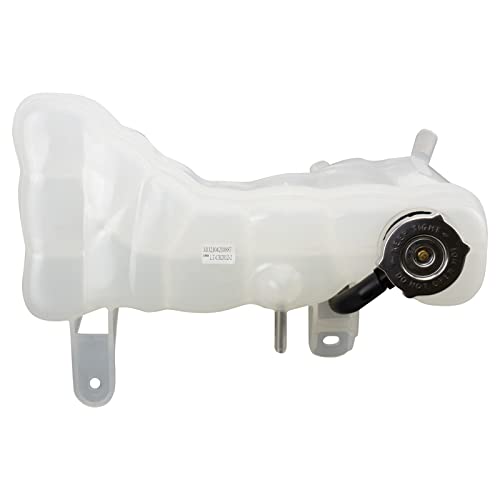
TRQ’s coolant reservoir is presented as a direct-fit expansion tank for a range of Dodge Challenger, Charger, and Charger variants, with references CH3014157 and 68237637AA/AB. The product emphasizes trust and compatibility, urging buyers to confirm fitment via the Amazon Garage “confirmed fit” tool and the compatibility chart. The design includes pre-assembled components to simplify installation and minimize the need for aftermarket modifications, making it a practical option for a DIY replacement or as part of a broader cooling system refresh.
Considerations include verifying the exact engine and year due to variations in the Charger’s cooling system across generations. The TRQ reservoir is positioned as a time-saving replacement with precise alignment to OEM mounting points and hose connections. Installation typically requires basic hand tools and careful inspection of lines to ensure a leak-free result. This option is well-suited for Charger owners seeking a tested, plug-and-play reservoir with documented compatibility.
Pros include validated fitment, ease of installation, and dependable performance. Potential drawbacks are the occasional need for additional clamps or hoses if the original hardware is worn. Refer to fitment data and the product’s compatibility notes before purchase to confirm suitability for your specific Charger version.
PPNZQAUT 603-380 Engine Coolant Reservoir

PPNZQAUT offers a 603-380 engine coolant reservoir compatible with 2011-2021 Chrysler 300, Dodge Challenger, and Dodge Charger models across multiple engine configurations (3.6L, 5.7L, 6.4L). It references OE replacements such as 55111260AB and related variants, positioning the part as a close aftermarket match to OEM specifications in terms of capacity and connections. The description notes that this is not a genuine OEM part but an aftermarket replacement designed to preserve original performance and fit.
The product stresses compatibility checks and model-year matching to ensure correct fitment. It also outlines the part numbers and fit contexts to help buyers verify compatibility, which is critical given the Charger’s diverse cooling system arrangements. The reservoir is built to handle normal operating temperature ranges and expansion demands, aligning with standard maintenance expectations for the Charger’s cooling system.
Key considerations include ensuring that the engine model and year align with the listed fitment, and that the mounting points and hoses correspond to the replacement. This option provides a balance of affordability and functionality, making it an option for owners seeking a reliable aftermarket reservoir without OEM pricing.
Buying Guide: Key Purchase Considerations
- Fitment accuracy: Chargers span several model years and engine options. Always verify vehicle year, model, and engine size against the product’s listed fitment and OE references (55111260AB, 603-380, etc.).
- Material and construction: Look for high-temperature resistant plastics and seal-friendly caps. A durable reservoir helps prevent leaks and maintains coolant levels under heat cycles.
- Direct-fit vs. universal: Direct-fit reservoirs replicate OE mounting points and hose connections, reducing installation time. Universal or semi-fit options may require modification.
- Pairing with other components: Many Chargers benefit from replacing the reservoir alongside a compatible radiator or sensor, such as a coolant temperature sensor, to ensure overall cooling system integrity.
- OEM references and cross-compatibility: OE numbers like 603-380 or 55111260AB are helpful anchors for confirming compatibility. Cross-reference with your VIN if possible.
- Warranty and support: BRTEC, TRQ, and other brands may offer warranties. A longer warranty can provide added confidence for long-term use.
- Installation considerations: Basic hand tools are typically sufficient, but ensure clamps, hoses, and mounting hardware are in good condition to avoid leaks post-installation.
- Cost vs. value: An affordable aftermarket reservoir can perform well, but verify that the part meets your expectations for fit, function, and durability before purchasing.
When upgrading or replacing the coolant reservoir on a Dodge Charger, prioritizing correct fitment and reliable materials ensures the cooling system remains effective across driving conditions. The options above reflect a mix of direct-fit replacements and robust aftermarket choices that align with typical Charger configurations, helping to maintain engine performance and cooling efficiency without unnecessary downtime.