Best Gauge for Jumper Cables: A Practical Guide to Choose the Right Cable Size
Choosing the right gauge for jumper cables is essential for safe, reliable boosts across a range of vehicles. This guide highlights high-performance options from trusted brands and explains how gauge, length, and construction affect conductivity and durability. Whether you drive a compact car or a full-size pickup, selecting the proper gauge helps ensure a quick jump-start with minimal effort.
Summary of chosen products:
| Product | Gauge | Length | Brand |
|---|---|---|---|
| Energizer Jumper Cables | 6 Gauge | 16 Feet | Energizer |
| TODPC 4 Gauge Jumper Cables | 4 Gauge | 20 Feet | TOPDC |
| EXTRESPO Heavy Duty Jumper Cables | 0 Gauge | 25 Feet | ExtreSpo |
| A ABIGAIL Heavy Duty Jumper Cables | 1 Gauge | 25 Feet | A ABIGAIL |
| CARTMAN 4 Gauge Jumper Cables | 4 Gauge | 20 Feet | CARTMAN |
Energizer 6 Gauge Jump Cables, 16 Feet
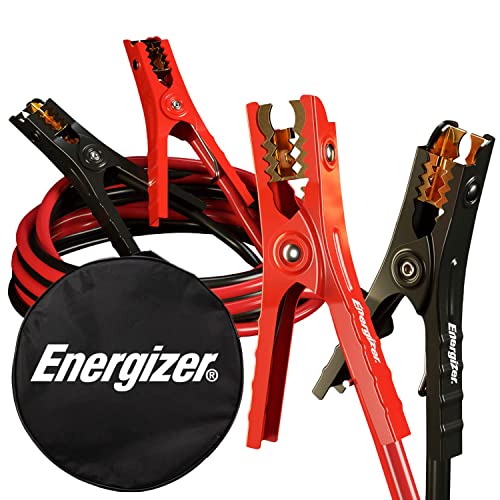
Energizer offers 16 feet of 6-gauge jumper cables, designed to jump-start dead or weak batteries in a variety of vehicles. The thick vinyl coating protects against rust and corrosion, and the cables include a carrying bag for easy storage and transport. The combination of gauge and length makes them suitable for most everyday use, including trucks, SUVs, and mid-size cars. The clamps are built to provide a secure grip, while the durable jacket helps withstand temperature fluctuations.
TOPDC 4 Gauge 20 Feet Jumper Cables

The TOPDC 4 gauge, 20-foot jumper cables combine robust clamps with flexible insulation and a heavy-duty outer jacket. The cables are designed for easy connections to both top-post and side-terminal batteries, delivering strong conductivity while resisting rust and corrosion. UL-listed quality assures reliability across temperature extremes, making them a solid choice for a wide range of vehicles from sedans to light trucks.
EXTRESPO 0 Gauge 25 Feet Heavy Duty Jumper Cables

ExtreSpo presents 0 gauge, 25-foot heavy-duty jumper cables rated up to 1000 amps. The high-density copper-clad aluminum ensures strong conductivity, and the cables remain flexible in cold weather. The kit includes a carry bag and safety features such as a thick vinyl coating and UL listing, making these suitable for use with 12V and 24V systems in cars, SUVs, and larger vehicles. The design emphasizes durability for extreme temperatures and demanding jump-starts.
A ABIGAIL 1 Gauge 800A Jumper Cables

A ABIGAIL offers a 1-gauge jumper cable at 25 feet, rated for up to 800 amps. The thicker wire promotes excellent conductivity, with color-coded identification to prevent cross-wiring during a boost. The oil, chemical, and water-resistant PVC jacket maintains flexibility in varied climates. Clamps are designed for durability, enabling repeated use without massaging the battery terminals. A carrying bag keeps the set organized for trunk or garage storage.
CARTMAN 4 Gauge 20 Feet Jumper Cables

CARTMAN provides 4-gauge, 20-foot jump cables with a patented, non-conductive rubber-clad clamp design for safety and repeated use. They employ a higher copper content to improve electrical conductivity and power transfer, using copper-coated aluminum (CCA) for flexible operation. The 20-foot length offers reach to the opposite side battery in most vehicles, making them versatile for full-size cars, SUVs, and light trucks. The set is designed for straightforward connections and reliable performance in emergencies.
Buying Guide: Key Purchase Considerations and Comparisons
Gauge choice matters when selecting jumper cables. Thicker gauges (lower numbers) support higher amperage, minimize voltage drop, and maintain performance across longer distances. In the table above, 0 and 1 gauge cables are well suited for larger vehicles and diesel engines, while 4 and 6 gauges cover most everyday cars and mid-size SUVs. Consider the following when shopping:
- Gauge vs. vehicle type: For compact cars, 6–4 gauge cables are typically sufficient. For trucks, SUVs, and diesel vehicles, 0–2 gauge cables are often preferred for higher amperage and flexibility under load.
- Length: Longer cables offer more reach but can be stiffer and heavier. Choose a length that fits your garage layout and typical parking positions, with 16–25 feet being common sweet spots.
- Cable material: Copper-clad aluminum (CCA) is lighter and inexpensive but slightly less conductive than pure copper. High-end cables may use pure copper conductors for maximum efficiency.
- Clamps and insulation: Durable, non-conductive clamps with good grip reduce the risk of arcing. Thick vinyl insulation helps resist moisture, heat, and abrasion in harsh weather.
- Durability and safety features: UL listing, tangle-free designs, and protective jackets enhance safety during use and storage. A carrying bag contributes to organization in vehicles and garages.
- Storage and maintenance: Keep cables in a carrying bag or pouch, and inspect clamps for corrosion and insulation wear periodically to maintain performance.
Overall, choose a gauge and length that align with your vehicle fleet, climate, and storage options. For everyday use, a 4–6 gauge, 16–20 foot cable set provides reliable performance across most cars and small trucks. For heavier duty needs or diesel engines, 0–2 gauge cables with longer lengths deliver greater amperage capacity and resilience in challenging conditions.