Best Oil Treatments for Cars: Top Additives for Engine Longevity
Choosing the right oil treatment can help reduce friction, fight sludge, and extend engine life. This guide highlights five well-regarded options, detailing how each product works, the problems it targets, and who might benefit most. Use these insights to decide which additive aligns with your vehicle’s needs and maintenance schedule.
| Product | Brand | Primary Benefit | Best For |
|---|---|---|---|
| STP Ceramic Oil Treatment, 15 Oz | STP | Ceramic coating, anti-friction tech | Smoother, quieter engines; protection between oil changes |
| STP High Mileage Oil Treatment + Stop Leak, 15 Fl Oz | STP | High-mileage protection and seal rejuvenation | Vehicles with 75k+ miles; leaks and wear prevention |
| Liqui Moly MoS2 Anti-Friction Engine Treatment, 300 ml | Liqui Moly | MoS2 film forms on all friction surfaces | Universal protection across engine speeds |
| Lucas Oil 10118 High Mileage Oil Stabilizer, 1 Quart | Lucas Oil | Raises oil pressure; reduces sludge | High-mileage engines; sludge control |
| Rislone 4102 XTREME LUBE Maximum Performance Engine Treatment, 16.9 oz | Rislone | Sludge removal and wear protection | Broad temperature protection; sludge and varnish control |
STP Ceramic Oil Treatment: Ceramic Coating for Friction Reduction

STP Ceramic Oil Treatment uses a ceramic coating designed to remain effective between oil changes. The ceramic layer aims to protect the engine by reducing friction, which can translate to smoother operation and quieter performance. The product’s anti-friction technology supports lubrication at metal interfaces, potentially extending engine life during regular maintenance intervals. A protective coating also helps minimize sludge buildup and deposits, contributing to cleaner internals over time. This option is suited for drivers who want an extra layer of protection during routine oil changes without major adjustments to their maintenance routine.
Engineers and vehicle owners often seek additives that work with standard motor oils. The STP Ceramic Oil Treatment emphasizes durability, claiming protection for up to 15,000 miles on a single application. For those who drive in varied conditions—city traffic, highway cruising, or frequent stop-and-go patterns—this product offers an approachable way to support a smoother engine feel while preserving oil film integrity between changes.
STP High Mileage Oil Treatment + Stop Leak: Seal Rejuvenation for Older Engines

This STP formulation targets high-mileage engines, offering a thicker oil treatment designed to cushion wear-prone components and reduce metal-to-metal contact. It features a ZDDP-based anti-wear additive to help protect critical bearings and surfaces. In addition, the stop-leak component aims to rejuvenate seals and gaskets, which can help curb leaks and related issues, potentially reducing smoking or external leaks. It’s offered in a 15-ounce bottle, making it practical for regular oil-change cycles.
For older or higher-mileage vehicles, this product can contribute to maintaining oil pressure while combating sludge formation. The dual function of wear protection and seal conditioning can be especially relevant for engines with accrued mileage, where gasket and seal integrity may have begun to degrade. Use with regular oil changes to support longer-term engine health.
Liqui Moly MoS2 Anti-Friction Engine Treatment: MoS2 Film for All Surfaces

Liqui Moly MoS2 Anti-Friction Engine Treatment centers on molybdenum disulfide (MoS2) to form a high-load-lubricant film across friction surfaces. The additive aims to reduce friction and wear at elevated engine temperatures, contributing to smoother operation and improved control at higher RPMs. Its universal fit makes it suitable for a broad range of engines and operating conditions, including those that experience high stress during spirited driving or heavy-duty use. This option highlights a focus on sustained lubrication under challenging loads.
Users can expect benefits such as quieter operation and a more controlled engine feel under load, with potential improvements in overall efficiency. The product is designed to be compatible across gasoline and diesel engines, including mixed-use fleets, which can be advantageous for owners with multiple vehicles or high-mileage engines requiring robust protection.
Lucas Oil 10118 High Mileage Oil Stabilizer: Sludge Control and Pressurization
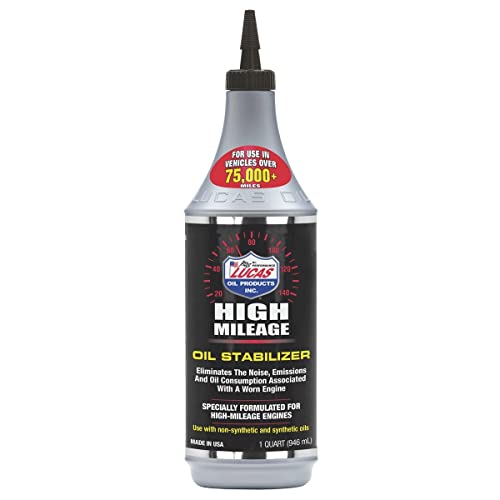
Lucas Oil 10118 High Mileage Oil Stabilizer is designed to address engines with higher mileage by reducing sludge buildup and lubricating internal components to minimize wear. A notable benefit is the potential to raise oil pressure, contributing to steadier oil flow and improved engine reliability in aging engines. This stabilizer can be a straightforward addition during oil changes, providing a preventive measure to help preserve engine performance as miles accumulate. It’s positioned for drivers who want an uncomplicated option to support older engines without major mechanical changes.
When considering high-mileage protection, the formulation emphasizes sludge suppression and internal lubrication. This can be particularly relevant for engines with longer service intervals or those that have accumulated deposits over time. Front-to-back protection—particularly during cold starts and under load—may help maintain efficiency and reduce wear in critical areas like bearings and lifters.
Rislone XTREME LUBE: Maximum Performance Engine Treatment

Rislone XTREME LUBE Maximum Performance Engine Treatment focuses on reducing friction and wear with a multi-grade formula that helps the oil flow freely across a broad temperature range. The additive claims to remove and prevent sludge, varnish, and other deposits that can affect tolerances and cause noisy valves or lifters. By maintaining cleaner oil passages and improving lubrication, it supports smoother operation and can help preserve engine quietness and efficiency. The product is positioned for engines that may experience sludge build-up or deposits that compromise performance.
In practice, XTREME LUBE aims to penetrate bearing surfaces and rings to dislodge varnish and sludge, keeping particles suspended until they’re captured by the filter or removed with the next oil change. This approach aligns with preventive maintenance strategies designed to extend engine life in a range of driving conditions, from daily commuting to more demanding workloads.
Buying Guide: Key Considerations And Comparisons
When selecting an oil treatment, consider engine type, mileage, and driving style. For high-mileage vehicles, STP High Mileage and Lucas Oil Stabilizer address wear protection and sludge control, while a MoS2-based option like Liqui Moly offers broad compatibility and a strong friction-reduction film under load. For engines that experience frequent stop-and-go driving, a ceramic coating like STP Ceramic can provide durable protection that persists through oil-change intervals.
Assess the additive’s primary mechanism: ceramic coatings, MoS2 films, or multi-grade sludging prevention. Ceramic-based products emphasize long-term film integrity; MoS2 delivers a layered friction-reducing film that performs well across RPM ranges; high-mileage stabilizers focus on seals, pressure, and sludge control. Compatibility with your vehicle’s oil viscosity and type is essential, as some additives are designed for conventional oils, while others are suitable for synthetic blends.
Consider maintenance practices. Additives are most effective when used with a regular oil-change schedule. For vehicles with known valve lifter or gasket concerns, stop-leak components may provide symptomatic relief, but they should be used cautiously and as part of a broader maintenance plan. For those seeking performance or noise reduction, look for products that emphasize friction reduction and film strength at high temperatures, such as MoS2 or ceramic-based formulations.
Safety and compatibility are also important. Read product labels to avoid mixing multiple additives, which can cause unforeseen chemical interactions. If you drive a modern engine with strict emissions controls, verify that the additive is compatible with your vehicle’s warranty and emission system. In all cases, start with the recommended dosage and consult your owner’s manual or a trusted mechanic if you’re unsure about the best choice for your engine’s needs.