Best Anchor for Rocky Bottom: Top Picks for Secure Mooring in Tough Bottoms
Finding the right anchor for rocky or debris-filled bottoms can be challenging. This guide highlights five anchors that perform well on hard, uneven, or mixed seabeds, offering strong holding power and reliable retrieval in lakes, rivers, and coastal areas. Each option balances durability, weight, and design to minimize drift and maximize stability when currents run strong and bottoms are rugged.
| Product | Weight | Best For |
|---|---|---|
| Better Boat River Anchor, 8 lb | 8 lb | Rocks, debris, strong river currents |
| SEACHOICE Folding Grapnel Anchor | 1.5 lb | Compact storage; rocky and weedy bottoms |
| SEACHOICE Utility Anchor w/ Slip Ring | Size 7E | Deep penetration; versatile seafloor |
| SandShark Premium Fluke Anchor | Under 5 lb | Multi-bottom performance; rocky and sandy areas |
| Anchor-Man Richter Anchor (14 lb) | 14 lb | Sand, rocks, mud; high hold in mixed bottoms |
Better Boat River Anchor, 8 lb

The 8 lb river anchor uses a hybrid mushroom fluke design that helps resist drag in rivers and lakes with thick mud or rocky debris. The 8-pound size is well-suited for small boats such as canoes, kayaks, jon boats, or dinghies, with available larger weights (12, 20, 30 lb) for bigger vessels. The anchor is cast from heavy-duty iron and vinyl-coated to protect the boat’s finish, while the galvanized dipped bow shackle enhances durability and resistance to corrosion.
SEACHOICE Folding Grapnel Anchor

This folding grapnel anchor is designed for easy storage, folding neatly when not in use. It can lock in either open or closed positions, allowing quick adjustments while anchoring in rocky or weedy bottoms. Built from malleable iron, it provides dependable holding power for compact boats and adds versatility for tight spaces or rocky shores where conventional danforth-style anchors may struggle to bite.
Seachoice Utility Anchor with Slip Ring
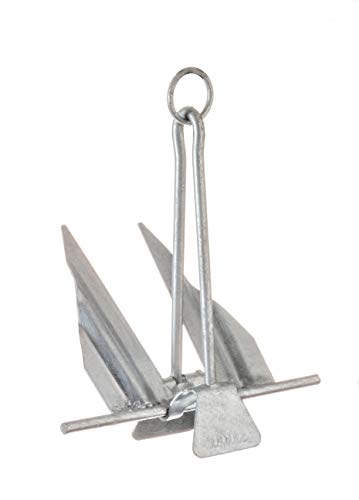
Designed to penetrate a range of seafloor compositions, this utility anchor includes a slip ring shank to ease retrieval if it gets stuck. Suitable for boats in the 15–19 feet range, this anchor offers a balanced approach to variety of bottom types, including rocky patches where extra grip and reliable release are valuable.
SandShark Premium Fluke Anchor

The SandShark fluke anchor uses aircraft-grade aluminum alloy to deliver lightweight strength with serrated flukes that dig into seabeds more effectively than typical Danforth-style designs. At under 5 pounds, it provides strong holding power for boats in the 16–30 ft range in both salt and freshwater, including rocky and mixed-bottom conditions. Its compact design facilitates easy storage on smaller vessels while maintaining robust anchoring performance.
Anchor-Man Richter Anchor

The Richter (14 lb) combines a grapnel design with river-application versatility, delivering high holding power across diverse bottom types such as sand, rocks, mud, and weeds. Its spike and tines enhance digging into hard or mixed substrates, helping keep a boat in place even with currents and drifting sediments. This anchor supports boats up to around 25 feet with a robust built profile suitable for rocky shores and variable seabeds.
Buying Guide
Key purchase considerations
Anchoring performance depends on boat size, typical water conditions, and bottom type. For rocky bottoms, look for anchors with flukes or spikes designed to dig into hard surfaces and resist slipping. Weight matters: heavier anchors increase holding in strong currents but require more storage and handling effort. Materials influence durability and corrosion resistance; vinyl coatings or galvanized finishes help protect steel or iron anchors in saltwater. A grab-and-release mechanism, like a slip ring, can ease retrieval from snag-prone bottoms. Consider whether you need a compact, portable option (folding grapnels or lightweight fluke anchors) or a heavier, all-around anchor for larger boats and deeper waters.
Bottom compatibility and boat size
Rocky, muddy, or weedy bottoms benefit from anchors with sharp flukes, serrated edges, or spike elements. For small craft and inflatables, a lighter, more compact anchor that still holds well in mixed bottoms can be ideal. For larger boats, heavier models with reinforced construction and corrosion resistance provide consistent performance in stronger currents. If you often encounter mixed bottoms, a versatile anchor that performs on sand, rock, and mud—such as a grapnel or fluke-style anchor—offers broader applicability.
Storage, maintenance, and ease of use
Folding or compact anchors save space on small vessels and pontoons, while galvanized or coated finishes prolong life in harsh water. Ease of retrieval matters in rocky bottoms where anchors can snag; anchors with slip rings or reinforced shanks can reduce effort when pulling free. Regular inspection of corrosion protection and hardware helps maintain performance over time. When choosing among options, balance storage convenience with the demand of holding power in your typical boating environment.