Best Carburetor Options for the 350 Small-Block Chevy
The 350 small-block Chevy remains a staple for classic muscle and street builds. Choosing the right carburetor can improve throttle response, fuel delivery, and overall performance. This guide highlights five relevant Amazon items that align with a 350 small-block rebuild or upgrade, including classic Rochester setups and books that aid in rebuilding for reliability and performance. Each entry includes a concise overview, key features, and practical context for typical small-block Chevy applications.
| Product | Brand | Type | Key Benefit |
|---|---|---|---|
| Rebuild the Small-Block Chevy Videobook: Step-by-Step Videobook | Cartech | Rebuild Guide | Comprehensive visual walkthroughs with photos and a DVD |
| Rochester 2GC Carburetor – 2 Barrel Carburetor Chevrolet Chevy Small Block Engines 5.7L 350 | Auto Parts Prodigy | Carburetor | Direct replacement with compatibility for 350 small-blocks |
| VergasRetor 2 Barrel Carburetor fits for Type Rochester 2GC Chevy 5.7L/350 | VergasRetor | Carburetor | Automatic choke option and large-base compatibility |
| Rochester Quadrajet 4 Barrel Carburetor for 1966-1973 350/327 | SOASEMBE | Carburetor | Quadrajet 4-barrel efficiency for high-CFM performance |
| Carburetor For Honda Rancher 350 TRX350 | Fitz | Carburetor | Complete carb kit for 350-class ATVs (relevant to 350 platforms) |
Note: The Honda Rancher carburetor listed here addresses 350-class engines outside the Chevy family. It’s included to illustrate the breadth of 350-side carburetor options commonly available on major marketplaces. For pure small-block Chevy performance, the Rochester and Quadrajet entries provide the most direct relevance.
Rebuild the Small-Block Chevy Videobook

Cartech’s Rebuild the Small-Block Chevy Videobook guides readers through a step-by-step rebuild with detailed color photos. The package includes more than 650 photos and a 2-hour DVD, offering a practical, visual approach to restoring reliability and performance in a 350 small-block engine. Suitable for hobbyists and professional mechanics alike, this resource complements hands-on carburetor work by ensuring the engine is rebuilt to correct tolerances and clean mechanicals before tuning the carburetor.
Rochester 2GC Carburetor For Chevy Small Block
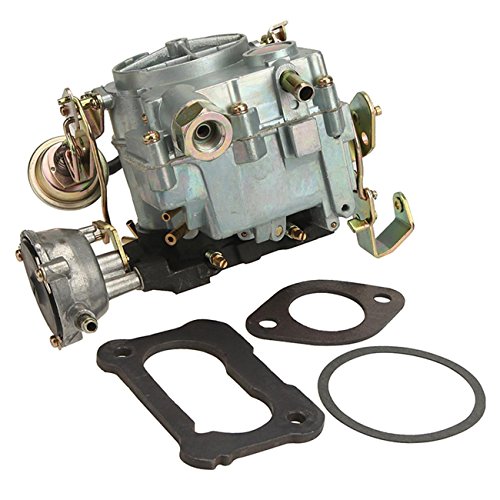
Designed for 350 small-block engines, this Rochester 2GC 2-barrel carburetor aims to replace worn units while preserving stock fuel mileage and drivability. It emphasizes direct compatibility with the common Chevy base pattern and throttle linkage expectations. The large-base design is compatible with certain manifolds and spacings used on 5.7L and 350 engines, making it a practical option for restoring factory performance or pursuing modest performance gains with unchanged jetting. It’s aimed at users seeking a straightforward swap that maintains original curb appeal and driveability.
VergasRetor 2 Barrel Carburetor For Chevy 350 5.7L
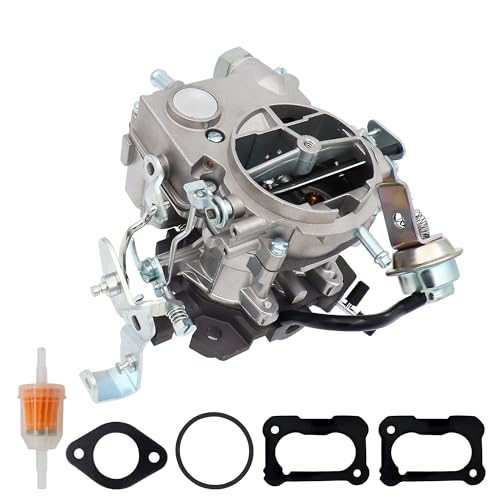
VergasRetor’s 2-barrel carburetor supports 1970-1980 Chevy small-blocks with a large-base footprint. It features an automatic choke and a robust metal construction intended to withstand street and occasional performance use. This unit is positioned as a cost-effective replacement that maintains stock fuel mileage with adequate airflow for typical street-driven 350 engines. Jet sizes and base patterns are sized for straightforward installation with compatible intake manifolds.
Rochester Quadrajet 4 Barrel For 1966-1973 Chevy

The Rochester Quadrajet 4-barrel carburetor is designed for high-CFM performance with spread-bore compatibility, commonly used on 1901R Quadrajet setups. Its divisions include a divorced choke and a mechanical choke option, offering versatility for daily driving or enthusiast-level applications. This unit is well-suited for throttle response improvements at higher RPM and for engines configured with dual-plane intakes. It’s a favored option when aiming for more robust mid- to high-range power without extensive tuning.
Buying Guide: Key Considerations For Chevy 350 Carburetors
- Engine compatibility: Confirm manifold bolt pattern, base diameter, and throat size correspond to your 350 small-block’s intake, throttle linkage, and air cleaner setup.
- Emission and regulation: Some carburetors are more emission-friendly than others. If you’re restoring a classic car, verify applicable regulations in your area and whether the carburetor requires an accompanying heat choke or emissions kit.
- Jetting and tuning flexibility: Some 2-barrel units accept stock jetting with minimal tuning, while others may require more precise metering rods and jets to match camshaft, exhaust, and rear-end gear changes.
- Choke type: Automatic chokes simplify cold starts and daily use, but manual chokes offer tactile control for enthusiasts who prefer tuning precision. Decide which aligns with your driving pattern.
- Quality and durability: Metal construction and corrosion resistance influence long-term performance, especially in hot climates or under high-humidity conditions.
- Support and compatibility: Check whether the carburetor’s base and throttle linkage are compatible with your distributor, air intake, and fuel line routing. Post-purchase support or kits can ease installation.
- Starter and driveability: For daily drivers, prioritize units designed to preserve smooth idle, off-idle response, and good cold-start behavior. For performance builds, consider higher-CFM options and progressive secondaries.
- Budget and availability: Original-spec replacements may offer best reliability, while aftermarket variants can yield performance improvements. Balance cost with anticipated drive quality and maintenance needs.
When selecting a carburetor for a 350 small-block Chevy, prioritize compatibility with your intake manifold, distributors, and throttle linkage. The Rochester 2GC and Quadrajet options provide recognizable, classic-fit choices, while rebuild guides can assist in restoring reliability. A careful assessment of your intended use—daily driving, weekend cruiser, or performance build—will help determine whether a straightforward replacement, a more advanced Quadrajet setup, or a rebuild-focused approach best meets your goals.