Best RV Batteries for Dry Camping: Reliable Power on the Road
Choosing the right RV battery is essential for dry camping where shoreline power isn’t available. This guide compares high-demand 12V options designed for off-grid use, including AGM and LiFePO4 chemistries known for safety, durability, and low maintenance. We highlight practical specs, compatibility, and performance factors to help you pick the best fit for your RV, camping needs, and energy goals.
| Product | Battery Type | Capacitiy | Key Benefit |
|---|---|---|---|
| Weize Deep Cycle AGM 12V 100Ah | AGM | 100Ah | Low self-discharge; maintenance-free |
| Renogy Deep Cycle AGM 12V 100Ah | AGM | 100Ah | Trusted safety and versatile connections |
| WEIZE 12V 100Ah Deep Cycle Battery | AGM | 100Ah | Maintenance-free with solid discharge specs |
| CHITOLI 12V 100Ah LiFePO4 | LiFePO4 | 100Ah | Long lifespan and high cycle count |
| attwood PowerGuard Pro Battery Box | Battery Box Accessory | — | Secure, vented storage for multiple batteries |
Weize Deep Cycle AGM 12V 100Ah Battery
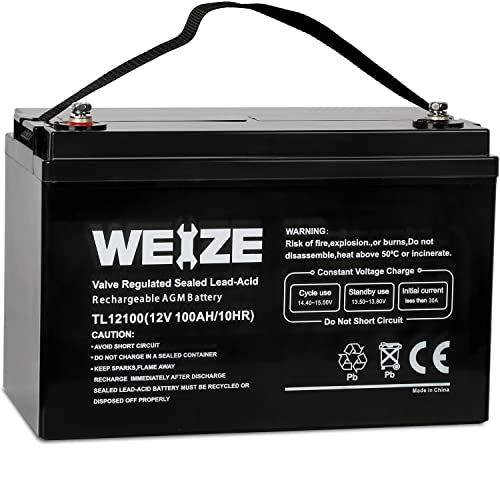
The Weize 12V 100Ah AGM deep cycle battery is designed for off-grid RV use, solar projects, and marine setups. It features AGM technology to minimize acid leakage and reduce maintenance needs. Its compact dimensions (approximately 12.99 x 6.73 x 8.43 inches) make it a versatile fit for many compartments. The battery supports a strong 1100A max discharge current for short bursts and operates effectively across a broad temperature range. A low monthly self-discharge rate of 1–3% helps with longer storage between trips, provided you keep it charged and within an appropriate temperature window.
Key points to consider: maintenance-free design; reliable max discharge and safe charging profiles; reasonable temperature operating window; and long storage life. As with all AGM packs, ensure proper ventilation in enclosed spaces and follow mounting guidance to prevent leaks or damage. This model is well-suited for RVs that balance weight, space, and dependable daily power during dry camping.
Product highlights
- Maintenance-free AGM design with low self-discharge
- Left Positive / Right Negative terminals for easy wiring
- Versatile use for RVs, solar, trolling motors, and off-grid systems
Renogy Deep Cycle AGM 12V 100Ah Battery

Renogy’s AGM 12V 100Ah battery is a staple in RV and off-grid power systems. It emphasizes safety and stability, with a sealed design that reduces the risk of leaks and a robust internal structure. The company notes compatibility with series and parallel configurations, enabling flexible arrangements for larger systems. Renogy’s reputation for reliability and a broad user base (hundreds of thousands of units sold) adds confidence for RVers who demand dependable performance from their energy storage. Minimal troubleshooting is required relative to many other chemistries, especially in standard RV power setups.
Considerations include its proven safety profile, broad compatibility, and ease of expansion in multi-battery banks. For many dry camping scenarios, Renogy AGM batteries deliver consistent, maintenance-free power with straightforward installation. Battery health and longevity will benefit from steady charging, avoiding deep discharges, and temperature control.
Product highlights
- Maintenance-free AGM chemistry
- Strong safety and chemical stability
- Flexible series/parallel configurations
WEIZE 12V 100Ah Deep Cycle AGM Battery

This WEIZE model mirrors common 100Ah AGM designs, with compact dimensions and a sealed, maintenance-free format. It lists a 1150A max discharge current, which supports short bursts of heavy load without compromising safety. The battery’s design emphasizes low self-discharge and compatibility with RVs, solar systems, and marine setups. The left-positive/right-negative terminal layout makes wiring straightforward for many standard RV electrical configurations. Temperature tolerance and proper charging practices help optimize lifespan.
Practical notes include keeping the battery within recommended temperatures and avoiding prolonged exposure to extreme heat or cold. This can help maximize cycle life and performance in typical dry camping conditions. Proper enclosure and ventilation are still important for safety in confined spaces.
Camco Double Battery Box
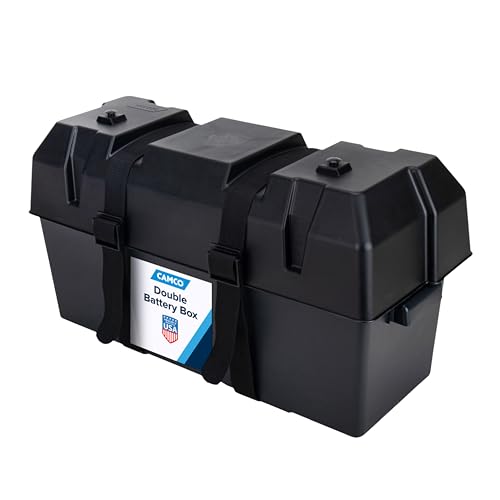
The Camco Double Battery Box is an accessory designed to safely transport and store two 6V GC2 or two 12V Group 24/24M batteries. It features heavy-duty, corrosion-resistant polymer construction with internal dimensions suitable for common RV battery types. This box helps manage venting and leaks, provides a neat mounting option, and protects batteries from the elements and road hazards. If you are running multiple smaller batteries in your RV setup, this enclosure can improve safety and organization during dry camping trips.
Important considerations include ensuring the box size matches battery dimensions, confirming compatibility with your battery chemistry, and adhering to venting recommendations. It’s a practical upgrade for RVs that regularly move off-grid and want a secure storage solution for their power banks.
ECO-WORTHY Portable 12V Lithium Battery (20Ah)

The ECO-WORTHY portable 12V lithium option is a compact power source with built-in BMS and a 5.5 x 2.5 mm DC port, suitable for light outages, camping gear, and small loads. While smaller than full 100Ah packs, it complements RV setups where portability or reserve power for accessories matters. It supports a range of devices via DC and USB outputs and prioritizes portability, balance, and ease of use for short trips or emergency backup power. Its 20Ah capacity makes it best suited for supplemental use rather than primary propulsion for extended dry camping in larger rigs.
Consider lithium advantages such as longer cycle life and lower weight, balanced by higher upfront costs and careful charging requirements to maximize longevity. This option is best when weight savings and quick, portable power are top priorities.
Buying Guide: Choosing The Right Battery For Dry Camping
When selecting an RV battery for dry camping, consider your energy needs, space, and whether you prefer maintenance-free AGM or the longer cycle life of LiFePO4. Key factors include capacity (Ah), discharge rate, weight, charging compatibility, temperature tolerance, and system scalability.
- Chemistry and longevity: AGM batteries are maintenance-free and robust against leaks, while LiFePO4 offers much longer lifespans and higher cycle counts but at a higher initial cost. For long adventures, LiFePO4 can deliver better total lifetime value, but plan for proper BMS integration and safe charging practices.
- Capacity and load profile: Estimate your daily energy usage (lights, fridge, water pump, small appliances) and match it to a battery bank that can sustain your typical days between charges. If you rely heavily on boondocking, consider higher capacity or supplementary solar input.
- Discharge current and peak loads: A higher max discharge current helps with high-power appliances, but for most RV loads, a steady, moderate discharge is sufficient. Ensure compatibility with your inverter and peripherals.
- Temperature sensitivity: Cold temperatures reduce lead-acid performance; LiFePO4 handles a wider range more stably. In cold climates, plan for insulation or a slightly oversized bank.
- Safety and mounting: For enclosed RV compartments, opt for sealed designs and proper venting. If using non-traditional enclosures, ensure they meet safety standards and mounting guidelines.
- Maintenance and monitoring: AGM batteries require minimal maintenance but still need periodic checks. LiFePO4 systems often integrate with BMS and monitoring for health and state of charge.
- Expandability: If you foresee adding more capacity, select batteries that support parallel or series configurations and verify the manufacturer’s guidance on expansion.
In practice, a balanced approach often involves a reliable 100Ah AGM battery as a primary power source for many RVs, complemented by an auxiliary LiFePO4 unit for long trips or higher-energy setups. Accessories like a robust battery box can improve safety and organization for dry camping environments.