Best Oil for Differential: Top Gear Oils for Different Transmissions and Hypoid Differentials
The right differential oil protects gears, reduces heat, and extends bearing life. This guide highlights five highly-rated products to help you choose the best gear oil for your differential needs. All selections balance performance, compatibility, and value for American drivers. Below, you’ll find a quick reference table, followed by in-depth product sections and a practical buying guide.
| Product | Brand | Viscosity | Notes |
|---|---|---|---|
| Lucas Oil 10047 SAE 75W-90 | Lucas Oil | 75W-90 | Synthetic gear oil for differential and transmission |
| Lucas Oil 10121 SAE 75W-140 | Lucas Oil | 75W-140 | Long-lasting, high-temperature endurance |
| Lucas Oil 10046 SAE 80W-90 | Lucas Oil | 80W-90 | Heavy-duty anti-wear protection |
| Toyota 08885-02506 GL-5 75W-85 | Toyota | 75W-85 | OEM-recommended for many Toyota differentials |
| Red Line 50104 75W85 GL-5 | Red Line | 75W-85 | Full synthetic; suitable for LSDs with friction modifiers |
Lucas Oil 10047 SAE 75W-90 Synthetic Gear Oil

Lucas Oil 10047 is a synthetic gear oil designed for both differential and transmission lubrication. The 75W-90 formulation supports smooth gear engagement and reliable protection under a wide temperature range. This product is marketed as an affordable solution, making it a practical option for budget-conscious vehicle owners seeking OEM-replacement performance. Its compatibility with various vehicle-specific fit types helps simplify maintenance for many American-built cars and light trucks.
Key features include synthetic composition for enhanced lubricity, robust wear protection, and a simple one-quart container. The formula emphasizes reducing gear noise and extending bearing life in daily driving and moderate towing applications. As with any oil, ensure the viscosity matches your vehicle’s manual recommendations. This option is widely used as a general-purpose differential and transmission lube in mid-range lubricity needs.
Lucas Oil 10121 SAE 75W-140

The Lucas Oil 10121 75W-140 offers a higher viscosity suitable for high-load or high-temperature conditions. It’s described as a “super-slick, long-lasting lubricant” that helps reduce gear noise and extends bearing life. The formulation is designed to withstand elevated temperatures while maintaining lubricity, making it a strong choice for rear axles and differentials in heavy-duty applications, off-road use, or vehicles with heavy loads. This product is positioned for users seeking improved heat management and stability under demanding driving conditions.
Consider this option if your differential operates in hot climates or under heavy loads. As always, verify compatibility with your vehicle’s owner’s manual and ensure the oil type aligns with OEM specifications for your specific model.
Lucas Oil 10046 SAE 80W-90

Lucas 10046 is a heavy-duty 80W-90 gear oil designed to deliver exceptional anti-wear protection and lubricity. The product emphasizes reducing drag and helping control heat in demanding service conditions. It leverages Lucas’ additive technology, sourced from their Heavy Duty Oil Stabilizer heritage, to deliver reliable performance in industrial and consumer heavy-duty gear systems. This oil is a practical choice for owners seeking robust protection in axles facing high friction, steep climbs, or towing loads.
Users should compare this viscosity to the vehicle’s manual recommendations. The oil’s blend aims to minimize gear chatter and extend life under repeated starts and heavy loads. It’s compatible with many gear systems but should be avoided in applications requiring strictly differentials with specific friction modifier needs, unless OEM guidance supports it.
Genuine Toyota 08885-02506 GL-5 75W-85

Toyota’s Genuine 08885-02506 GL-5 75W-85 is formulated to meet manufacturer recommendations for many Toyota differentials. The GL-5 specification supports robust gear protection and compatibility with a range of Toyota models. This product is especially suitable for owners who prefer OEM-grade lubricants and want to align with vehicle-specific maintenance recommendations found in owner manuals. It’s a straightforward choice for maintaining factory performance and protection in compatible vehicles.
When selecting this oil, users should confirm their vehicle’s exact manual specification. While it’s a reliable option for Toyota models, non-Toyota owners should verify cross-compatibility before use to prevent any lubrication mismatches or warranty concerns.
Red Line 50104 75W-85 GL-5

Red Line 50104 75W-85 GL-5 is a full synthetic gear oil designed to handle hypoid differential lubrication with limited-slip compatibility. The product notes indicate multi-viscosity support, and it includes friction modifiers suitable for clutch-type LSDs—though it cautions that some transmissions with synchronizers may experience shifting issues if lubrication is not appropriate. This makes it a strong candidate for performance-oriented vehicles and LSD-equipped differentials where slip control is needed without over-thickening the shift feel.
Customers should ensure their LSD design aligns with the oil’s friction modifier profile. For most LSDs, the product works with minimal additional modifiers, but cross-checking the vehicle’s requirements remains essential to avoid shifting problems or warranty concerns.
Traxxas 5136X Differential Oil Kit
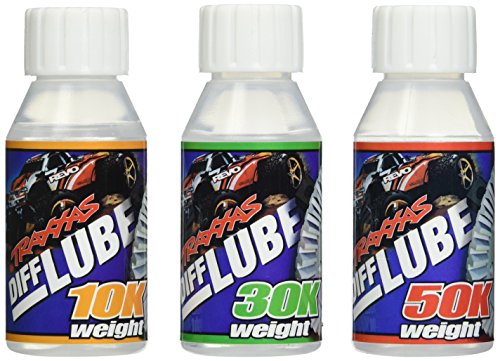
The Traxxas differential oil kit provides weights of 10,000, 30,000, and 50,000, enabling rapid tuning of locking action in sealed differentials of RC vehicles. These oils are not typical automotive gear oils but offer a precise, adjustable approach to differential performance in hobby-grade applications. They support varying levels of differential locking, making them ideal for hobbyists who require fine control over the differential behavior for off-road or high-demand RC scenarios.
For typical automotive use, this product is not a replacement for a standard street differential oil. It is best suited for RC enthusiasts seeking customized differential torque characteristics and reliable lubrication within their scale models.
Buying Guide: Key Purchase Considerations
Choosing the right differential oil involves balancing viscosity, gear type, and driving conditions. This guide summarizes essential considerations to help you compare options.
- Viscosity and specification: Follow your vehicle’s owner manual for recommended grades (e.g., 75W-90, 75W-85, 80W-90). GL-5 and API designations indicate suitable performance for hypoid gears and limited-slip differentials.
- Application: Distinguish between differential oil, final drive oil, gear oil, and transmission lubrication. Some products are optimized for LSDs, while others target heavy-duty or high-temperature environments.
- Limited-slip differential compatibility: If your vehicle has an LSD, verify whether the oil format requires additional friction modifiers or is compatible with existing clutch mechanisms.
- OEM alignment: OEM-grade oils (such as Toyota’s GL-5 formulation) can provide peace of mind for warranty coverage and manufacturer-recommended performance.
- Temperature performance: Higher-temperature stability reduces wear and maintains lubricity under load. This matters for towing, off-road use, or hot climates.
- Volume and serviceability: Consider whether you need a single quart, a larger container, or a kit with multiple weights for differential tuning and experimentation.
- Vehicle type: Automotive differentials vary from passenger cars to trucks and SUVs. Ensure the product’s viscosity and additive package suit your vehicle’s design and duty cycle.
Practical considerations and comparisons
- Synthetic vs. conventional: Synthetic blends typically offer better temperature stability, lubrication, and longer service intervals, especially in high-load or extreme environments.
- OEM vs. aftermarket: OEM oils guarantee compatibility with manufacturer specifications, whereas aftermarket options can provide broader gear compatibility and often lower cost.
- Friction modifiers: LSDs may require or benefit from specific friction modifiers. Using an oil with the wrong modifiers can affect lock behavior and shifting, so confirm compatibility with your differential design.
- Maintenance interval: Adhere to service intervals stated by your vehicle manufacturer or oil supplier guidance to maintain optimal protection against wear and heat.
This selection emphasizes reliable protection across common American vehicles and performance contexts. When in doubt, consult your manual and consider starting with a manufacturer-approved option, then evaluate higher-viscosity or higher-end synthetic formulations for demanding use.