Best Tow Straps for Trucks and Off-Road Recovery
Finding the right tow strap can be critical for safe recovery of a stuck vehicle, whether you’re on a back road, trail, or highway. The following picks represent high-strength, weather-resistant options designed for trucks, SUVs, ATVs, and off-road use. This guide compares materials, break strengths, lengths, and hook configurations to help you choose a strap that matches your needs and driving environment.
| Product | Brand | Break Strength | Length & Width | |
|---|---|---|---|---|
| Rhino USA Recovery Tow Strap (3″ x 20′) | Rhino USA | 31,518 lb | 3″ x 20′ | American-owned, weather-resistant polyester; flat-recovery design |
| JCHL Nylon Tow Strap (2” x 20’) | JCHL | 20,000 lb | 2″ x 20′ | Versatile, heavy-duty towing; includes high-tensile build |
| Rhino USA Recovery Tow Strap (3″ x 30′) | Rhino USA | 31,518 lb | 3″ x 30′ | Flat recovery; durable polyester; USA-based support |
| HORUSDY Nylon 3″ x 30′ Tow Strap | HORUSDY | 35,000 lb | 3″ x 30′ | Includes shackles and D-ring extensions; strong for heavier recoveries |
| JCHL Recovery Tow Strap With Reinforced Loops (2” x 20’) | JCHL | 26,000 lb | 2″ x 20′ | Reinforced loops; protects strap at connection points |
Introduction to selection criteria and practical usage helps ensure you pick a strap that aligns with every scenario you may encounter, from mud to snow, gravel to desert heat. Below are five detailed product sections, each explaining key features and how they apply to real-world towing and recovery tasks.
Rhino USA Recovery Tow Strap (3″ x 20′)

The Rhino USA 3″ x 20′ strap offers a high break strength benchmark with 31,518 pounds, making it well-suited for full-size pickups, Jeeps, and UTVs. It is crafted from weather-resistant polyester designed for long-lasting performance in varied conditions. This strap is optimized for flat recovery—pulling a vehicle that is stuck on flat surfaces—minimizing damage risk to both vehicles during the recovery operation. The American-owned, family-operated brand emphasizes reliable, USA-based customer support, which can be helpful if you encounter an unusual recovery scenario or need guidance on proper setup. The strap’s thickness and rigidity aid compatibility with standard recovery points, but as with all recovery gear, avoid sharp edges and always use rated shackles and gloves during handling.
Key considerations: verify vehicle weight and recoverable mass, ensure proper winch or anchor points, and maintain a clear recovery path. Routine inspection for fraying or embedded debris helps extend life. This strap is ideal for flat recoveries and frequent trail usage where quick response and sturdy performance matter.
JCHL Nylon Tow Strap (2” x 20’)
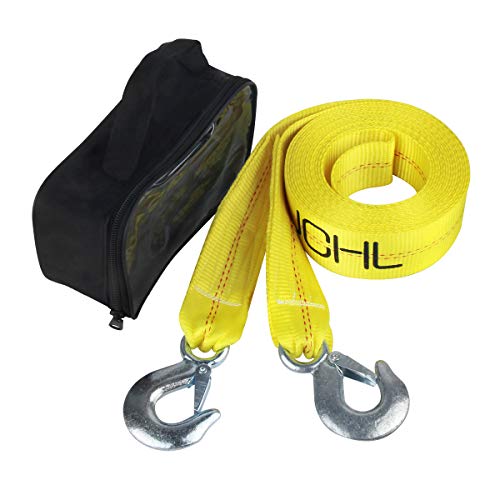
The 2″ x 20′ JCHL tow strap is built to handle up to 20,000 pounds of load, making it versatile for cars, light trucks, and ATVs. Constructed from high-tensile polyester, it combines strength with a degree of flexibility that helps absorb some shock during recovery—reducing the risk of strap failure. The universal design supports towing, winch extension, or tree-saving applications when needed. It is a practical choice for weekend recovery kits and smaller vehicles commonly found in shared driveways or rural areas. With consistent performance, it remains a reliable option for drivers seeking a balance between weight, length, and breaking strength.
Tips for use: always pair with rated recovery points and avoid using the strap around sharp edges or hot exhaust components. Inspect hooks and keep the strap free of knots or tangles before use. This strap suits drivers seeking a robust option without overwhelming heft on compact or mid-size vehicles.
Rhino USA Recovery Tow Strap (3″ x 30′)

This Rhino USA 3″ x 30′ strap extends the reach in bigger recovery scenarios, offering a formidable 31,518 lb break strength. The longer length provides flexibility when vehicles are separated or when you’re dealing with uneven terrain that limits direct lines of pull. The strap’s polyester construction is designed to resist weather and abrasion, and Rhino USA emphasizes a supportive customer experience for guidance on safe recovery practices. For off-road enthusiasts, the extra length adds a margin of error when positioning vehicles, though the heavier wide strap requires careful handling and appropriate anchor points to maximize safety and effectiveness.
Usage considerations: prefer this option for larger trucks or Jeeps that require greater pulling distance. Keep clear of pedestrian and vehicle pathways, and always use heavy-duty shackles and gloves. Regularly inspect for wear from exposure to UV light and contact with ground debris that could compromise integrity.
HORUSDY Nylon Tow Strap 3″ x 30’

The HORUSDY strap stands out with a 35,000-pound break strength and a robust 3″ x 30′ dimension, designed to stand up to demanding recovery tasks. The kit includes 3/4″ D-ring shackles, providing a ready-to-use solution for off-road recoveries or heavy equipment moves. The included shackles reinforce secure connections and distribute load, reducing the risk of strap failure at weak points. This setup is particularly valuable for drivers who anticipate more strenuous recoveries or who regularly deal with mud, snow, or uneven terrains where a longer strap is advantageous.
Practical guidance: ensure the shackles are properly seated and not over-torqued. Use proper anchor points and maintain a steady pull to prevent jerking that can stress the strap or vehicle attachments. This option suits larger vehicles and more challenging recoveries where maximum strength and extended reach are advantageous.
JCHL Recovery Tow Strap With Reinforced Loops (2” x 20’)

The JCHL 2″ x 20′ strap prioritizes reinforced loops to protect connection points under high loads. With a 26,000-pound break strength, this strap is robust enough for a wide array of recovery tasks—from standard car pulls to light-truck recoveries. The reinforced loops and UV-resistant polyester construction support durability in sun-drenched climates and variable weather. This option emphasizes connection integrity, ensuring that hooks and straps stay aligned during a recovery, which is critical when dealing with unpredictable traction or sudden shifts in resistance.
Best practices: pair with compatible hooks rated well above the strap’s breaking strength and inspect the loops for wear before each use. Consider a sleeve or protective cover to extend life when dragging over rough terrain. This product hits a middle ground between length, strength, and ease of use for daily drivers and hobbyist off-roaders alike.
Buying Guide: Key Purchase Considerations And Comparisons
When choosing tow straps for trucks and off-road use, consider the following factors to match your specific needs:
- Break strength vs. vehicle weight: For full-size trucks and heavy SUVs, opt for straps with break strengths well above the vehicle’s gross weight plus dynamic field loads. Higher break strengths tend to be more durable but heavier and bulkier to handle.
- Width and length: Wider straps (3″) offer greater load distribution and reduced risk of rope burn, while 2″ straps are lighter and easier to manage for smaller vehicles. Longer straps provide more reach but are heavier; select based on typical recovery distances you expect to encounter.
- Materials: Weather-resistant polyester is common for recovery and towing due to its balance of strength and flexibility. Nylon-based options can stretch under load, which may be advantageous for certain recoveries but increases the chance of temporary length changes during pulling.
- Connectors and safety gear: Reinforced loops, shackles, and protective sleeves contribute to durability and safety. Ensure shackles are rated higher than the strap and that all connections are secure before applying force.
- Usage scenario: Flat recoveries emphasize straps designed for pulling vehicles that are not embedded in mud or snow. For deeply stuck scenarios, longer straps with higher stretch or specialized tree-saving options may be needed in combination with loss-prevention measures for the environment.
- Storage and maintenance: Dry thoroughly after use, inspect for fraying or heat damage, and store in a protective bag away from direct sunlight to prolong life.
- Emergency readiness: Consider pairing a tow strap with a compact winch rope, portable jack kit, and recovery gear so you’re prepared for common roadside or off-road scenarios.
Overall, these five options provide strong, reliable choices across a range of use cases—from casual trail rides to serious off-road recoveries. Matching your straps to your vehicle weight, expected terrain, and typical recovery distances will help you select a strap that performs when it’s needed most.