Best Boat Batteries for Starting and Electronics: Reliable Power for Your Vessel
Boat success hinges on dependable power for starting engines and running onboard electronics. The following guide highlights top batteries chosen for durability, cold-crank performance, and long-life deep cycling. Each option blends strong starting power with marine-grade design, helping you choose a battery that fits your boat size, climate, and electrical needs.
Summary of selected products:
| Product | Brand | Type | Key Power | Notes |
|---|---|---|---|---|
| Litime 12V 140Ah Dual Purpose LiFePO4 | Litime | LiFePO4 Dual-Purpose | 1000 CCA | Cross-brand compatibility, ABYC-compliant |
| OPTIMA D34M BlueTop | OPTIMA | AGM Dual-Purpose | 750 CCA | SpiralCell technology, high reserve capacity |
| Interstate Batteries Marine AGM 100Ah | Interstate Batteries | AGM Deep-Cycle | 925 CCA | Extended cycle life, heavy-duty design |
| OPTIMA 34M Sealed AGM | OPTIMA | AGM Dual-Purpose | 800 CCA | Versatile mounting, robust construction |
| LiTime 12V 165Ah LiFePO4 | Litime | LiFePO4 Dual-Purpose | 1200 CCA | Higher starting power, cross-brand compatibility |
Litime 12V 140Ah Dual Purpose Lithium Marine Battery

The Litime 12V 140Ah dual-purpose LiFePO4 battery blends starting power with storage capabilities. With 1000 CCA, it aims to deliver reliable engine cranking even in cold-water starts. The 2-in-1 design supports marine electronics and fish finders, reducing the need for multiple batteries. ABYC-compliant installation guidance helps ensure safe cross-brand use across popular outboard engines such as Yamaha, Mercury, and Honda. This model emphasizes compact, space-saving versatility for small to mid-sized boats where space is at a premium.
Features to note include: a 12V LiFePO4 chemistry for lighter weight and longer cycle life, compatibility guidance for common outboard brands, and a focus on preventing cold-start failures with robust CCA performance. Installation should still follow marine electrical standards, and users should verify fit for their specific boat and engine pairing.
Best use cases: boats that require reliable cranking in varied climates and a need to power trolling motors and electronics without carrying extra heavy batteries. Its cross-brand compatibility and safety compliance make it a practical choice for boaters who want simplicity and reliability in one compact package.
OPTIMA D34M BlueTop Dual-Purpose AGM Battery

This Optima BlueTop D34M combines deep-cycle endurance with strong starting power. At 750 CCA, it is compact enough for many boats while providing substantial reserve capacity for electronics and accessories. The SpiralCell technology underpins higher performance and a more consistent power output in varying weather. Dual terminal posts add mounting flexibility, aiding installations in tight engine rooms. With a weight around 43.5 pounds, it remains manageable for typical marine ballast while delivering steady cranking and energy for accessories.
Consider its maintenance-free design, sealed AGM construction, and resilient performance. The D34M is a common choice for anglers and recreational boats that require reliable starts and dependable auxiliary power without the concern of electrolyte leaks or frequent maintenance.
Buying tip: verify mounting options and space in your boat, and confirm that the battery size aligns with your boat’s owner manual or electrical layout. Its robust build and dependable starting power make it suitable for boats with moderate loads and a mix of electronic devices.
Interstate Batteries Marine AGM 100Ah
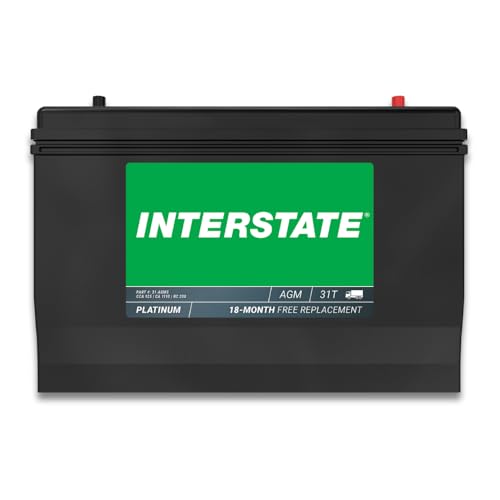
The Interstate 100Ah marine AGM battery emphasizes deep-cycle durability with strong cranking capability. It’s designed to power engine startups and a range of aboard accessories—from trolling motors to radio and depth finders. The 925 CCA rating supports reliable starts in cooler climates, while the AGM construction is known for reduced maintenance and spill-proof safety. The battery is built with thick plates aimed at sustaining discharge cycles and consistent performance under long runs and heavy accessory use.
Applications span auxiliary units like APUs and heavy-duty electronics, making it a versatile option for boats that demand both stamina and dependable ignition. The design prioritizes longevity and resilience, ideal for vessels that see frequent use or extended cruising days.
Installation considerations include ensuring proper venting and secure mounting, along with compatibility checks for specific electrical systems and brand preferences. This battery suits mid-size boats that require a balance of starting power and deep-cycle capacity for electronics.
OPTIMA 34M Sealed AGM Battery

The OPTIMA 34M Sealed AGM is a robust dual-purpose battery designed for boat and RV use, delivering 800 CCA with a compact, sealed arrangement. Its 50 Ah C20 capacity supports extended electronics duty cycles while still offering strong engine starting power. SpiralCell technology contributes to reliable power delivery and reduced sulfation risk over time. The dual-terminal setup adds mounting and wiring flexibility, useful in varied installation environments.
With a weight around 38.4 pounds, the 34M is easy to handle for many boaters and provides maintenance-free operation. This model is well-suited for boats that need a dependable all-round battery capable of starting the engine while supporting navigation, fish finders, and audio systems without frequent replacements.
Tip: consider compatibility with your boat’s electrical system and any space constraints. The 34M is a popular choice when you want a balance of starting power, deep-cycle capabilities, and a flexible mounting footprint.
LiTime 12V 165Ah LiFePO4 Dual-Purpose Battery

The LiTime 165Ah LiFePO4 model emphasizes high starting power with 1200 CCA, aiming to prevent cold-start failures in challenging conditions. The 165Ah capacity supports extended use for trolling motors, electronics, and lighting while keeping weight lower than typical lead-acid alternatives. Like other LiFePO4 solutions, it benefits from longer cycle life and a faster recharge profile, which can be advantageous on longer trips or day cruises.
Brand compatibility notes indicate broad outboard engine support, including Mercury and Evinrude, with ABYC-compliant installation guidance. This reduces integration friction when upgrading from a lead-acid battery to lithium on many boats. Ensure you have a compatible charging system and BMS management for optimal performance.
This option suits boats where weight reduction and higher continuous power are priorities. Its higher CCA and modern chemistry make it a strong choice where cold-weather starting and electronics reliability are essential, especially for boats with many auxiliary devices.
NOCO Genius GEN5X2 Onboard Charger
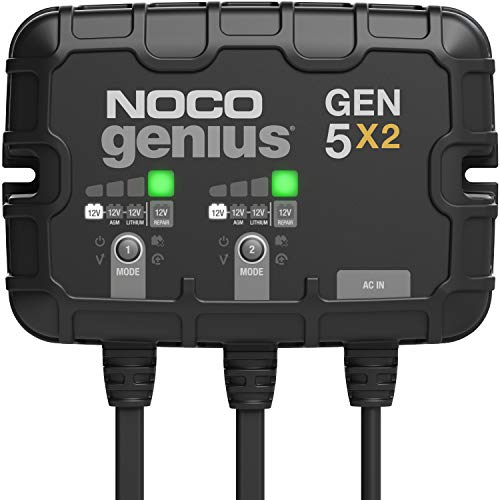
The NOCO Genius GEN5X2 is a two-bank onboard charger delivering a combined 10 amps (5 amps per bank). This device supports multiple battery types including lead-acid and lithium, with selectable modes for 12V, 12V AGM, and 12V Lithium. Temperature compensation enhances charging efficiency in varied marine environments, helping protect batteries and extend their life. It is compact and designed to withstand harsh conditions typical of boat installations.
While not a battery itself, this charger complements a boat’s energy system by enabling precise charging across different battery chemistries. It’s particularly useful for owners who run both starting batteries and high-demand deep-cycle packs or LiFePO4 banks. Ensure your boat electrical setup can accommodate two banks and that the charger’s output is compatible with your batteries’ chemistry and capacity.
Buying Guide: Key Considerations for Boat Battery Selection
- Cranking vs. deep-cycle balance: Determine whether your primary need is engine starts (high CCA) or long-duration power for electronics (deep-cycle). Dual-purpose batteries can cover both, but specific chemistry may excel in one role.
- Chemistry and weight: AGM and LiFePO4 offer maintenance-free operation and lighter weight versus flooded lead-acid. LiFePO4 generally provides longer cycle life but may require compatible charging systems.
- Climate and cold starts: Boats in colder regions benefit from higher CCA ratings and reliable fast-start capacity. Consider batteries with proven cold-crank performance.
- Space and mounting: Measure available space and mounting clearance. Compact designs and dual-terminal posts offer flexible installation options.
- Charging system compatibility: Ensure your boat’s alternator, charger, and BMS (for lithium) support the battery type. Some chargers are multi-chemistry, while others are chemisty-specific.
- Maintenance and safety: AGM and LiFePO4 batteries are typically maintenance-free and spill-resistant. Ensure proper ventilation and secure mounting to avoid movement and leaks.
- Service life and warranty: Look for batteries with thicker plates, robust cycle life, and reliable support from the manufacturer or distributor.
- Cost of ownership: While lithium options may have a higher upfront price, their longer life and weight savings can translate to reduced total cost of ownership over time.
When selecting a battery lineup, consider how each component fits your boat’s size, typical voyage duration, and the assortment of electronics you rely on. A high-CCA starting option paired with a strong deep-cycle companion ensures reliable starts and steady performance across devices like radios, fish finders, and trolling motors. For lithium builds, pairing a capable charger and BMS-aware system can maximize longevity and safety on the water.