Best Fish Finders for Bass Boats: Top Portable and in-Dash Options
The right fish finder can transform bass boating by revealing underwater structure, depths, and fish activity. The following picks cover portable handheld units, castable options, and in-dash depth finders to suit different boat setups and fishing styles. Each product is evaluated for depth range, display clarity, battery life, and ease of use on a bass boat.
| Product | Brand | Depth Range / Key Feature | Type |
|---|---|---|---|
| LUCKY Kayak Portable Fish Depth Finder | LUCKY | 3 ft to 328 ft; handheld with backlight | Portable |
| DANOPLUS Portable Fish Finder Large HD Display | DANOPLUS | 147 ft depth; 2.4″ color LCD | Wireless/Castable |
| LUCKY Portable Fish Finder Handheld | LUCKY | up to 328 ft; 26 ft wired, 45° beam | Portable |
| Yoocylii XF-08 Depth Finder | Yoocylii | 164 ft depth; wireless 328-656 ft range | Wireless |
| DepthTrax 2B Boat Mount In Dash | HawkEye | 2.5 to 600 ft; in-dash mounting | In-Dash |
Below are five product sections highlighting each option with a quick image, a direct link to Amazon, core features, and practical notes for bass boat use. The focus is on depth accuracy, display readability, and ease of use on a moving boat.
LUCKY Kayak Portable Fish Depth Finder
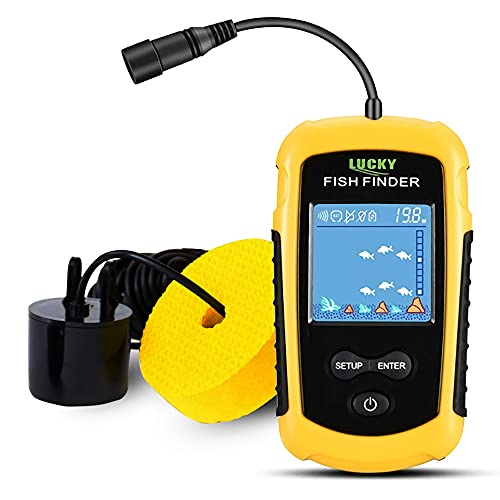
This handheld unit provides a straightforward view of approximate fish locations and water depth. The sonar transducer can be temporarily mounted on a kayak or small boat hull to monitor depth as you move, with a depth range from 3 feet to 328 feet when fully immersed. It’s designed for single-handed use and includes a neck strap, making it practical for bass boats where quick checks are common. The backlit display ensures readability in bright sun or low light, aiding reliable bite decisions during long days on the water.
DANOPLUS Portable Fish Finder With Large Display

The DANOPLUS model features a 2.4-inch color LCD screen and a depth detection capability up to 147 feet. It is designed as a versatile castable or handheld unit with multiple display modes and 21 language options. In bass boat scenarios, the unit’s compact size, quick responsiveness, and lightweight transducer reduce drag and simplify mounting on smaller craft or secondary rods. An attractive lamp sensor helps attract fish by illuminating the vicinity when the transducer contacts water, potentially helping locate active zones faster.
LUCKY Portable Fish Finder Handheld Kayak Model
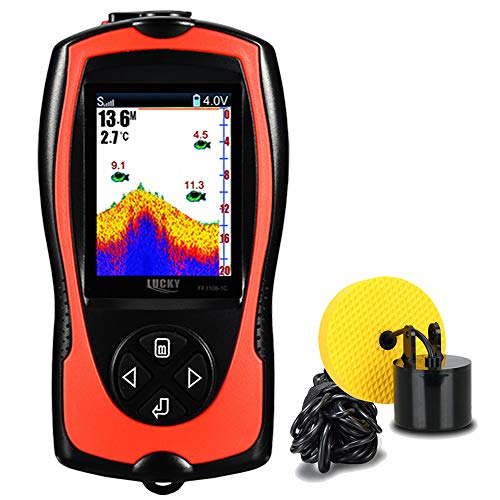
This handheld fish finder emphasizes clear underwater contour and fish size indication (small, middle, big) along with water depth and temperature. It offers two modes: transducer and simulation, helpful for practice before a real bass boat session. With a 26-foot wired operating distance and a 328-foot depth range, this device supports versatile use on kayaks and small boats. The rechargeable design provides several hours of continuous use, and the brightness can be adjusted for sunlight readability on bright lake days.
Yoocylii XF-08 Depth Finder With Color LCD

The Yoocylii XF-08 pairs a 3.5-inch color LCD with a wireless sonar that detects up to 164 feet and offers a 100-200 meter wireless range for multi-surface use. The unit displays real-time sonar data, bottom contour, water surface, and temperature. Its IP67 waterproof probe and portable design make it suitable for bass boats that occasionally mount devices on kayaks or larger craft. The larger display improves readability in quick-scan bass fishing, aiding rapid interpretation of structure and fish density.
DepthTrax 2B Boat Mount In Dash Depth Finder

The DepthTrax 2B is an in-dash depth finder designed for continuous readings up to 600 feet, making it well-suited for deeper bass fishing spots. It features a 200 kHz transducer, with a transom or through-hull mounting option and the ability to install through solid hulls. The unit includes a three-stage Advanced Warning System with audible alerts and a bright LED indicator, which is valuable during high-velocity boat handling or when scanning complex underwater terrain. This in-dash option prioritizes visibility and reliability on larger bass boats.
Buying Guide: Key Purchase Considerations And Comparisons
When choosing a fish finder for a bass boat, consider these dimensions to align with your boating style and fishing locations:
- Depth Range And Target Clarity: Deeper lakes or offshore structure call for units with greater depth capability and precise bottom contour display. Wireless and castable models are ideal for smaller boats or temporary setups, while in-dash units excel on spacious bass boats.
- Display Readability: A bright, high-contrast display improves visibility in sunlit conditions common on lakes. Larger screens reduce eye strain when scanning depth lines and fish arcs during active fishing.
- Transducer Type and Mounting: Transom-mounted, through-hull, or castable transducers affect installation complexity and boat performance. Consider your hull material and mounting space.
- Power And Battery Life: Battery longevity matters for all-day sessions. Handheld and castable devices benefit from rechargeable power, while in-dash models rely on your boat’s power system.
- Ease Of Use: Quick-access controls, intuitive menus, and one-handed operation are beneficial for bass anglers who need fast data while maneuvering the boat.
- Water Conditions And Coverage: For murky water or weed edges, units that show bottom structure and weed mapping help identify productive areas. Some models offer temperature data which can correlate with fish activity.
- Durability And Waterproofing: IP67 or higher ratings protect devices from splashes and immersion during boat operation and rough water.
Bottom line: portable handheld units are great for versatile setups, while in-dash depth finders deliver uninterrupted data for ongoing navigation on larger bass boats. Castable options offer flexibility when mounting constraints exist. For the best all-around bass fishing experience, balance depth capability, display clarity, ease of use, and mounting practicality to your typical lakes and water conditions.