Best Battery for Boat Electronics: Top Marine Power Solutions
Choosing the right battery setup for boat electronics is essential for reliable starting, persistent accessory power, and safe operation on the water. This article highlights five top picks that balance compatibility, durability, and performance for American boaters. Each option covers different needs—from onboard multi-bank chargers to portable lithium packs and marine-grade switches—so you can compare ways to power radios, fish finders, GPS, trolling motors, and essential safety devices.
Summary of chosen products
| Product | Type | Key Benefit | Brand |
|---|---|---|---|
| NOCO Genius GEN5X2 | Onboard Charger | Two independent banks, 10A total with 5A per bank | NOCO |
| NOCO Genius GEN5X3 | Onboard Charger | Three independent banks, 15A total with 5A per bank | NOCO |
| 2 Bank Marine Battery Charger 5X2 10A | Onboard Charger | Two banks, 5A per bank, IP68 sealed | FirstPower Pro |
| ECO-WORTHY Portable 12V 20Ah Battery | Portable Battery | Built-in BMS, 4000+ cycles, compact lithium pack | ECO-WORTHY |
| Nilight 90015A Battery Switch | Battery Switch | Heavy-duty disconnect to eliminate parasitic drain | Nilight |
NOCO Genius GEN5X2: 2-Bank, 10A Onboard Battery Charger
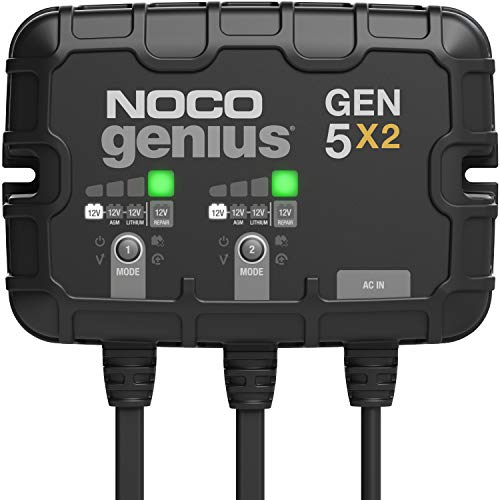
The GEN5X2 provides a compact, high-performance onboard charging solution suitable for marine applications that demand reliable maintenance of multiple battery banks. It is designed to withstand harsh marine environments while offering independent charging for two 12V batteries. Each bank can be configured for 12V lead-acid, AGM, or lithium chemistries, making it versatile for a mixed battery setup on boats with trolling motors, radios, and navigation gear. The unit includes temperature compensation to optimize charging rates in varying climates, helping extend overall battery life.
- Two banks, 10A total (5A per bank) for simultaneous charging
- Modes: 12V, 12V AGM, 12V Lithium, and 12V Repair Mode
- Compact and rugged—engineered for marine environments
NOCO Genius GEN5X3: 3-Bank, 15A Onboard Battery Charger
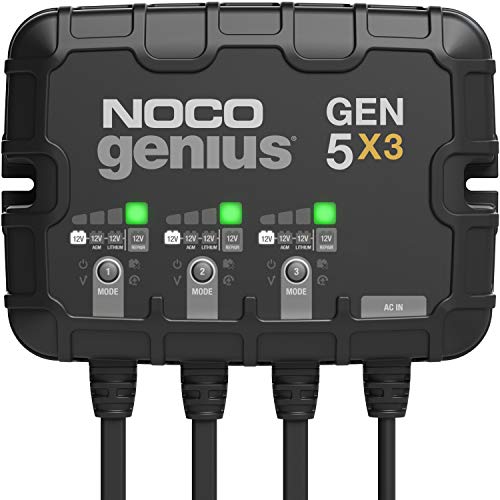
The GEN5X3 expands on the GEN5X2 with an additional bank, delivering 15 amps across three independently programmable banks. This configuration is ideal for boats with multiple critical power draws—navigation electronics, fish finders, and a separate crank battery. Like its two-bank sibling, it supports multiple charging chemistries and includes repair mode to assist desulfation and recovery of tired cells. Its compact design and temperature compensation ensure performance stability in varied marine conditions.
- Three banks, 15A total (5A per bank)
- Independent modes per bank for 12V lead-acid, AGM, and lithium
- Advanced temperature compensation and protection features
2 Bank Marine Battery Charger 5X2 10A

This FirstPower Pro charger targets dual-battery boats that require dependable 12V charging and maintenance with a marine-grade seal. Each bank can be independently set to the appropriate mode, allowing SLA/AGM, lithium, and calcium chemistries to be charged without compromising the other bank. The unit supports 24/7 onboard charging and features IP68 protection for wet environments. A “Force Mode” feature can wake sleeping or deeply discharged batteries, making it a strong option for boats with intermittent usage patterns.
- 2 banks, 5A per bank; IP68 waterproof
- Mode selection per bank for SLA/AGM, lithium, and calcium
- Force Mode to start charging at very low battery voltages
ECO-WORTHY Portable 12V 20Ah Lithium Battery

This portable lithium pack provides a compact, high-density power option for boats, campers, or emergency kits. With a built-in BMS and a 20Ah rating, it suits lightweight electronics, trolling motor accessories, or compact sonar devices on smaller craft. The battery supports a DC output interface and USB power, enabling flexible recharging and powering of USB-enabled devices. It also serves as a handy backup power source for cabin lights or small radios when shore power is unavailable.
- 20Ah lithium with built-in BMS for safety and longevity
- Compact dimensions suitable for kayaks and small boats
- DC port and USB output for versatile use
Nilight 90015A Battery Switch

This heavy-duty battery switch provides a safe, mechanical means to disconnect or isolate the boat’s electrical system, reducing parasitic drain when the vessel is not in use. Rated for DC 12V to 48V systems and capable of handling substantial current surges, it is suitable for boats with multiple circuits that require a reliable on/off control. Using a robust switch can protect both the battery and onboard electronics from accidental drain or short circuits.
- On/Off switch for 12–48V DC systems
- High current capability with secure mounting
- Helps prevent battery drain when parked or stored
Attwood 9091-5 Battery Tray

This adjustable battery tray fits common 27-series marine batteries and provides a secure mounting solution that meets ABYC and USCG standards. Durable construction and corrosion-resistant materials help ensure battery stability in rough conditions and reduce maintenance needs. Pairing a sturdy tray with proper strap or clamp hardware can prevent battery movement during waves and maneuvers, contributing to overall electrical reliability.
- Fits 27/27M batteries; adjustable hold-down
- Heavy-duty, non-corrosive plastic
- Meets ABYC E-10 and USCG requirements
Buying Guide: Key Considerations For Boat Battery Systems
Choosing the right battery setup depends on vessel size, installed electronics, and typical usage patterns. Consider the following factors when building or upgrading a marine power system.
- Battery chemistry: Lead-acid, AGM, and lithium options each offer trade-offs in weight, cost, lifecycle, and maintenance. Lithium batteries generally provide higher energy density and lighter weight but may require compatible BMS and charger support.
- Charger compatibility: Onboard chargers should support the same chemistries as your batteries and include temperature compensation for marine environments. Independent banks allow parallel servicing of different battery groups (starter, trolling, house).
- Bank configuration: Determine how many banks you need based on the number of circuits and critical systems. More banks offer better flexibility but add complexity and cost.
- Protection and safety: Waterproof enclosures, dust and corrosion resistance, and proper fusing protect electrical systems from moisture and salt exposure. A robust battery switch helps minimize parasitic drain when idle.
- Portability vs. permanence: Portable lithium packs are convenient for smaller boats or temporary power needs, while fixed onboard chargers and trays suit larger craft with heavy electronics.
- Mounting and space: Ensure enough space for batteries, trays, and chargers, with proper ventilation and weight distribution to maintain vessel stability.
- Maintenance: Look for features like low-voltage cutoffs, battery monitoring, and easy access for inspection or replacement.
In sum, the best battery solution for boat electronics should align with the boat’s size, equipment, and typical running conditions. A combination of a reliable onboard charger (with multi-bank support), a suitable battery chemistry, and a robust safety strategy will help ensure consistent performance, longer battery life, and safer boating.