Best Lead Acid Batteries for Solar: Top 5 Options for Off-Grid Power
The right lead acid or lead-acid-based battery can dramatically improve solar storage, reliability, and system longevity. This guide highlights five top options that suit RVs, cabins, small homes, and off-grid setups. Each choice covers common solar needs, including deep cycle capability, durable construction, and suitability for varying climates. Read on to compare formats, maintenance, and compatibility to help you pick a dependable energy storage solution.
Summary of Selected Products
| Product | Type & Capacity | Key Benefit | Brand |
|---|---|---|---|
| GRNOE 12V 100Ah LiFePO4 | LiFePO4, 100Ah | Lightweight, high energy density, long cycle life | GRNOE |
| ExpertPower 12V 100Ah AGM | AGM, 100Ah | Rugged, maintenance-free, solid temperature performance | ExpertPower |
| Mighty Max 12V 100Ah SLA | SLA/VRLA, 100Ah | Deep cycle capability, durable for off-grid use | Mighty Max Battery |
| UPG UB121100 12V 110Ah | AGM, 110Ah | Spill-proof, low maintenance for solar PV setups | UPG |
| WindyNation 100Ah AGM | AGM, 100Ah | Long float life, reliable for RVs and off-grid | WindyNation |
GRNOE 12V 100Ah LiFePO4 Battery

GRNOE offers a compact 12V 100Ah lithium iron phosphate (LiFePO4) option with built-in BMS and low-temperature protection. Weighing approximately 22.5 pounds, it delivers higher energy density than traditional SLA options and a longer potential life, often exceeding ten years with proper care. The battery supports cold-weather operation thanks to a smart low-temperature cut-off, which protects the unit when temperatures drop. Note that charging requirements differ from standard 12V lead acid batteries, so use an appropriate charger and voltage target (around 14.6V ±0.2V).
ExpertPower 12V 100Ah AGM Deep Cycle Battery

The ExpertPower AGM battery is a robust 12-volt, 100Ah deep cycle option designed for solar and other off-grid applications. It features an Absorbed Glass Mat (AGM) design for maintenance-free operation and broad temperature range tolerance. The sturdy construction supports reliable cycling in RVs, cabins, and solar arrays, making it a practical choice for steady energy storage with minimal upkeep.
Mighty Max Battery 12V 100Ah SLA
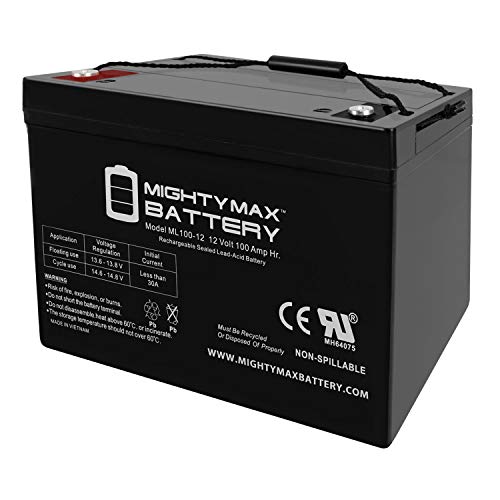
The Mighty Max SLA battery provides a 12V, 100Ah deep-cycle option in a sealed lead-acid (SLA) format. It emphasizes rugged durability and deep discharge capability, suitable for off-grid solar, remote cabins, or backup systems. This unit is maintenance-free and designed for long service life, though it may be heavier than comparable LiFePO4 options.
UPG UB121100 12V 110Ah AGM

UPG UB121100 is a 12V 110Ah AGM deep cycle battery designed for solar PV homes and off-grid systems. The larger capacity provides extended runtime between charges, and the AGM design supports maintenance-free operation with a spill-proof, vibration-resistant build. It is well-suited for cabins, workshops, and backup power setups where reliability matters.
WindyNation 100Ah AGM Deep Cycle Battery
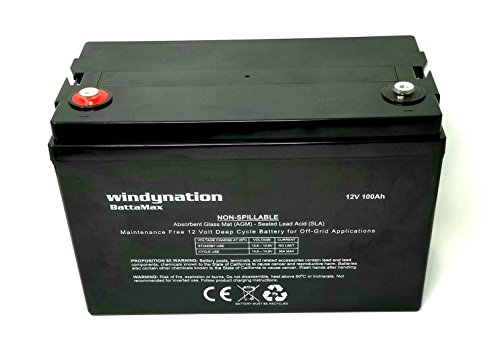
WindyNation’s 100Ah AGM battery is designed for off-grid solar, RVs, and backup power. Its deep-cycle capability supports sustained discharges, while the AGM format provides maintenance-free operation with good resistance to vibration and temperature variation. This model aims to balance cost with dependable energy storage for practical solar systems.
Buying Guide: Key Considerations For Solar Storage
- Battery chemistry: LiFePO4 delivers higher energy density, longer cycle life, and lighter weight than traditional lead-acid but comes at a higher upfront cost. AGM/GEL lead-acid options are typically lower in initial cost and compatible with many existing solar setups.
- Capacity and voltage: For many small to mid-size solar systems, 12V configurations in the 100Ah range provide a practical balance of runtime and weight. Larger capacities extend runtime but require bigger space and higher inverter/charging requirements.
- Charge/discharge cycles: Deep cycle designs support repeated charging and discharging, which is essential for solar storage. Consider cycle life expectations (often 1000+ cycles for AGM, 2000+ for LiFePO4) when evaluating long-term cost.
- Charger compatibility: LiFePO4 batteries require specific charging voltages and profiles unlike some SLA batteries. Ensure your charger or solar charge controller matches the battery’s specifications to optimize performance and longevity.
- Temperature management: Cold weather can affect performance. Some models include low-temperature cut-off or temperature compensation features. For cold climates, a battery with robust temperature handling is beneficial.
- Maintenance and safety: AGM and SLA batteries are typically maintenance-free, while LiFePO4 requires less maintenance but may need careful handling and proper disposal at end of life. Always follow safety guidelines for venting, charging, and storage.
- Physical characteristics: Weight and size influence installation locations and structural support. LiFePO4 options tend to be lighter per amp-hour, easing mounting and transport.
- System compatibility: Match battery type to your existing inverter, charge controller, and wiring. Ensure connectors, terminals, and mounting hardware satisfy system requirements.
When selecting a solar storage battery, weigh initial cost against long-term performance, cycle life, and maintenance needs. LiFePO4 can offer long life and lighter weight for mobile or space-constrained setups, while AGM and SLA batteries remain economical and widely supported in traditional solar configurations. For off-grid cabins or RVs, pairing a battery with an appropriate, compatible charger and a robust protection strategy will maximize reliability and safety.