Best Code Reader for Cars and Trucks: Comprehensive Guide to Top OBD2 Scanners
The right code reader can quickly reveal why a check engine light is on, monitor vehicle health in real time, and help you decide whether a trip to the mechanic is necessary. This article highlights five highly capable OBD2 scanners that work with most cars and light trucks built since 1996, focusing on accuracy, ease of use, and depth of diagnostic data. Each option is evaluated for accessibility, data access, and value for everyday drivers and DIY enthusiasts in America.
| Product | Brand | Key Strength |
|---|---|---|
| ANCEL AD310 | ANCEL | Fast diagnostics and compact design |
| BlueDriver | BlueDriver | Professional-grade diagnostics with unlimited repair reports |
| ANCEL AD410 | ANCEL | Wide compatibility and advanced OBDII diagnostics |
| FOXWELL NT604 Elite | FOXWELL | 5-in-1 scanning including ABS/SRS and live data |
| FOXWELL NT301 | FOXWELL | Solid basic code reader with live data and VIN retrieval |
Whether you’re a weekend wrench or a busy car owner, selecting a code reader that fits your needs can save time and money. The following profiles summarize five top options, followed by a buying guide to help you compare features like live data, DTC libraries, and system coverage.
ANCEL AD310 Classic Enhanced OBD II Scanner
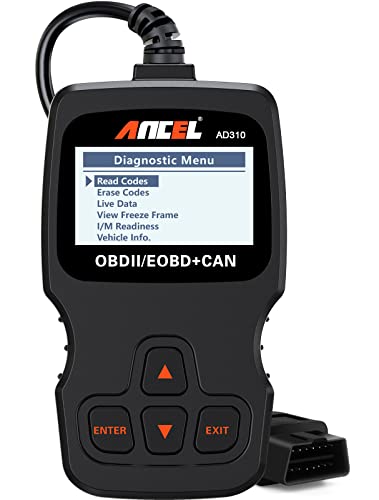
The ANCEL AD310 is a popular choice for quick, reliable fault-code reading and clearing. It supports 1996 and newer OBD2 protocols and provides rapid results when diagnosing the Check Engine Light. Notable features include the ability to read live data, view freeze frames, monitor I/M readiness, and access diagnostic trouble code definitions. Its build is sturdy and compact, with a 2.5-foot cable and a protective profile that accommodates tight engine bays. Users report fast performance and clear, easy-to-read results on a bright display. The device draws power directly from the vehicle’s OBDII port, removing the need for separate batteries or chargers. This makes it ideal for quick DIY checks or as a compact trailer-travel companion for maintenance checkups.
Key attributes: compact design, direct power from the vehicle, wide compatibility with modern OBD2 vehicles, fast code reading and clearing, live data and freeze-frame views. This scanner shines in scenarios where a user wants a simple, dependable tool without extra frills. It’s particularly well-suited for beginner to intermediate users who value speed and straightforward reporting.
BlueDriver Bluetooth Pro OBDII Scan Tool
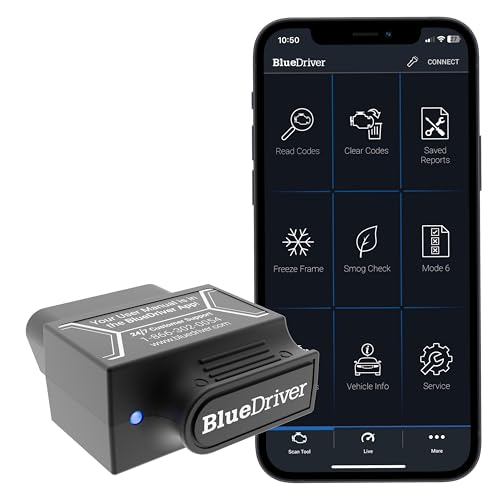
BlueDriver stands out as a premium, app-based diagnostic tool designed for iPhone and Android use. It provides a robust, professional-grade diagnostic experience with the advantage of no subscription fees and comprehensive coverage. In addition to reading and clearing codes, BlueDriver offers expansive repair reports that suggest potential causes and fixes, supported by real-time health monitoring while you drive. The tool accesses ABS, Airbag (SRS), TPMS, and many other systems beyond just the engine, making it one of the most capable consumer-grade options for ongoing maintenance awareness. Its cloud-backed data ensures you can save and share results with a mechanic or vehicle technician.
Strengths include a broad system reach, detailed repair insights, and the convenience of wireless operation via a smartphone. It’s particularly valuable for owners who want ongoing monitoring, proactive maintenance, and guidance on repairs. While the price is higher than basic readers, the depth of data and ease of use through the app can justify the investment for those who frequently diagnose issues.
ANCEL AD410 Enhanced OBD2 Scanner

The AD410 from ANCEL emphasizes wide compatibility and advanced diagnostic functions suitable for a broad range of OBDII vehicles, including those with KWP2000, ISO9141, J1850, CAN, and more. It supports 1996+ US, EU, and Asian models, and it can read and clear fault codes while providing extensive DTC lookups (over 42,000). The AD410 is designed to work directly off the vehicle’s power, eliminating battery concerns, and it’s multilingual to support international users. The tool enables quick fault-code clearing, monitors readiness for emissions tests, and offers comprehensive diagnostics to help pinpoint the root cause of a fault before deciding on repairs. It is best suited for users who want broader compatibility and deeper code databases in a straightforward device.
Important considerations include the note that this device focuses on engine-related diagnostics and does not provide full ABS or SRS clearance capabilities. It’s a strong option for users prioritizing engine diagnostics and emissions-related data and who prefer a plug-and-play approach with robust code libraries.
FOXWELL NT604 Elite OBD2 Scanner

The FOXWELL NT604 Elite is positioned as a versatile 5-in-1 diagnostic tool that covers engine (OBD2), ABS, SRS (airbag), transmission, and readiness checks. The 2025 version emphasizes out-of-the-box usability with minimal setup, making it a practical choice for car owners who want a comprehensive diagnostic tool without frequent software updates. The NT604 Elite supports live data streaming, data playback, built-in DTC libraries, and the ability to print or save results, which is valuable for record-keeping or sharing with a technician. It also highlights I/M readiness status for inspections, a feature that many owners find essential for state-management checks.
Pros include robust system coverage, ease of use, and a broad feature set at a reasonable price point for the level of diagnostics offered. A potential caveat is that it does not replace professional-grade tools for more complex repairs, but it provides a strong, all-in-one solution for routine maintenance and troubleshooting across multiple vehicle systems.
FOXWELL NT301 OBD2 Scanner

The FOXWELL NT301 is a dependable option for enthusiasts who want a straightforward code reader with live data and the ability to view emissions readiness information. It provides a CEL (check engine light) read/clear capability, access to live data streams, and the VIN retrieval feature for quick vehicle identification. While it does not offer full coverage of ABS or SRS, it excels as a reliable, portable tool for diagnosing engine-related issues and monitoring vehicle health. The device is well-regarded by mechanics and DIYers for its accuracy, reliable performance, and compact design. It’s an excellent value for users who primarily need engine-focused diagnostics with essential live data features.
Notes include that NT301 is a strong choice for basic to mid-level diagnostics, particularly for those who appreciate a dedicated tool with an easy-to-interpret interface and consistent performance across a variety of standard vehicles.
Buying Guide: Key Purchase Considerations And Comparisons
When choosing a code reader for cars and trucks, consider the following dimensions to align with your needs and vehicle type.
- Vehicle compatibility and coverage: Confirm 1996+ vehicles and the OBDII protocol support (CAN, ISO, KWP2000, etc.). If you own newer or European/Asian models, verify that the device lists compatible makes and models or has broad OBDII support.
- Scope of diagnostics: Decide whether you need engine-only diagnostics or broader access to ABS, SRS, transmission, and EVAP systems. Some models offer 5-in-1 coverage, while others focus on engine codes and I/M readiness.
- DTC library size and quality: A larger library (tens of thousands of DTC definitions) reduces the need to Google codes and helps you quickly interpret issues. A robust library often pairs with clear definitions and suggested remedies.
- Live data, graphs, and printouts: Real-time sensor data can help diagnose problems more precisely. Look for data logging, graphing capabilities, and the option to save or print results for records or to share with a mechanic.
- Power and power source: Some scanners draw power directly from the vehicle, others require batteries. In most cases, direct vehicle power is convenient and reliable, but note any limitations during battery-powered use or on certain vehicles.
- Ease of use and display: A clear screen, intuitive menus, and straightforward code definitions help regardless of tech experience. Consider screen size, readability, and whether the device is ready to use out of the box with minimal software setup.
- Updates and support: Some scanners offer free lifetime updates or periodic software refreshes. This is especially valuable as car diagnostics evolve and new models require updated data definitions.
- Subscription models: Some tools rely on optional subscriptions for advanced features, repair reports, or cloud access. If you prefer a one-time purchase, look for models with no ongoing fees.
- Language and regional support: For non-English users or those who need multilingual support, verify language options to ensure smooth operation in daily use and in professional contexts.
- Portability and build quality: A compact, durable tool is beneficial for on-the-go diagnostics, especially in cramped engine bays or working in the field.
In summary, the best code reader for you balances breadth of diagnostic coverage, data depth, and practical usability. For hobbyists focused on engine diagnostics, a device like the ANCEL AD310 or FOXWELL NT301 offers solid performance and simplicity. If you need professional-grade capabilities with extensive repair guidance, the BlueDriver provides comprehensive reports and cloud-backed support. For a versatile, all-in-one option that covers multiple systems and supports print-friendly output, the FOXWELL NT604 Elite stands out. Lastly, if you want robust engine diagnostics with a large DTC library at a reasonable price, consider the ANCEL AD410 or similar high-coverage readers that emphasize engine data and ease of use.