Best 12 Volt to 110 Converter Solutions for Vehicles and Off‑Grid Use
Powering laptops, cameras, tablets, and small appliances from a 12V vehicle battery or a portable power setup is easier with the right 12V to 110V inverter. The following selections highlight popular options that balance wattage, safety features, and portability. Each product supports common on‑the‑go electronics while protecting your devices from power surges and fluctuations. Below, you’ll find five well‑rounded choices, a quick buyer’s guide, and a summary table to compare core specs at a glance.
| Product | Max Output | Key Perk |
|---|---|---|
| TWING 1000W Inverter | 1000W continuous | Dual 110V outlets and USB‑C PD |
| Pro Chaser 400W Inverter | 400W continuous | Compact travel companion with 4.8A USB fast charging |
| Yaheeda 600W Inverter | 600W continuous | Adjustable input and robust shell |
| IMAYCC 600W Inverter | 600W continuous | Two clamps and versatile input specs |
| ALITOVE 120W Inverter | 120W continuous | Wide compatibility with 12V car devices |
TWING Car 1000W Inverter — 12V DC to 110V AC

The TWING 1000W inverter converts 12V DC from a vehicle battery into 110V AC power for laptops, cameras, and other electronics. It features dual 110V outlets and two USB ports—one QC 3.0 and one PD3.0—supporting fast charging for USB‑C devices and tablets. A 150W surge on the cigarette lighter outlet helps power higher‑demand devices briefly. The unit includes a digital display, cooling fan, and a protective fuse, guarding against over voltage, short circuits, and overheating. Its ABS shell emphasizes durability for road trips and camping.
Pro Chaser 400W Inverter — Compact Vehicle Power
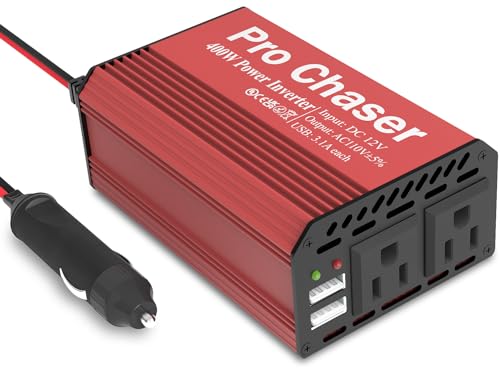
The Pro Chaser inverter provides a steady 400W with an 800W peak, supporting everyday on‑the‑go charging. It includes two 110V AC outlets and high‑speed dual USB ports (3.1A) for phones, tablets, cameras, and more. A 30‑inch cord adds flexibility for seating arrangements in cars, RVs, or pickups. This model is ideal for laptops, small appliances, and travel gear during road trips, camping, or emergency backup where space is at a premium. Its lightweight form makes it easy to stash in a glove compartment or cargo area.
Yaheeda 600W Inverter — Adjustable 12V/DC Output

Yaheeda’s 600W inverter offers adjustable input handling and a robust aluminum alloy shell. It supports AC 110V input variants, delivering DC 12V outputs with safe current limits. The one‑button on/off switch ensures straightforward power control, while built‑in protection minimizes risk from overload, overvoltage, and overheating. Built for RVs, boats, or utility vehicles, it suits users who need reliable 12V to 110V conversion with a durable enclosure and solid thermal performance.
IMAYCC 600W Inverter — Adjustable Power Supply

IMAYCC’s model emphasizes adjustable power with a 600W continuous rating and a 50A peak. It comes with two clamps for easy battery connection and a solid aluminum shell for protection and heat dissipation. The product description notes a focus on safe startup and operation, ensuring reliable DC to AC conversion for devices such as medical pumps, fans, and small appliances. The compact footprint makes it suitable for limited vehicle space or stationary use in off‑grid setups.
ALITOVE 120W Inverter — Car To Wall Power
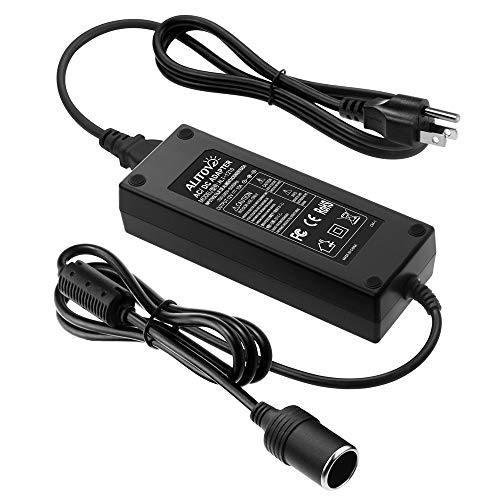
The ALITOVE 120W inverter is a practical option for lighter loads like car vacuums, small fans, or a compact cooler. It runs on 12V DC input and provides a max of 10A at 12V, equating to roughly 120W of continuous output. Built‑in protections cover overvoltage, overtemperature, and short circuits, while the 8‑foot cord improves reach within a vehicle. This model is best for everyday low‑power devices where compact size and quick setup matter more than high wattage.
Buying Guide
When choosing a 12V to 110V converter, consider how you will use it, your devices’ wattage, and reliability expectations. Here are key purchase considerations and common tradeoffs:
- Power rating and surge capacity: Match continuous wattage to your devices, and verify peak or surge ratings if you plan to power motors or laptops. Higher wattage units handle more devices simultaneously but may be bulkier.
- Portability vs. durability: Lightweight inverters are easier to carry, while models with metal shells or reinforced housings suit outdoor use or frequent transport.
- Outlets and charging options: Dual AC outlets help run multiple devices; USB ports (including QC and PD) power phones and tablets quickly. Ensure USB output aligns with your charging needs.
- Safety features: Look for overvoltage, overload, short‑circuit, and thermal protections. A built‑in cooling fan can extend the inverter’s life in hot environments.
- Cable length and installation: Longer cords improve placement flexibility but may introduce small voltage drop for high‑demand devices. Clamp connections vs. cigarette lighter plugs affect installation ease and battery load.
- Device compatibility: Not all inverters tolerate smaller or high‑inrush devices equally. Check the manufacturer’s guidance on resistive vs. motor loads and peak power needs.
- Remote usage scenario: For RVs, boats, or off‑grid cabins, consider models with low idle current and stable performance under varying voltage conditions.
In practice, higher wattage models like the TWING 1000W offer robust performance for laptops and larger electronics, including cameras and household devices, but they require more space and heavier cabling. Mid‑range options such as the Pro Chaser 400W provide solid flexibility for travel and road trips, while compact units like the ALITOVE 120W excel for light loads and quick top‑ups. Adjustable or versatile models, such as Yaheeda or IMAYCC variants, emphasize safety protections and installation ease for RVs and off‑grid setups. Consider your device mix, space, and safety preferences to select the best fit.