Best Bluetooth Car Radio Touchscreen Options for Modern Cars
Choosing the right Bluetooth car radio with a touchscreen can elevate driving safety, convenience, and entertainment. This guide highlights five top Android Auto and Apple CarPlay compatible models, focusing on ease of use, audio quality, and feature sets like backup cameras, GPS navigation, and Mirror Link. Each option is designed to fit a wide range of vehicles, from compact sedans to SUVs, ensuring a seamless upgrade to a smarter cockpit.
The table below summarizes five highly relevant products, their brands, and core features to help you compare at a glance.
| Product | Brand | Key Features | Connectivity |
|---|---|---|---|
| Portable Wireless Carplay Car Stereo — 7″ HD Touchscreen | Yongeid | Wireless CarPlay/Android Auto, GPS, Backup Camera | Wireless/Wired |
| PLZ 7″ Wireless Double Din Car Stereo | PLZ | Wireless CarPlay/Android Auto, 240W, 2 Subwoofers | Wireless/Wired |
| Portable Newest Wireless CarPlay & Android Auto Screen | PASLDA | Wireless CarPlay/Android Auto, Mirror Link, Backup Camera | Wireless/Wired |
| Single Din Car Stereo with Apple CarPlay | GHIOPMZ | Apple CarPlay/Android Auto, Backup Camera | USB |
| PLZ 10.1″ Wireless Single Din Car Radio | PLZ | 10.1″ IPS display, CarPlay/Android Auto, DSP | Wireless/Wired |
Yongeid Portable Wireless Carplay 7″ Car Stereo

The Yongeid 7-inch HD touchscreen stereo supports wireless CarPlay and Android Auto, allowing safe hands-free access to maps, messages, and music. It integrates with Siri or Google Assistant via voice commands and connects via Bluetooth, WiFi, or USB. Its universal 12V–24V compatibility makes it suitable for a wide range of vehicles, including campers, trucks, and SUVs. The dashboard-mount is adjustable, and a real-time GPS navigation feature helps with route planning and traffic updates. A backup camera with an 18-foot cable enhances reverse safety.
PLZ 7″ Wireless Double Din Car Stereo

The PLZ double din system delivers wireless CarPlay and Android Auto with a robust 240W peak output and dual subwoofers for richer bass. It includes a 10-band EQ, a built-in DSP, and an independent Bluetooth 5.3 module with a dedicated antenna to minimize static and improve call clarity. Voice control is supported via Siri or Google Assistant, and a backup camera can be connected for safer parking. This model emphasizes high-fidelity sound and responsive wireless performance, ideal for audiophiles who want seamless smartphone integration.
PASLDA 7″ Wireless CarPlay Android Auto Screen

The PASLDA model offers wireless CarPlay and Android Auto with mirror-link capabilities for both iOS and Android devices. It supports Bluetooth 5.2, AUX, FM transmitter, and a built-in speaker for flexible audio output. A notable feature is the ability to customize boot logos, and its wireless mirror link enables streaming apps like YouTube or TikTok on the screen. This option prioritizes modern connectivity with flexible media playback and vehicle compatibility.
GHIOPMZ Single Din Car Stereo with CarPlay
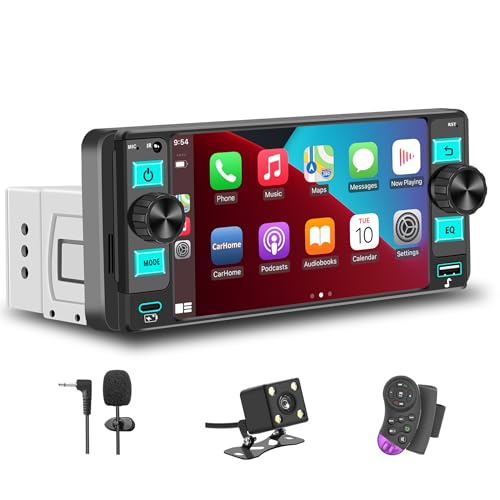
This single-din option brings Apple CarPlay and Android Auto through USB, with a 5.7-inch display designed for easy navigation and hands-free control via voice commands. Bluetooth 5.2 supports stable wireless streaming and clear hands-free calls, while a rear-view camera connection enhances parking safety. The unit integrates with existing vehicle audio systems through RCA outputs, offering a practical upgrade path for those preferring a compact, budget-friendly touchscreen solution.
Sobalai 6.9″ Wireless Single Din Car Stereo
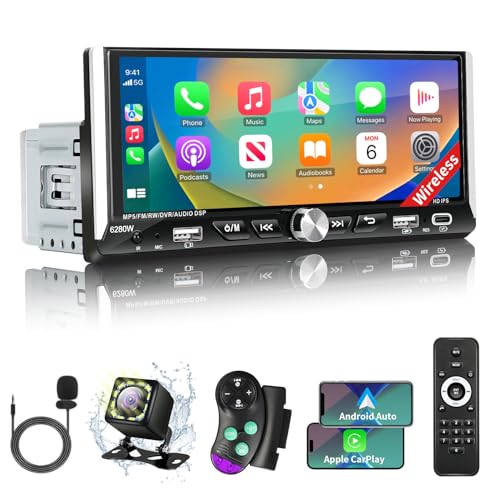
The Sobalai single din radio features wireless CarPlay and Android Auto with voice control, plus a mirror-link function for iPhone and Android devices. It includes a 6.9-inch IPS display with a DSP for enhanced sound shaping, a dual USB port setup, and an extra microphone to improve voice pickup. While compatibility notes warn about fitment in certain vehicles, the unit offers strong multimedia performance with robust safety features and flexible connectivity for modern drivers.
Buying Guide: Key Purchase Considerations
- Compatibility and fit: Confirm your dash opening size (single vs. double din) and vehicle voltage (12V is standard for cars; 24V is common in some commercial vehicles). Consider units that offer flexible mounting, such as adjustable brackets or dash mounts.
- Connectivity: Wireless CarPlay/Android Auto provides the easiest setup, but wired options can be more reliable in areas with weak Wi-Fi signals. Look for Bluetooth version (5.2 or newer) for stable streaming and clear calls.
- Display and usability: An IPS or HD touchscreen with good viewing angles improves visibility in bright daylight. A larger screen (7″–10.1″) can enhance navigation and media control, but ensure it fits your dash space.
- Audio quality: Built-in DSP, 4.2-channel outputs, and subwoofer support can greatly enhance sound. If you value bass and clarity, prioritize models with dedicated subwoofer outputs and EQ controls.
- Camera support: Backup or rear-view cameras improve safety. Ensure the unit provides camera inputs or compatibility with aftermarket cameras, especially if you park in tight spaces.
- Mirror Link and navigation: Match your needs for wireless screen mirroring and GPS navigation. Some models offer real-time traffic updates and route optimization via integrated GPS or connected apps.
- Expansion and inputs: Check for USB-C/USB-A ports, AUX, FM/AM, and RCA outputs to connect external devices or the vehicle’s audio system. Dual USB ports help with charging and data transfer.
- Warranty and support: A long-term support plan or replacement policy (some brands offer up to 10 years) reduces risk if installation or operation issues arise.
Additional Perspectives
When evaluating these head units, consider your primary use: navigation-heavy driving may benefit from seamless wireless CarPlay/Android Auto and real-time traffic features, while audio-centric users might prioritize DSP, EQ customization, and subwoofer outputs. Vehicle compatibility and installation complexity are also critical; some units require professional installation, while others are designed for quick DIY upgrades. Finally, consider future-proofing: look for devices with software updates and ongoing support to maintain compatibility with evolving phone ecosystems.