Best Lithium Banks for Car Audio Power: Top In‑Car Battery Solutions
Choosing the right lithium bank for car audio can dramatically improve bass handling, voltage stability, and overall system reliability. This guide highlights five top options, drawing from high‑drain LFP and Titanate packs, bus bars, and DIY kits designed to withstand vibration and harsh vehicle environments. Compare power output, weight, and installation considerations to pick a solution that best fits your setup and goals.
| Product | Brand | Key Power | Type | Ideal Use |
|---|---|---|---|---|
| XS Power XMAX90-DIY 8300 | XS Power | 20,000W burst | LFP 12V Battery | High-demand car audio, competitions |
| VMAX VCP9K | VMAXTANKS | 9000W | LiTiO2 14.4V | Voltage stabilization for large systems |
| VMAX VCP18K | VMAXTANKS | 18,000W | LiTiO2 14.4V | High-current surge handling |
| Aluminum Bus Bars (Big Jeff Audio) | Big Jeff Audio | Hardware kit | Aluminum bus bars | DIY bank assemblies |
| 40ah 6 Cell Bank DIY Set | Jims Machineworx | Customizable | DIY bus bar kit | Flexible low‑cost builds |
XS Power XMAX90-DIY 8300 Amp High-Performance Battery

The XS Power XMAX90-DIY is a 12V Lithium Iron Phosphate (LFP) battery designed for high-energy car audio applications. It emphasizes lightweight construction, high energy density, and a long lifespan. With a burst capability around 20,000W, it is suited for peak demands during bass drops while maintaining voltage stability for amplifiers and subs. The sealed, maintenance-free design helps protect against leaks and harsh conditions, making it a practical option for show vehicles or competition setups that demand reliable power with minimal maintenance.
VMAX VCP9K Charge Pump 9000W LTO
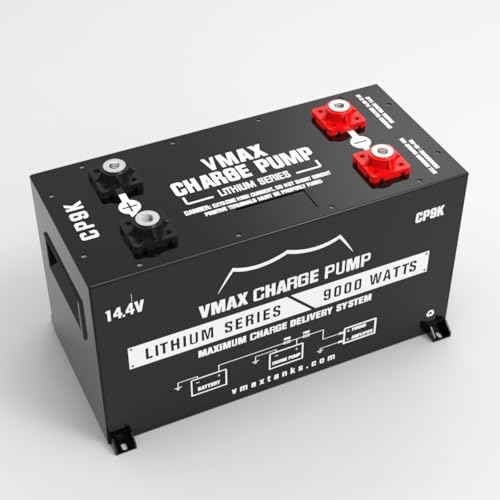
The VCP9K from VMAXTANKS provides a robust 9,000W surge capacity at 14.4V, aimed at stabilizing voltage for decibel‑driven systems. It excels in preventing voltage dips that can degrade amplifier performance and speaker integrity during dynamic passages. Its focus on voltage stabilization helps to minimize flicker in lighting and ensure a consistent, clean audio signal, which is especially important in multi‑amp configurations and large subwoofers.
VMAX VCP18K Charge Pump 18K

The VCP18K doubles the surge level to 18,000W, delivering substantial current for high‑end car audio systems with multiple amplifiers and large subwoofers. It maintains voltage stability under heavy load, helping amplifiers reach potential without clipping or distortion caused by sagging voltage. This model is suited for enthusiasts pursuing maximal SPL while preserving equipment reliability in demanding install scenarios.
Big Jeff Audio Aluminum Bus Bars (Double Bank)

These 6061 aluminum bus bars provide robust conductivity and longevity for Yinlong cells, making them a practical choice for assembling a DIY lithium bank. The kit includes hardware and is tailored for Yinlong 35Ah, 40Ah, and 45Ah cells, enabling builders to create compact, well‑balanced packs with reliable connections and straightforward assembly.
40ah 6 Cell Bank DIY Set

This do‑it‑yourself kit provides Lithium Economy Style Bus Bars, two end bars, and a complete hardware bundle to assemble a 40Ah, 6‑cell bank. It is designed for experienced builders aiming to customize capacity and layout. The kit emphasizes modularity and easier maintenance while enabling precise cell balancing and robust mechanical integrity in vibration‑prone vehicle environments.
Big Jeff Audio Single 6 Yinlong Cell Bank Bus Bars
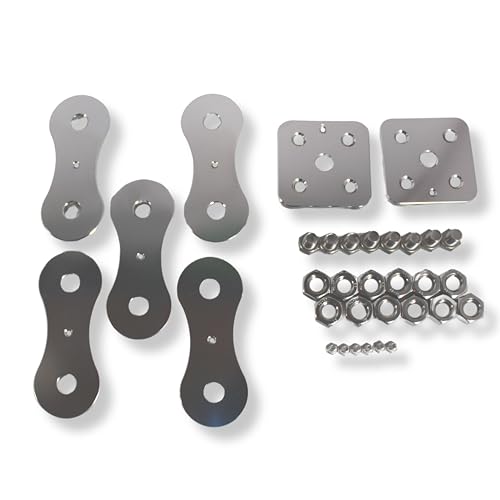
Single 6 Yinlong cell bus bars from Big Jeff Audio focus on optimized connectivity for Yinlong cells, with polished aluminum construction for superior conductivity. The kit includes hardware for straightforward installation and is tailored to Yinlong 35Ah, 40Ah, and 45Ah cells, making it suitable for compact or modular bank builds that prioritize clean, low‑voltage drops across the system.
Buying Guide: Key Purchase Considerations
Power availability and stability are the core requirements for in‑car audio lithium banks. Consider total peak power needs, voltage tolerance, and how much headroom you require for bass transients. Materials matter: lighter LFP packs provide high energy density with long lifespans, but installation weight and mounting availability are critical in cars. Titanate chemistry offers fast surge response, yet it can be more expensive and require specific charging profiles. Always verify compatibility with existing amplifiers, inverters, and vehicle electrical systems.
Battery format and installation flexibility affect long‑term maintenance. DIY kits offer customization and cost savings but demand mechanical skills and precise balancing. Ready‑made packs simplify installation yet may limit expandability. Bus bars and hardware kits enable clean, secure connections and reliable thermal paths, reducing resistance and heat buildup in vibration‑prone environments. Safety features, leakage resistance, and corrosion resistance are essential for automotive use; sealed designs are typically preferred for leak protection and low maintenance.
Charging and balancing options influence performance. Ensure chargers support the battery chemistry and that the system can handle the desired surge profiles without risking voltage sag that could harm amplifiers. For multi‑amp, multi‑sub setups, parallel configurations can maximize capacity but require careful balancing and equalization. Finally, assess weight distribution and mounting space within the vehicle to avoid compromising handling or safety.
In summary, select a lithium bank with a proven high‑drain response, robust voltage stabilization, and a design that fits your vehicle’s mounting constraints. For competition or extreme bass setups, prioritize higher burst wattage and reliable, sealed packs. For daily installations, balance weight, capacity, and ease of maintenance. Consider a combination of a high‑surge unit for peak power with bus bars or a DIY kit for scalable expansion.