Best Windshield Camera for Car: Top Picks for Clear Road Evidence
Finding a reliable windshield camera helps protect you on the road with clear front and rear footage, night vision, and smart parking features. The following selections emphasize 4K or high-quality 1080p recording, wide-angle lenses, robust night vision, and convenient wireless connectivity. Use this guide to compare options and choose a model that fits your vehicle and driving needs.
| Product | Key Benefit | Record Quality | Special Feature |
|---|---|---|---|
| TERUNSOUl 4K+4K Dash Cam | Front+Rear Dual Recording | 4K / 4K | Built-in GPS, 5.8GHz WiFi, 128GB included |
| ROVE R2-4K DUAL Dash Cam | High-Res Front + Rear | 4K / 1080p | Sony STARVIS 2 sensor, 5GHz WiFi |
| OMBAR Dash Cam Front and Rear | 4K Front, 2.5K Rear | 4K / 2.5K | Built-in 5G Wi-Fi & GPS |
| SUVCON 3-Channel Dash Cam | Front, Cabin, Rear | 1080p / 1080p / 1080p | IPS display, G-Sensor, Parking |
| Jansite 10″ Mirror Dash Cam | Mirror-Style Front/Rear View | 1080p / 1080p | 10” IPS touch screen, long cable |
These picks cover a range of installation styles and must-have features for drivers seeking reliable evidence capture, easy sharing, and solid night performance. Read on for detailed specs, visuals, and practical considerations to help you decide.
TERUNSOUl 4K+4K Dash Cam Front and Rear
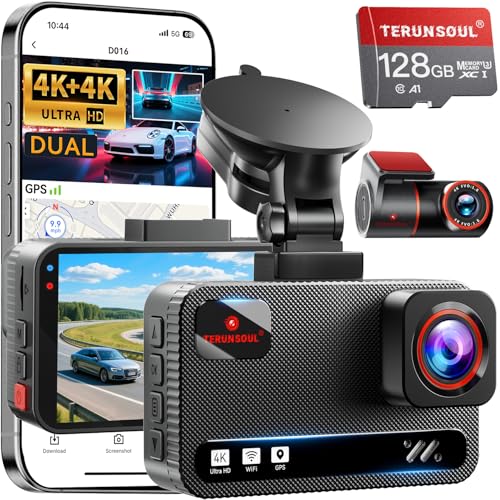
The Terunsoul dual-channel dash cam records in 3840×2160P on both the front and rear cameras for high-detail road footage. A 170° front lens helps cover wide lanes, and a pre-installed 128GB card supports continuous recording with loop features. A built-in G-sensor locks emergency clips, while the device supports microSD cards up to 512GB. Night imagery benefits from an F1.5 front aperture and F1.8 rear aperture for brighter videos in low light. A one-touch lock button enables quick preservation of critical clips.
ROVE R2-4K DUAL Dash Cam Front and Rear

Rove’s dual-channel setup captures front at 4K (3840×2160) and rear at 1080p with a 150° front and 140° rear view. Featuring a Sony STARVIS 2 sensor and fast 5G WiFi, the R2-4K app-enabled experience enables quick video downloads up to 20 MB/s and easy firmware updates via the app. The wide apertures of F1.5 (front) and F1.8 (rear) improve night performance, while dual-band WiFi supports seamless connection across devices.
OMBAR Dash Cam Front and Rear

OMBAR combines 4K front recording with 2.5K rear capture, using 170° front and 150° rear lenses. The F2.0 front aperture and WDR enable clearer daytime and night footage, including license plates and road signs. A drip-glue suction mount and resilient build aim to maintain stability across temperature changes and bumpy roads. Wireless control via a 5G Wi-Fi connection supports the RoadRec app for live view and easy transfers.
SUVCON Dash Cam Front, Rear and Cabin

This 3-channel setup covers the front, cabin, and rear with a 170° front and 150° cabin/rear angles. It uses an IPS display for clear playback from any angle and includes a G-Sensor with parking monitor to lock emergency footage when movement is detected. A 32GB card is included to ensure immediate usability, with loop recording that continuously overwrites older footage when storage runs out.
Jansite 10″ Mirror Dash Cam
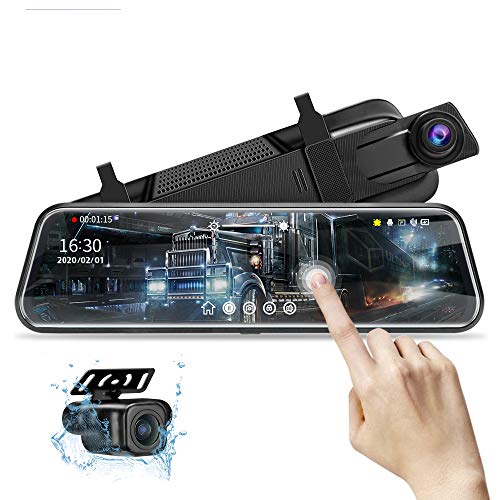
The Jansite mirror dash cam blends a 10-inch IPS touch display with dual 1080p front and rear recording. The system ships with a long 33-foot cable to facilitate flexible mounting and wiring. Its 170° wide front view helps minimize blind spots, while the mirror form factor minimizes dashboard clutter. Night vision and parking features support safer driving in low-light conditions and during stops.
Buying Guide
Key purchase considerations:
- Video quality and sensor: Higher resolutions like 4K front cameras provide clearer evidence, but consider the rear camera resolution and low-light performance for overall coverage.
- Field of view: Wide-angle lenses (generally 150°–170°) reduce blind spots but may cause distortion at edges; balance with mounting location in your vehicle.
- Storage and loop recording: A pre-included memory card simplifies setup, but confirm max supported capacity and how the loop recording handles overwriting old files.
- G-Sensor and parking mode: Emergency locking of footage when a collision occurs is essential; ensure reliable parking monitoring if you park on the street or in lots.
- Night vision and exposure: Look for F-number values (lower = more light) and features like WDR to improve nighttime clarity for plates and signs.
- Connectivity: WiFi (2.4/5 GHz) or app control enables quick transfers and settings adjustments; check compatibility with iOS/Android.
- Ease of installation: Consider suction-match mounts, adhesive options, and whether a multi-camera system fits your vehicle’s interior layout.
- Brand support and firmware updates: Manufacturers offering OTA updates and responsive customer support improve long-term reliability.
Multiple perspectives:
- All-in-one vs modular: All-in-one dual-camera solutions save wiring time, whereas modular kits allow flexible rear-camera placement or cabin cameras for interior monitoring.
- Impact on boot time and startup: Some dash cams boot quickly and begin recording immediately, while others require a short initialization sequence.
- Privacy and legal considerations: Ensure alignment with local regulations on camera placement and data usage in your area.
When selecting a windshield camera, prioritize reliability, user-friendly interfaces, and robust night performance. If you frequently park in busy areas or have concerns about rear-end incidents, a 4K front camera with a high-quality rear sensor and a strong parking mode offers the strongest evidence capture.