Best Weight Scales for Semi Trucks: Accurate Load Monitoring on the Road
Finding the right weight scale for a semi truck involves dependable accuracy, easy installation, and dependable weight readings on the go. This guide reviews top options designed for air suspension systems, trailers, and tractor-trailer sets, helping fleet operators and owner-operators pick a reliable onboard or interior scale. Below, you’ll find a concise overview of five solid choices, followed by a buying guide that weighs key considerations.
Summary of chosen products
| Product | Brand | Type | Key Advantage |
|---|---|---|---|
| Right Weigh 202-DDG-02 | Right Weigh | Interior Digital Load Scale | Two air sensors with dual height control valves |
| MEASUREMAN Air Pressure Gauge Kit | MEASUREMAN | Air pressure gauge kit with onboard scales | Comprehensive monitoring for suspension loads |
| PartLogix Air Pressure Gauge Kit | PartLogix | Onboard load gauge kit | No drilling mounting, converts pressure to weight |
| Right Weigh 202-DDG-01 | Right Weigh | Interior Digital Load Scale | Color touchscreen with smartphone visibility |
| Teltek USA Load Weight Gauge (Bezel Blue) | Teltek USA | Bezel gauge for semi, pickup, car | High capacity with dash-mount fit |
The following sections explore each option in detail, focusing on installation, readout method, and how the device handles load measurements on heavy vehicles. Each product is evaluated on how well it meets common semi-truck weight monitoring needs, from steer and drive axle readings to overall trailer weight distribution.
Right Weigh 202-DDG-02 Interior Digital Load Scale
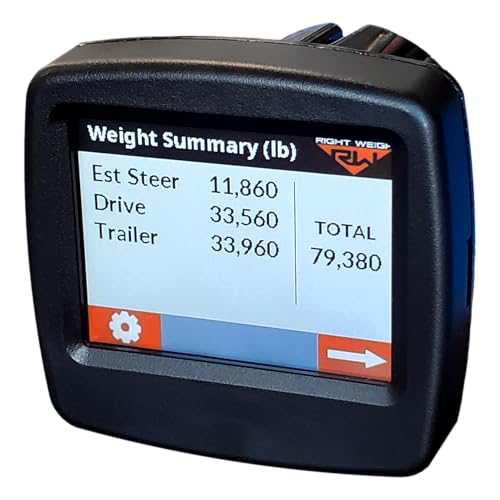
The Right Weigh 202-DDG-02 provides an interior, touchscreen-enabled load scale tailored for air suspension tractors, straight trucks, and tractor-trailer sets. It uses two air pressure sensors to monitor either a single dual height control valve axle group or a dedicated set with two valves. The onboard display shows estimated steer weight when installed on a drive axle group, and the unit supports a programmable PIN code for security. This configuration enables real-time weight readings in pounds or kilograms, accessible directly from the cab for quick decisions on load balance and safety.
Key features include dual-sensor monitoring, secure PIN protection, and a clear touchscreen interface. While the system excels at drive-axle weight estimation, operators should verify compatibility with their specific air suspension setup and confirm that the display is accessible from the cab for their workflow. The absence of broad Bluetooth or mobile app integration in this model keeps the reading method straightforward and robust in challenging trucking environments.
MEASUREMAN Air Pressure Gauge Kit for Semi Truck Trailer Suspension
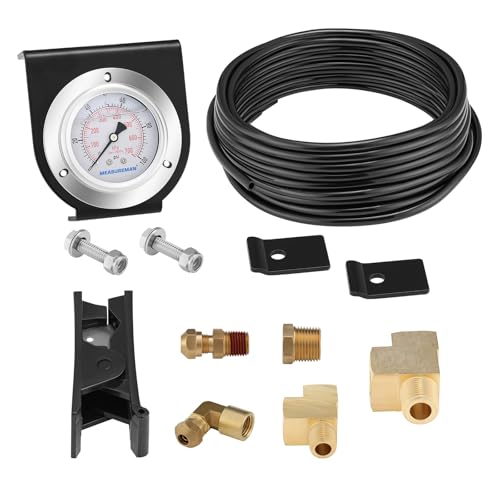
The MEASUREMAN kit provides a comprehensive onboard solution for monitoring suspension loads on semi trucks and trailers. It focuses on precise air pressure readings in each air bag to optimize load distribution and stability. Installation is designed to be straightforward across a range of suspension systems, making it suitable for fleets seeking a full monitoring setup rather than a single-point scale. The kit emphasizes accuracy and reliability, with a goal of helping operators maintain balanced loads, reduce stress on axles, and improve braking and handling performance.
Considerations for this option include potential cabling and sensor placement, ensuring that all sensors stay protected in the vehicle environment. The kit’s strength lies in its holistic approach to load management via air pressure data, which can complement other scales or serve as a primary monitoring system for drivers and maintenance crews alike.
PartLogix Air Pressure Gauge Kit for Semi Truck Trailer Suspension

The PartLogix kit offers a pressure-to-weight solution for air bag suspensions without the need for drilling into cross-members. This feature simplifies installation on many trailers and trucks, enabling quick setup in fleets with multiple vehicles. The primary benefit is converting suspension pressure readings into weight information, thereby providing a practical dashboard metric for load distribution and axle loading. This kit is well-suited for operators who want a lightweight, install-friendly gauge that integrates with existing air systems.
When evaluating this option, consider the accuracy of the pressure-to-weight conversion and whether the sensor hardware suits your trailer type. It’s particularly appealing for those who value a straightforward install with clear weight indications, supporting better loading decisions during maintenance checks or scheduling.
Right Weigh 202-DDG-01 Interior Digital Load Scale

The Right Weigh 202-DDG-01 provides a color touchscreen display and Bluetooth connectivity, enabling weights to be viewed from a smartphone or tablet. It’s designed to estimate steer weight from drive-axle suspension, a feature specifically highlighted for tractor-trailer configurations. This model prioritizes modern readouts and wireless accessibility, enabling operators to monitor load data remotely, which can improve pre-trip planning and on-the-fly adjustments before heading out on the road.
Among considerations for this unit are compatibility with your truck’s cab mounting and the reliability of the Bluetooth link in various environments. Operators should confirm that their application (tractor-trailer versus straight truck) aligns with the weight estimation method. The wireless capability is its strongest selling point for fleets seeking flexible, in-cab decision support without frequent physical inspections of the display.
Fastway Simple WEIGH Tongue Weight Scale

The Simple WEIGH Tongue Weight Scale by Fastway focuses on measuring tongue weight, a crucial parameter for safe hitching of trailers and ensuring proper tongue load distribution. It offers quick and straightforward tongue weight measurements with a mechanical spring scale known for durability, capable of supporting up to 2100 lbs. This option is ideal for operators who prioritize rugged reliability and need a dedicated tool for tongue load assessments, particularly when hitching or recalibrating trailers after heavy loads.
Usage considerations include the scale’s mounting compatibility with different hitch setups and the mechanical nature of the scale, which may be favored in rough work environments. While it does not provide full vehicle weight data, it complements other onboard scales by offering a focused metric essential to hitch safety and trailer handling.
Buying Guide: Key Considerations For Semi Truck Weight Scales
- Measurement Type: Decide between interior digital scales, onboard air-suspension gauges, or tongue weight tools. Each provides different data points—truck weight, axle distribution, or hitch load.
- Installation Ease: Some kits require drilling or cross-member access, while others emphasize plug-and-play or non-invasive mounting. Consider fleet maintenance capabilities and vehicle variety.
- Display And Access: Determine whether you prefer a cab-mounted display, a touchscreen interface, or mobile-device connectivity. Wireless options can improve quick decision-making in the field.
- Readout Units: Ensure units (pounds vs. kilograms) match your operations and that the scale supports the level of precision you require for safe loading.
- Axis Coverage: Evaluate whether the system covers drive axle, steer axle, and trailer weight comprehensively or focuses on single-axis readings for quicker checks.
- Durability And Environment: Trucks encounter vibrations, dirt, and weather. Look for rugged housings, IP ratings, and sensor protection appropriate for semi-truck use.
- Security: If Bluetooth or Wi-Fi connectivity is included, consider PIN codes or other security features to protect data access in fleet environments.
- Integration: Check compatibility with existing fleet telematics or maintenance software. Some systems provide remote data access or easier reporting.
- Cost Of Ownership: Compare initial costs, sensor lifespan, calibration needs, and maintenance requirements across options to estimate total cost of ownership.
Across these options, buyers weigh accuracy, ease of use, installation constraints, and how readings translate into actionable loading decisions. For fleets with air suspension systems, dual-sensor interior scales may deliver robust, cab-accessible data, while for quick checks or tongue-load concerns, dedicated tongue weight scales offer a practical, durable solution. The best choice depends on the vehicle configuration, preferred data points, and how weight information is used in daily operations.