Best Car Audio Processor: Top DSPs for Better Road Sound
Choosing the right car audio DSP (digital signal processor) can dramatically improve sound by offering precise equalization, crossovers, time alignment, and bass restoration. Below is a selection of top-performing DSPs designed for both aftermarket and factory radio upgrades. The table at a glance highlights key strengths to help readers compare options quickly.
| Product | Brand | Notable Feature | Connectivity |
|---|---|---|---|
| PRV AUDIO Car DSP 2.4X | PRV AUDIO | 2 inputs, 4 outputs with 15-band EQ | Analog |
| AudioControl EPICENTER | AudioControl | Bass restoration and remote control | Analog |
| Timpano TPT-SP4BT | Timpano | Bluetooth control with sequencer | Bluetooth |
| Taramp’s DSP Pro 2.4S | Taramp’s | 15-band EQ and multiple presets | Analog |
| Dayton Audio DSP-408 | Dayton Audio | 4x/8x channels with GUI | Analog |
Note: The table reflects features as described by product listings. Availability and specifications may vary by region.
PRV AUDIO Car DSP 2.4X Review

The PRV AUDIO Car DSP 2.4X is a compact 4-channel digital signal processor with two inputs and four independent outputs. It uses a 16×2 LCD interface for real-time adjustments and offers an integrated 15-band graphic equalizer with multiple presets. Users can select input sources (A, B, or A+B) for each output, enabling flexible routing for complex multispeaker systems. The device targets installers seeking a straightforward interface while delivering professional-grade tone shaping and crossovers for a customized in-car listening experience.
AudioControl EPICENTER Digital Bass Restoration
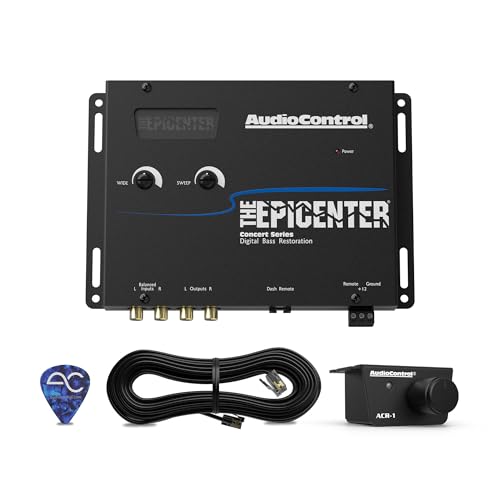
The AudioControl EPICENTER focuses on bass restoration and enhanced low-end impact. It includes an ACR-1 remote level control with a 20-foot RJ-14 cable for convenient bass tuning from the dash or seating area. Its built-in bass maximization circuit adjusts the frequency response to provide fuller, more dynamic bass performance. This processor is well-suited for systems that require a noticeable bass uplift without sacrificing midrange clarity or high-end detail.
Timpano TPT-SP4BT Bluetooth DSP 4 Output

The Timpano TPT-SP4BT is a Bluetooth-controlled DSP with four output channels and a built-in voltmeter. Its app-enabled configuration supports Android and iOS, allowing remote tuning from a smartphone. A unique sequencer feature enables startup and shutdown sequencing for up to three connected devices, making it convenient for multi-component installs. Ideal for enthusiasts who want wireless access to DSP settings and flexible startup control for a refined audio system.
Taramp’s DSP Pro 2.4S Review

The Taramp’s DSP Pro 2.4S offers a 15-band graphic equalizer, parametric EQ, and versatile crossover controls with ISO-standard center frequencies. It supports simultaneous processing of multiple inputs and outputs, providing precise tone shaping and crossovers for complex speaker configurations. The device is designed for users seeking detailed, tunable DSP performance with clear presets and robust signal processing capabilities for both aftermarket and factory-integrated systems.
Dayton Audio DSP-408 Overview

The Dayton Audio DSP-408 provides four input channels, eight output channels, built-in EQ crossovers, time alignment, and input/output mixing. It emphasizes an intuitive GUI for real-time adjustments and comprehensive customization, making it suitable for both home and car audio applications. This DSP is geared toward users who prioritize a user-friendly software experience alongside robust DSP features for precise tuning and soundstage control.
Buying Guide: Key Considerations for Choosing a Car DSP
- Channel count and routing: Determine how many inputs and outputs you need based on your speaker layout (2-4 channels, 4-8 outputs, etc.).
- Equalization and crossovers: Look for 12- to 15-band graphic EQs or parametric EQ, and adjustable crossovers with multiple slopes (6–48 dB/Octave) and filter types.
- Time alignment: Essential for aligning drivers to create a coherent soundstage; consider DSPs with robust time-alignment features and intuitive measurement tools.
- Remote control options: Some models include dash remotes, Bluetooth apps, or sequencers for startup/shutdown automation—useful for complex systems.
- Bass restoration and processing: If bass is a priority, evaluate devices with dedicated bass restoration or maximization circuitry for tighter low end.
- Connectivity and compatibility: Check compatibility with factory radios, aftermarket head units, and the presence of remote turn-on, RCA, high-level inputs, or digital interfaces.
- Software usability: A clear GUI and real-time processing can significantly reduce installation time and tuning accuracy.
- Build quality and stability: Durable housings and reliable power handling help ensure consistent performance in the vehicle environment.
- Future-proofing: Some DSPs offer firmware updates or app-based enhancements, extending usable life as audio formats evolve.
- Budget and installation complexity: Higher-end DSPs offer deeper tuning but may require professional installation; weigh cost against expected sonic gains.