Best GPS for Semi Truck: Top in-Cab Navigation Systems for 18-Wheelers
The right truck GPS can save time, fuel, and headaches on long hauls. This guide covers five leading semi-truck navigators, focusing on custom routing, loading-dock guidance, and Birdseye imagery that helps drivers plan safer, more efficient routes. Each product below is evaluated for screen clarity, truck-specific routing, and real-world usability in commercial fleets.
| Product | Brand | Key Benefit |
|---|---|---|
| Garmin dezl OTR720 | Garmin | Large 7″ screen with custom truck routing and high-res imagery |
| Garmin dezl OTR1010 | Garmin | 10″ display with Birdseye satellite view and advanced routing |
| Garmin dezl OTR1000 | Garmin | 10″ touchscreen with load-to-dock guidance and updated maps |
| Rand McNally RANDTAB7 | Rand McNally | Industry-leading custom trucking routes and 2025 maps |
| Garmin dezl OTR620 | Garmin | Compact 6″ model with reliable truck routing and imagery |
In this roundup, each item is assessed on screen size, ease of use, and truck-specific features like height alerts, weight limits, and dock access. The selection aims to balance larger, easier-to-read displays with practical routing tools that align with typical semi-truck operations.
Garmin dezl OTR720: Large 7-Inch Truck Navigator
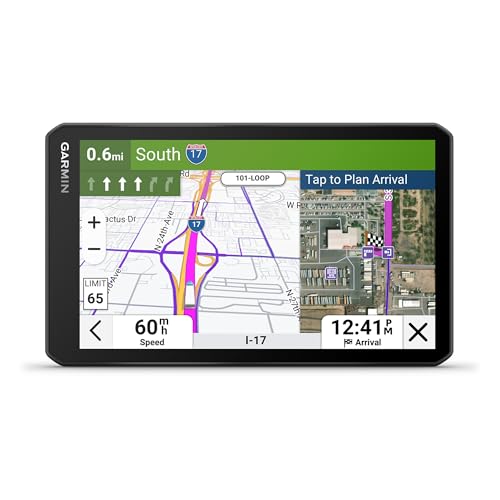
The dezl OTR720 provides a bright 7-inch touchscreen designed for in-cab viewing. It offers custom truck routing based on your rig’s size and weight (availability varies by area; always follow posted road signs). Alerts for bridge heights and sharp curves help drivers anticipate obstacles. The device also features approach guidance to loading docks, entrances, and security gates, plus BirdsEye Direct Satellite Imagery for high-resolution destination views, aiding expert arrival planning.
Garmin dezl OTR620: Compact 6-Inch Truck Navigator

The OTR620 brings a smaller, more maneuverable option with a 6-inch display while delivering the same core truck-routing capabilities. It includes route suggestions tailored to the truck’s size and weight, plus alerts for upcoming bridge heights and weight limits. Loading dock approaches and security gate access are simplified by clear, in-cab guidance, complemented by BirdsEye Direct Satellite Imagery to visualize destination layouts before arrival.
Garmin dezl OTR610: 6-Inch Truck Navigator

The dezl OTR610 focuses on essential truck-navigation features in a compact 6-inch frame. It delivers custom routing based on vehicle size and weight, with alerts for bridge heights, weight limits, and sharp curves. Birdseye Satellite Imagery provides high-resolution aerial views of loading docks and truck entrances, aiding precise scheduling and docking at destinations encountered in daily freight routes.
Garmin dezl OTR1010: 10-Inch Luxury Truck Navigator
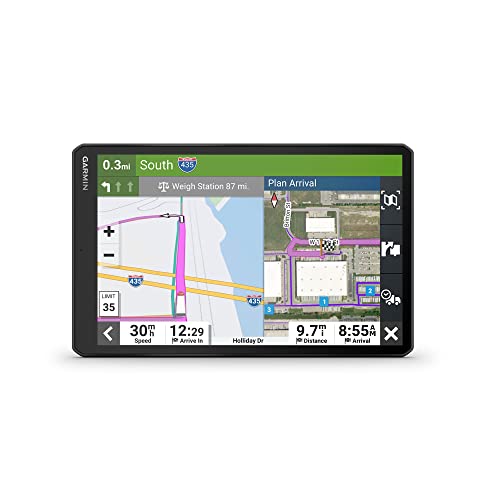
The dezl OTR1010 features a large 10-inch touchscreen for easy readability on the road. It offers customizable routing based on truck dimensions, height and weight constraints, plus alerts for sharp curves and grade changes. BirdsEye Satellite Imagery provides overhead views of loading docks and gate access, supporting strategic arrival timing and route planning across long hauls with complex destinations.
Garmin dezl OTR1000: 10-Inch Load-To-Dock Navigator
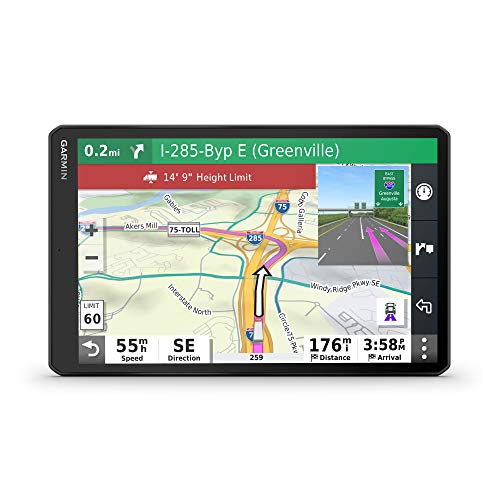
The OTR1000 pairs a large 10-inch display with comprehensive truck routing and load-to-dock guidance. It emphasizes route suggestions based on vehicle size and weight, with alerts for bridge heights and weight limits. It also highlights parking information along routes, helping plan rest stops and truck-friendly locations for overnight or layovers in compliance with regulations.
Buying Guide: Key Purchase Considerations
- Screen size and readability: Bigger displays (7–10 inches) reduce eye strain and improve in-cab visibility, especially under bright daytime conditions or in a moving vehicle.
- Truck-specific routing: Look for routing that accounts for height, width, length, and weight. Verify that the device supports the routes and vehicle types you operate, and be aware of areas where routing is not available.
- Bridge and weight alerts: Real-time alerts for bridge heights, weight limits, and restricted roads help avoid costly delays and unsafe maneuvers.
- Loading-dock and access guidance: Features like dock entrances and security gate cues simplify destination arrivals, particularly at warehouses with tight access points.
- BirdsEye Satellite Imagery: High-resolution aerial views of destinations aid arrival timing and dock alignment, reducing blind parking and repeated driving around facilities.
- Map updates and coverage: Check the update frequency and geographic coverage, especially for cross-country fleets that demand current maps and traffic data.
- Ease of use and hardware durability: A sturdy mount, clear menus, and reliable touchscreen performance improve long-term usability in truck cabs.
- Cost of ownership: Consider upfront device cost, subscription requirements, and potential add-ons like reinstallable maps or premium imagery.
- Support and ecosystem: A robust support network and compatibility with other fleet tools (truck stops, weigh stations, parking databases) can add overall value.
When choosing among these models, fleets should balance display size with mounting space, assess the importance of high-resolution imagery, and consider whether heavier-duty routing features are required for oversized loads or specialized routes. It’s also prudent to verify local road conditions and posted signs, as onboard routing may not capture every temporary restriction.