Best Heaters for a 2 Car Garage and Workshop
Choosing the right heater for a two-car garage or workshop involves balancing space, safety, energy use, and installation needs. The following reviews highlight five reliable options designed to heat large spaces quickly, maintain stable temperatures, and fit different mounting and control preferences. Each product is evaluated on heating capacity, safety features, installation style, and smart options where available. Use this guide to compare performance and decide which unit best fits your garage workflow and climate.
| Product | Brand | Type | Heating Capacity |
|---|---|---|---|
| AOBMAXET Electric Greenhouse Heater | AOBMAXET | Portable 1500W with Thermostat | Up to 300 sq ft |
| Shinic 2 Packs Electric Garage Heaters | shinic | Ceiling-Mounted 1500W/750W with Halogen Light | Varies by setting |
| Heat Storm HS-1500-PHX-WIFI | Heat Storm | Wall-Mounted Infrared | Standard room coverage |
| Comfort Zone 7500W Hard-Wired Garage Heater | Comfort Zone | Ceiling Mounted, 240V | Industrial & Commercial spaces |
| InoKraft 7,500W Garage Heater | InoKraft | Ceiling-Mounted, 240V with Digital Thermostat | Large garages/workshops |
Note: The table highlights representative capacity and mounting styles to help identify suitable options for a 2-car garage and workshop environments. Always verify electrical compatibility and local safety codes before installation.
AOBMAXET Electric Greenhouse Heater With Thermostat

The AOBMAXET 1500W heater is designed to rapidly warm spaces up to about 300 square feet, making it suitable for smaller garages or grow spaces adjacent to a workshop. It features a digital thermostat for precise temperature control and offers Fahrenheit/Celsius switching to accommodate user preference. The unit is described as energy-efficient, with a compact form factor that supports placement on a shelf or portable use in a garage setting. Overheat protection helps guard against unsafe operation when left unattended.
Shinic 2 Packs Ceiling Mounted Garage Heaters

Shinic offers two ceiling-mounted units with 1500W/750W options and a built-in halogen work light. The radiant quartz heaters quickly warm the area in front of them, making them ideal for garages, shops, and larger rooms. The included remote or wall controls provide convenient operation, and the 90-degree rotation feature helps direct heat where it’s needed. The package typically includes installation brackets and necessary accessories for ceiling mounting.
Heat Storm HS-1500-PHX-WIFI Infrared Heater

The Heat Storm unit is a wall-mounted infrared heater with Wi-Fi control. It supports remote operation via a smartphone, plus a touch screen thermostat and included remote for easy temperature adjustments. A compact design helps save floor space in a garage while delivering steady warmth across a room. Features like tip-over safety and a sleek wall-mount profile suit garages seeking modern, controlled heating without bulky floor units.
Comfort Zone 7500W Hard-Wired Garage Heater
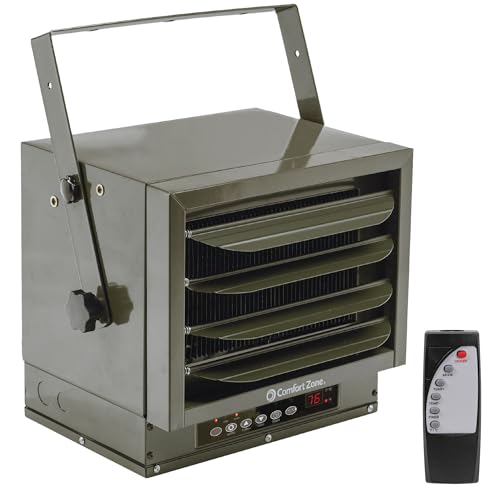
Designed for industrial and commercial spaces, this 7500W hard-wired unit uses a durable steel body with louvers and a flexible mounting angle to direct airflow. A fully enclosed motor helps protect internal components in dusty workshop environments. Digital thermostat functionality and remote operation options add convenient control, though installation requires appropriate electrical wiring and ventilation considerations for a garage setting.
InoKraft 7,500W Garage Heater

The InoKraft 7,500W unit delivers high-output heat suitable for large garages and workshops. It includes a digital thermostat with temperature ranges from 40°F to 99°F and an optional ECO mode to optimize energy use. A 1-24 hour timer provides scheduling flexibility, while overheat protection and a NEMA 14-50P plug configuration support safer, practical installation for dedicated workshop spaces with available ceiling mounting.
Buying Guide: Key Purchase Considerations
- Space and heating capacity: For a two-car garage, target units rated for larger spaces or with adjustable wattage to match the area, ceiling height, and insulation level. Infrared and quartz radiant models heat objects and people quickly, while forced-air units warm air faster on open spaces.
- Mounting style: Ceiling-mounted units save floor space in a crowded garage, while wall-mounted or portable options offer flexible placement. Consider existing wiring and whether professional installation is needed for hard-wired models.
- Thermostat and controls: Digital thermostats enable precise temperature management. Look for 24-hour timers, ECO modes, and remote or app-based controls for convenient operation from other rooms or on the go.
- Energy efficiency: Compare wattage usage and heating efficiency, especially for frequent use. Models with energy-saving features or ECO modes can reduce operating costs over time.
- Safety features: Overheat protection, tip-over shutoffs (for portable units), and flame-retardant housings are essential for garage environments. Ensure proper clearance from flammable materials and adequate ventilation where needed.
- Durability and build quality: Garages can be dusty and humid. Look for metal housings, sealed motors, and components designed for harsher environments. A sturdy mounting system is important for ceiling installations.
- Electrical requirements: Check voltage (120V vs. 240V) and plug types (NEMA configurations) to ensure compatibility with your garage’s electrical panel. Large garage heaters may require professional wiring.
- Noise levels: Some units operate quietly, while radiant or fan-forced heaters may emit noticeable noise. Consider tolerance for workshop activities where extra noise could be disruptive.
- Safety certifications and warranties: Look for units that meet recognized safety standards and offer reasonable warranties to protect your investment over time.
Selecting the right heater for a two-car garage should balance heat output, energy use, and installation practicality. Evaluate the layout, insulation, and typical climate to choose between ceiling-mounted radiants, wall-mounted infrared models, or larger hard-wired units for consistent warmth during cold seasons.