Best Sound Insulation for Car: Top 5 Choices for Quieter Rides
Finding the right car sound insulation can dramatically reduce road, engine, and wind noise. This guide reviews five popular options, focusing on DIY friendliness, thermal performance, and installation simplicity. Each product below includes core features to help you compare quickly and decide which mat best fits your vehicle and comfort goals.
| Product | Brand |
|---|---|
| KILMAT 80 mil 36 sqft Car Sound Deadening Mat | KILMAT |
| Siless Liner 157 (4 mm) 36 sqft | Siless |
| KILMAT 80 mil 10 sqft Car Sound Deadening Mat | KILMAT |
| Siless Liner 157 mil (4 mm) 36 sqft Aluminum Foil Finish | Siless |
| CUKWUYBY 80 mil (2mm) 36 sqft Car Sound Deadening Mat | CUKWUYBY |
KILMAT 80 Mil 36 Sqft Car Sound Deadening Mat

KILMAT 80 mil automotive sound deadening uses a butyl and foil construction designed for DIY installation. The material is notably thick, aiming to deliver enhanced insulation compared with thinner options. It is described as self-adhesive and easy to apply, with a weight of about 0.5 pounds per square foot, which supports robust vibration dampening. The thicker profile suggests increased performance for reducing road and engine noise, particularly in areas with tight panel access or large flat surfaces. Users should prepare surfaces thoroughly for optimal adhesion and consider heat exposure in high-temperature areas of the vehicle.
Siless Liner 157 (4 mm) 36 Sqft Car Sound Deadening
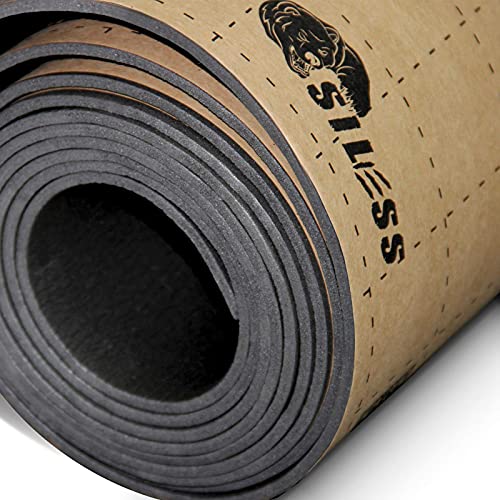
Siless Liner 157 delivers a closed-cell PE foam with an adhesive backing for strong, moisture-resistant performance. The liner aims to block heat and reduce vibration while offering a cost-effective approach per square foot. Its closed-cell composition provides waterproof characteristics and a flexible, easy-to-install profile. The combination seeks to minimize radiant heat transfer and noise for a cooler summer interior and a warmer winter ride, with the added benefit of lightweight handling for DIY enthusiasts.
KILMAT 80 Mil 10 Sqft Car Sound Deadening

This smaller KILMAT 80 mil sheet is built for precise, targeted application in tighter spaces or smaller panels. Like the larger edition, it features a self-adhesive butyl and foil build designed to deliver effective dampening. Weight remains at around 0.5 pounds per square foot, offering a balance between practical weight and performance. The 80 mil thickness is intended to maximize sound attenuation in reduced areas where a full sheet isn’t necessary, making it a suitable add-on for compact vehicles or spot treatments.
Siless Liner 157 mil (4 mm) 36 Sqft Aluminum Foil Finish

Siless Liner with an aluminum foil finish combines a closed-cell foam core with an AluFoil surface, enhancing heat reflection while maintaining sound deadening properties. The adhesive-backed liner aims to optimize thermal barriers and reduce radiant heat transfer from the engine and exhaust. The aluminum finish adds a reflective layer that can help contribute to cooler interior temperatures and less heat-induced expansion, useful for vehicles in hot climates. It shares the same moisture resistance and flexible installation benefits as other Siless liners.
CUKWUYBY 80 Mil 36 Sqft Car Sound Deadening

CUKWUYBY 80 mil 36 sqft offers an 80 mil three-layer design that combines an aluminum foil with a butyl rubber core and a strong adhesive backing. The construction aims to optimize heat reflection, sound isolation, and durability. The 8-wire aluminum foil strengthens heat reflection, while the butyl layer provides robust vibration damping. Coverage of 36 square feet makes this option suitable for larger panels such as doors, trunks, and floors, providing a balanced approach between space and performance. Installation is described as straightforward for DIY projects with basic surface prep.
Buying Guide: Key Purchase Considerations
When choosing car sound insulation, consider how the product’s composition and thickness align with your goals. Thicker materials typically offer stronger dampening, but may require more surface prep and time to install. Here are factors to weigh from multiple perspectives:
- Material composition: Butyl-based mats often provide strong vibration dampening, while closed-cell foams excel at heat and moisture resistance. Aluminum foil finishes add heat reflection, which can help in hot climates.
- Thickness and coverage: Thicker mats (e.g., 80 mil) generally yield better noise reduction, but ensure you have space to apply and seal edges properly. A smaller sheet can be ideal for targeted treatments.
- Adhesive performance: Self-adhesive options require clean, dry surfaces and may demand deep panel access for thorough adhesion. Temperature during install can affect tackiness.
- Moisture and durability: Closed-cell foams minimize moisture absorption, important in areas with humidity or road salt exposure. Aluminum foils can improve heat resistance and reflectivity.
- Ease of installation: DIY-friendly products with clear instructions and minimal surface prep save time. Flexible sheets can conform to curved surfaces more easily.
- Vehicle type and climate: Hot climates benefit from heat-reflective finishes; larger vehicles may justify higher coverage, while compact cars might use more targeted applications.
- Cost per square foot: Compare per-square-foot pricing and long-term durability. Cheaper options may still yield solid results if applied strategically.
For a balanced solution, mix larger-area panels with a few targeted spots to maximize quietness without overdoing installation time. Always follow product-specific installation instructions, and consider testing one panel first to gauge effectiveness before covering larger sections of the vehicle interior.