Best Solar Panels for Truck Adventures: Top Picks for Off-Grid Power
For road trips, camping, and work trips in remote areas, a reliable solar setup can keep batteries charged, devices running, and campers comfortable. This guide highlights five top-performing solar panels optimized for pickup trucks and other mobile habitats. Each option balances lightweight design, high efficiency, and easy installation, helping you choose a solution that fits roof racks, hitches, or cargo areas without adding excessive weight. Read on to compare features, installation ideas, and performance considerations for truck-based solar power.
| Product | Brand | Key Benefit | Approx. Weight |
|---|---|---|---|
| Renogy 200W Portable Solar Panel Blanket | Renogy | High efficiency foldable design for travel and shade | ~8.82 lb |
| ECO-WORTHY 200W Solar Panel Kit | ECO-WORTHY | Solid kit with PWM controller for RV and off-grid use | ~ |
| Callsun N-Type Mini 400W (4-Pack) | Callsun | Compact modular setup with 25% efficiency | ~ |
| Renogy Flexible 100W Panel | Renogy | Ultra-flexible installation on curved surfaces | ~ |
| Renogy 400W Solar Panel Blanket | Renogy | High power in a foldable, portable blanket | ~16.1 lb |
Renogy 200W Portable Solar Panel Blanket
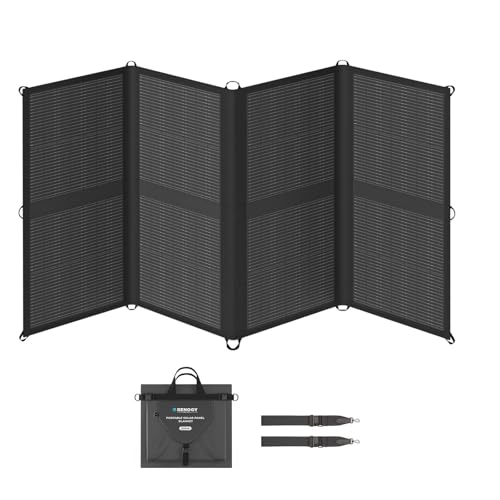
The Renogy 200W Portable Solar Panel Blanket uses lightweight N-Type cells with up to 25% efficiency, delivering solid power while remaining compact for truck use. Its 8-fold design folds down to a backpack-like size, easing storage in tight camper spaces or a truck bed. Installation options include laying the panel across a windshield for shade while charging, deploying on the ground in sun, or hanging between racks to catch optimum light. The design emphasizes quick setup and reliable energy generation for camping or mobile work setups.
ECO-WORTHY 200 Watts Solar Panel Kit

This ECO-WORTHY kit combines a 200W monocrystalline panel with a 30A PWM charge controller, aimed at RVs, campers, and off-grid vehicle setups. It emphasizes broad applicability (RV, caravan, boat, golf carts, and more) and robust performance in varied sunlight. The panel uses durable aluminum framing and is designed to withstand wind and snow loads. Its 4-channel integration supports steady energy delivery for charging house batteries, running appliances, or powering electronics when you’re parked for extended periods.
Callsun N-Type 16BB Mini 400W (4-Pack)

The Callsun 400W option comes as a compact 4-pack, each 100W panel using N-Type cells with 25% efficiency and 16BB busbars for improved light absorption and reduced hot spots. Pre-drilled mounting holes simplify truck or camper installation, enabling a modular approach to roof or cargo-area setups. While actual output depends on sun exposure, modular 100W units offer flexible scaling to meet power needs for charging, lighting, or small appliances on the go.
Renogy Flexible 100W Panel

Renogy’s 100W flexible panel is designed for curved surfaces and uneven mounts on trucks, vans, and RVs. Its ultra-light construction, roughly 70% lighter than rigid panels, makes it easier to transport and install. The panel is extremely thin and can fit on unusual roof profiles without adding significant weight. This flexibility is ideal for stealth mounting or applications where rigid panels aren’t feasible, ensuring a steady power stream for charging and auxiliary loads on the road.
Renogy 400W Solar Panel Blanket
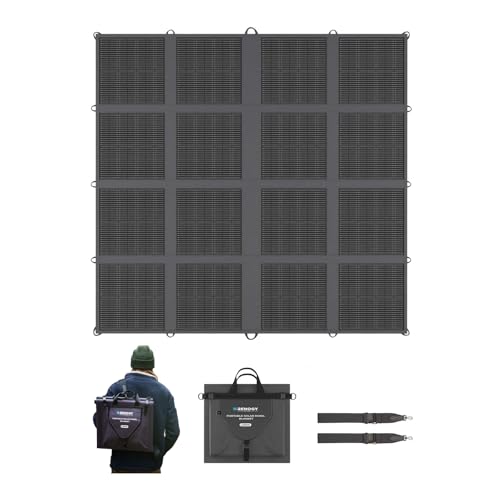
This Renogy 400W solar blanket packs 25% efficiency into a foldable, 16-fold design. With a 16-fold configuration, it stores more compactly and deploys rapidly for camping, RVs, trucks, or off-grid use. The blanket format supports flexible mounting on vehicle surfaces or nearby shade structures, while maintaining a high power output for extended trips, battery charging, or powering essential devices during long drives.
Buying Guide
Key considerations for choosing solar panels for a truck:
- Power needs: Estimate daily energy use (in watt-hours) and match panel wattage to support charging and essential loads without overburdening the system.
- Movement and mounting: Consider foldable blankets for quick setup and compact storage, or flexible panels for curved roof surfaces. Modular kits allow staged expansion as power needs grow.
- Weight and space: Lighter panels reduce load on the vehicle and simplify transport. Foldable designs save cargo space in compact trucks or SUVs.
- Efficiency and technology: N-Type cells and 16BB busbars offer higher efficiency and reliability in partial shade or cooler conditions, which can matter for fast charging in varying climates.
- Durability and weather-resistance: Look for corrosion-resistant frames, IP ratings, and robust mounting options to withstand road dust, wind, and rain.
- System compatibility: If using a battery bank or power station, ensure the controller and wiring are compatible (PWM vs MPPT, cable gauges, and connector types).
- Portability vs continuous use: For long road trips, a balance between high output and easy setup is essential; for short trips, portability may be the priority.
When comparing options, assess how each product’s design aligns with your truck’s payload capacity, available mounting points, and typical driving routes. For high-output needs or longer stays off-grid, a modular approach (using multiple 100–200W units) can scale power without overloading any single component. Always follow manufacturer installation guidelines to maximize efficiency, safety, and longevity of the solar setup.