Best Wifi Antenna Solutions for Trucks and RVs
Truck, RV, and fleet operators increasingly rely on reliable wireless links for backup cameras, remote monitoring, and on-the-road connectivity. The right wifi antenna can boost signal strength, reduce dropouts, and improve video stability in challenging environments. Below is a carefully selected set of antennas designed to enhance wireless performance on trucks, trailers, and mobile setups. Each option emphasizes rugged construction, compatibility with common truck systems, and ease of installation.
| Product | Brand | Bands | Gain | Connector | Notes |
|---|---|---|---|---|---|
| Bingfu Dual Band 3dBi (2-Pack) SMA | BINGFU | 2.4 & 5 GHz | 3 dBi | SMA Male | Compact, versatile for cameras and DVRs |
| Bingfu 6dBi Dual Band (2-Pack) | BINGFU | 2.4 & 5 GHz | 6 dBi | SMA Male | Omni-directional with stronger gain |
| Bingfu 9dBi Magnetic Base Antenna | BINGFU | 2.4 & 5 GHz | 9 dBi | SMA Male | Magnetic base for easy mounting |
| Bingfu 4-Pack 2.4/5 GHz (3dBi) | BINGFU | 2.4 & 5 & 5.8 GHz | 3 dBi | SMA Male | High-count pack for multiple devices |
| Eightwood 6E Tri-Band Antenna | Eightwood | 2.4/5/6 GHz | Varies by model | RP-SMA Male | Supports WiFi 6E for high-bandwidth needs |
Bingfu Dual Band 3dBi Antennas (2-Pack) For Truck and DVR Use
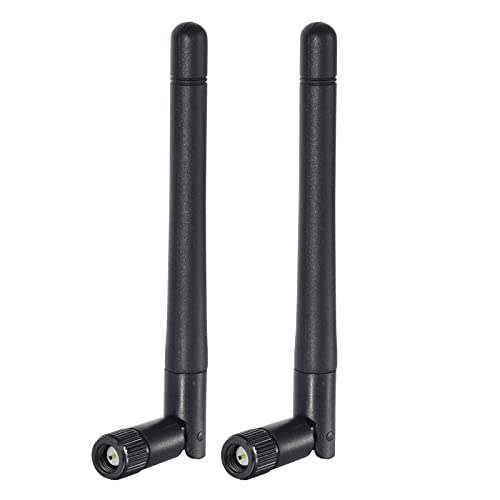
The Bingfu 3dBi dual-band antennas offer a compact, easy-to-mount solution for truck-based wireless systems. With support for 2.4 GHz and 5 GHz, these SMA-male antennas are well-suited for wireless IP cameras, DVRs, and remote monitoring units used on trailers, trucks, and RVs. The 2-pack configuration helps cover multiple devices or create a broader overall coverage when mounting around a vehicle. Their small form factor minimizes aerodynamic impact while delivering respectable gain for mobile setups. This option is a practical entry point for users upgrading from stock antennas.
Bingfu 3dBi Dual Band Antennas (2-Pack) For Routers, IP Cameras, and Surveillance

This pair from Bingfu provides a balanced 3dBi gain across 2.4 GHz and 5 GHz bands, making them a versatile upgrade for desktop and mobile networks alike. The omnidirectional design helps maximize reception in varied directions around a truck or trailer, while the RP-SMA/Male connection aligns with most standard network cards, routers, and camera systems. It’s a solid mid-range option for drivers who need dependable performance without complex installation requirements.
Bingfu 9dBi Magnetic Base Antenna For Mobile Setups

The magnetic-base Bingfu antenna delivers a higher gain of 9 dBi for enhanced link stability on the road. Its omni-directional radiation pattern helps maintain a robust connection with stationary or moving receivers, such as truck-mounted IP cameras, DVRs, or mobile routers. The magnetic base offers quick, tool-free mounting to metal surfaces on trailers or equipment racks, making it a convenient option for temporary or semi-permanent installations.
Bingfu 4-Pack Dual Band Antennas (2.4/5 GHz) For Surveillance And Vehicles

This four-pack from Bingfu provides a broad assortment for truck and fleet setups requiring multiple antennas across different devices. Featuring dual-band 2.4 GHz and 5 GHz operation, these SMA-male antennas come in handy for back-end cameras, remote monitoring hubs, and onboard routers. The 4-pack is attractive for operators running several cameras and gateways, simplifying stocking and replacement in the field.
Buying Guide: How To Choose The Right Truck Wifi Antenna
- Frequency bands: For most mobile deployments, 2.4 GHz and 5 GHz support provides adequate coverage with good penetration and speed. If you require access to the newer 6 GHz band, consider tri-band or WiFi 6E-capable antennas like Eightwood options.
- Gain vs. coverage: Higher dBi gains (e.g., 6 dBi, 9 dBi) can improve range but may reduce broad, immediate coverage or create directionality. Omni-directional antennas are typically best for mobile setups with changing vehicle orientation.
- Mounting and base: Magnetic bases offer quick, tool-free mounting on metal surfaces, while fixed mounts require more planning but provide stability in rough roads. Consider weatherproof housings for outdoor exposure.
- Connector compatibility: Ensure the antenna uses SMA Male connectors or matches the existing hardware (RP-SMA is common). Check cable length and impedance compatibility with your router, camera, or modem.
- Durability and temperature tolerance: Trucks encounter vibration and wide temperature swings. Look for ruggedized plastics, water resistance, and secure connectors to withstand long hauls.
- Kit composition: Multi-pack options (2-pack or 4-pack) are cost-efficient when equipping several devices. They simplify maintenance, replacements, and future upgrades.
- Interference management: In busy 2.4 GHz bands, higher gains can increase susceptibility to reflections. Consider antennas with lower profile to minimize wind load and interference near metal surfaces.
- Compatibility with systems: Verify that the antenna is suitable for IP cameras, DVRs, remote monitoring hubs, and vehicle-mounted routers used in trucking or RV setups.
In practice, a balanced approach favors dual-band antennas in the 2.4 GHz and 5 GHz ranges for most trucks and trailers, combined with a magnetic-base option for flexible mounting. For fleets prioritizing high bandwidth or streaming of 4K video, consider tri-band or 6E-capable antennas where equipment supports these features. Always ensure that mounting locations are free of obstructions and comply with roadworthiness and safety guidelines.