Best Solar Charging Station for Car: Top Portable Power Packs for On‑The‑Go Power
Discover leading solar charging stations that keep vehicles and devices powered while on the move. This guide highlights five reliable options, ranked for outdoor use, road trips, and emergency prep. Each product offers a mix of solar compatibility, multiple outputs, and portable design—ideal for cars, RVs, camping, and off‑grid living.
| Product | Brand | Key Strength | Output Range |
|---|---|---|---|
| MARBERO Portable Power Station 88Wh | MARBERO | Compact 8-output versatility; fast 0-80% charging | AC, USB, USB-C PD, car DC, 8 ports |
| Anker SOLIX C1000 Gen 2 | Anker | Ultra-fast recharge; high total output | 2000W output; 1024Wh |
| ALLWEI Portable Power Station 300W | ALLWEI | Nine ports; MPPT charging; robust for CPAP | AC, USB, DC, car |
| Jackery Explorer 1000 v2 | Jackery | Large capacity; 1‑hour fast charging option | 1500W AC; 1070Wh |
| Takki 120W Peak Solar Generator | Takki | Integrated 21W panel; compact with safety cutoff | AC, DC, USB; 80W peak |
MARBERO Portable Power Station 88Wh
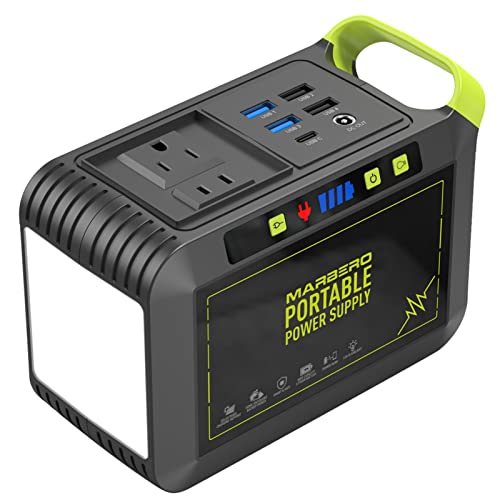
The MARBERO unit emphasizes efficiency and portability. It charges from 0 to 80% in about two hours when using the included adapter, and it can simultaneously power other devices, functioning similarly to a compact charging strip. A dedicated 30W or 60W solar panel option enhances outdoor usability. Its slim dimensions (approximately 6.5 x 4.6 x 3.1 inches) and a lightweight 3.2 lb build support easy transport for camping, road trips, and emergency prep. Eight outputs support multiple devices at once, with USB, USB-C PD, and two AC outlets for home appliances or small electronics. The integrated BMS contributes to stability and safety while the car DC charger can run a car fridge, vacuum, or air compressor.
Anker SOLIX C1000 Gen 2 Portable Power Station

The Anker SOLIX C1000 Gen 2 delivers substantial power with 2,000W continuous output and a 3,000W peak, backed by a 1,024Wh LiFePO4 battery. It features ultra-fast charging enabled by HyperFlash, reaching full charge in about 49 minutes if conditions allow. The device is designed to be compact and portable, becoming easier to transport around a home, RV, beach, or camping trip. It is also compatible with an optional solar panel, allowing flexible recharging outdoors. Apps provide additional control and monitoring for safe operation during outages or remote work scenarios.
ALLWEI Portable Power Station 300W
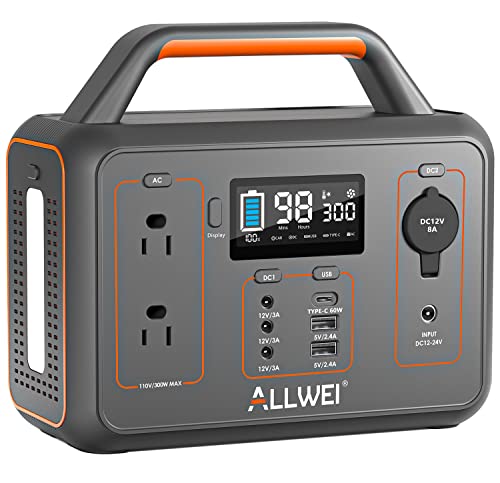
ALLWEI’s 280Wh, 300W-rated unit provides nine output ports, including two pure sine wave AC outlets and multiple USB ports, making it suitable for CPAP devices, laptops, phones, and small appliances during camping or emergencies. It supports three recharge methods: AC wall charging, car charging, and solar panel charging, with MPPT optimization to improve solar recharging efficiency. The compact form and built-in safety features help it serve as a reliable backup power source for RV trips, outdoor activities, and home use.
Jackery Explorer 1000 v2 Portable Power Station

The Jackery Explorer 1000 v2 combines a high 1,070Wh LiFePO4 battery with a strong 1,500W AC output and 3,000W surge capacity. It supports rapid charging via an emergency charging mode through the Jackery app, enabling a full recharge in about an hour under optimal conditions. The unit weighs around 23.8 pounds with a foldable handle for portability, making it a practical choice for camping, RV trips, and emergency outages. Its durable battery chemistry contributes to a long lifespan, providing reliable service over many cycles.
Takki 120W Peak Solar Generator

Takki’s S81 system offers a built‑in 21W solar panel and 88.8Wh capacity, designed for lighter loads and shorter trips. It powers devices up to 80W continuous (120W peak) across eight ports, including two AC outlets, with multiple USB and DC options. While ideal for charging phones, small tablets, CPAPs, cameras, and portable TVs during outdoor activities, it may require careful planning when running higher-wattage appliances. The kit emphasizes portability and ease of use in off‑grid scenarios.
Buying Guide: Key Purchase Considerations
- Power capacity and output: Match the unit’s wattage and battery capacity to your typical loads (phones, tablets, laptops, CPAPs, small appliances). Higher wattage helps with resilient performance during outages or multi-device use.
- Recharge options: Look for models with multiple charging methods—AC, car/DC, and solar panel compatibility. An MPPT controller improves solar charging efficiency in sunny conditions.
- Portability and weight: If you’ll carry the unit in a car or RV, prioritize compact, lightweight designs with ergonomic handles and durable enclosures.
- Safety features: A built‑in Battery Management System (BMS), surge protection, and over‑current safeguards are essential for reliable, long‑term use.
- Output variety: A mix of AC outlets (for home appliances), USB-C PD, USB-A, and car DC ports extends versatility for devices and vehicle accessories.
- Charge speed: Fast recharge capabilities (via HyperFlash or similar tech) reduce downtime during outages or trips. Consider whether you need one-hour or shorter charging cycles.
- Expansion and compatibility: If you plan to expand your setup, ensure compatibility with other power stations or solar panels and check for firmware/app support where available.
- Longevity and warranty: Battery chemistry (LiFePO4 vs. Li-ion), cycle life, and warranty terms influence long‑term performance and total cost of ownership.
- Solar panel integration: Some systems include solar panels; others require separate purchases. Evaluate panel wattage, portability, and solar conditions for best outdoor results.
- Use scenario balance: For heavy home backup or RV use, prioritize higher capacity and multiple outlets. For occasional camping, compact models with essential ports may suffice.