Best Speed Monitor for Car: Top HUD and GPS Speedometers for Safe Driving
Choosing a reliable speed monitor helps drivers stay within speed limits, monitor live speed data, and reduce speeding tickets. This guide highlights five top-rated car HUD and GPS speedometers that pair with OBD-II or standalone GPS to display real-time speed, RPM, and other vital readings. Each option prioritizes easy viewing, quick alerts, and compatibility with a wide range of vehicles. Compare features, installation, and safety benefits to find the best speed monitor for your car and driving style.
| Product | Brand | Type | Main Benefit |
|---|---|---|---|
| wiiyii OBD2 Gauge Display | wiiyii | HUD / OBD2 | Discreet, glanceable speed with multiple interfaces |
| SinoTrack Digital GPS HUD | SinoTrack | GPS HUD | Overspeed and fatigue alerts, large display |
| GEARBONE OBD2 HUD | GEARBONE | OBD2 HUD | Real-time speed, temperatures, and fault codes |
| Docbraces HUD Display | Docbraces | GPS HUD | Bright, flexible GPS speedometer with multiple modes |
| GUGUMO GPS Digital Speedometer | GUGUMO | GPS HUD | Stand-alone speed readout with low power use |
wiiyii OBD2 Gauge Display Heads Up
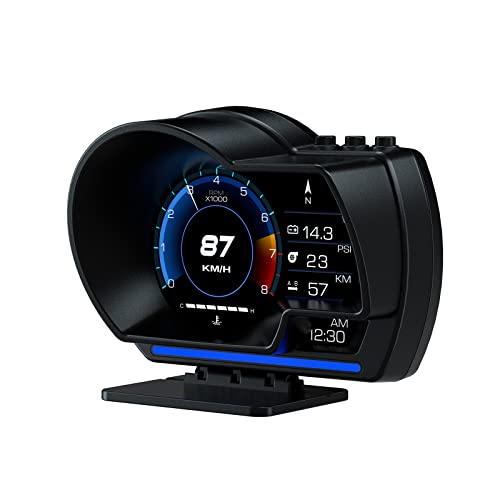
The wiiyii speed display is designed to keep your eyes on the road. It presents crucial data at a glance, including speed, RPM, and water temperature, with an adjustable viewing angle to minimize distractions. The display offers 10 interface options and two installation methods—dashboard mounting or windshield attachment—so you can tailor it to your vehicle and comfort level. Its emphasis on readability and minimal interaction helps drivers maintain focus while cruising or highway cruising.
Key features include a clear LCD meter, fault code reading, and real-time data streaming via an OBD2 connection. This model aims to improve driving awareness by providing speed readings directly in your line of sight, enhancing safety and reducing the risk of speed-related penalties. It is especially useful for drivers who want a simple, unobtrusive speed readout without major reconfiguration of their dashboard.
SinoTrack Digital GPS HUD 5.5 Inch

The SinoTrack GPS HUD offers a large 5.5-inch display that shows mph, driving time, mileage, and direction at the same time. It includes an overspeed alarm and fatigue warning, helping drivers maintain safe speeds and take breaks after prolonged driving. The automatic brightness feature adjusts the screen for daytime or nighttime clarity, ensuring comfortable readability across lighting conditions. This unit is particularly useful for long highway trips where continuous speed monitoring and alerting can prevent over-speeding and fatigue-related risks.
OBD2 HUD Head Up Display (GEARBONE)

The GEARBONE OBD2 HUD provides a comprehensive set of real-time vehicle data through a plug-and-play interface. It reads speed, water temperature, RPM, voltage, and more, delivering accurate GPS-backed speed readings even for older vehicles with limited factory gauges. The device doubles as a fault diagnostic tool, enabling reading and clearing common fault codes, which can aid in quick DIY troubleshooting. This versatility makes it a strong option for drivers who want both speed monitoring and basic vehicle health insights from a single device.
Docbraces HUD Heads Up Display

The Docbraces HUD combines GPS speed readings with a bright, adaptable display. It supports multiple display modes and uses a dual-mode chip for enhanced satellite reception, allowing stable speed readings even in challenging environments. The automatic brightness adjustment ensures readability in sunlit and dark conditions. This model emphasizes ease of use and reliable GPS data, aiming to deliver accurate mph readings without requiring complex setup or ongoing adjustments.
GUGUMO GPS Digital Speedometer

The GUGUMO GPS Digital Speedometer is a standalone speed display that relies on GPS rather than the vehicle’s internal systems. It’s designed for broad compatibility across cars, trucks, motorcycles, and even golf carts. The device uses high-precision GPS to reflect real-time speed readings and includes smart power management that activates on movement and powers down after inactivity, preserving energy. This option is ideal for users seeking a lightweight, plug-and-play speed readout that doesn’t depend on the car’s OBD system.
Buying Guide
- Installation compatibility: Decide between OBD-II connected HUDs (simpler to install for most modern cars) versus standalone GPS HUDs (works across a wider range of vehicles, including older models).
- Display readability: Look for large fonts, brightness adjustment (automatic or manual), and high-contrast interfaces to reduce eye strain during day or night driving.
- Alerts and safety features: Overspeed alerts, fatigue warnings, and trip data can improve driving discipline. Consider how audible alerts or visual cues integrate into your driving style.
- Data depth: If you want more than speed, pick options offering RPM, water/oil temperature, voltage, fuel economy, and fault codes. Some models also include GPS logging and route data.
- Power management: Standalone GPS HUDs often consume minimal power, while some OBD-based displays draw more, especially with multiple sensors. Check sleep modes and wake behavior.
- Longevity and compatibility: Ensure the device supports your vehicle’s sensors, especially for trucks or older models that may have fewer factory gauges.
- Privacy and connectivity: GPS HUDs with companion apps offer better data visualization but require mobile data access and potential data sharing considerations.
- Cost of ownership: Some devices offer standard features at a lower upfront price, while others include advanced diagnostics, longer warranties, or subscription-based data services.