Best Trailer Hitch Options for Semi Trucks and Heavy Haulers
Choosing the right trailer hitch for a semi truck or heavy-duty vehicle involves weighing strength, compatibility, and security. This guide highlights five high-capacity hitches designed to handle demanding loads, rugged conditions, and varied trailer configurations. Each option combines solid construction with features like anti-theft pins, adjustable drops, and compatibility with common ball sizes. Use this overview to compare performance, installation practicality, and long-term reliability across top brands.
| Product | Brand | Key Feature |
|---|---|---|
| Rhino USA Adjustable Trailer Hitch | Rhino USA | 6″ drop/rise, 12,500 lb GTW, weatherproof locking pins |
| Adjustable Drawbar Trailer Hitch | PSAUTO | 20,000 lb GVWR, 6″ drop, anti-rattle, SAE J684 tested |
| Adjustable Trailer Hitch with 2″ Receiver | Koerdo | 2″ & 2-5/16″ balls, 6″ drop/rise, solid iron alloy |
| METOWARE Adjustable Trailer Hitch | METOWARE | 6″ drop/rise, 8,000 lb/12,500 lb towing options, aluminum/steel combo |
| CURT Lifted Truck Trailer Hitch Mount | CURT | 2″ ball, 6″ drop, 7,500 lb capacity |
Below are detailed sections for each option, focusing on build quality, towing capacity, and practical considerations for semi trucks and heavy trailers. Each entry stays within safe towing and safety standards for commercial use, while providing flexibility for different trailer configurations.
Rhino USA Adjustable Trailer Hitch

The Rhino USA hitch is designed for heavy-duty use and is American-owned with a focus on durability. Its 6-inch drop/rise capability helps align heavy trailers with tall semi trucks, reducing the need for multiple height adjustments. The hitch supports a 12,500 lb gross towing weight, and comes with weatherproof, double anti-theft locking pins for added security. Its 2-inch hitch ball also supports towing up to 8,000 lbs, offering versatility for mixed trailer types. The design emphasizes a lifetime replacement program and reliable customer support, which can matter in commercial fleets that rely on uptime.
Key considerations for semi trucks: ensure compatibility with your trunnion or standard 2-inch receivers, verify hitch pin options, and assess the impact of the aluminum construction on long-term corrosion resistance in harsh environments. The Rhino USA unit is well-suited for mixed payloads and heavy campers, with a balance of strength and practical security features for fleets prioritizing quick service and replacements.
Adjustable Drawbar Trailer Hitch

The PSAuto adjustable drawbar hitch is designed for substantial towing with a claimed capacity up to 20,000 lb GVWR and a 6-inch drop, enabling easy hitching and level towing for heavy semi trailers. It features an anti-rattle design with three silencer pads to minimize noise and vibration during long hauls, a common concern on highways. Built from steel with a robust finish, it is SAE J684 tested for safety, providing an additional layer of assurance for fleet operators. This model targets versatility across RVs, motorcycles, and other heavier applications, making it a flexible choice for mixed-use fleets.
Practical notes: evaluate mounting hardware quality and whether the shank style aligns with your receiver configuration. Anti-rattle performance improves ride quality and reduces trailer wander on uneven surfaces, especially important for long-distance semi trips where fatigue and noise can impact driver focus.
Koerdo Adjustable Trailer Hitch

The Koerdo adjustable hitch is built to handle heavy towing, featuring both 2-inch and 2-5/16-inch ball options. It offers a 6-inch drop and rise, making trailer alignment easier for various semi-trailers and equipment trailers. The unit emphasizes solid construction with a steel shank and corrosion-resistant powder coating, designed to withstand challenging weather and long-term use. Its versatility in mounting to the receiver and robust welds aim to deliver reliable performance in demanding work environments.
Considerations for semi trucking: the dual-ball setup allows compatibility with different trailer types, including flatbeds and goosenecks when applicable. Check the compatibility with your trailer’s coupler size and ensure the hitch is correctly rated for the weight classes you routinely haul, especially when carrying equipment or heavy loads on road and construction sites.
METOWARE Adjustable Trailer Hitch

METOWARE’s hitch is described as highly versatile with a dual-ball system: a 2-inch ball rated for 8,000 lbs and a 2-5/16-inch ball rated for 12,500 lbs, supporting a 6-inch drop and rise. This capacity range makes it suitable for heavier semi trailers and RV configurations, while the aluminum/steel approach may contribute to weight management on certain setups. The product includes double stainless steel locks and a hitch pin for added security, aligning with fleet needs for secure anti-theft features and straightforward installation.
Key considerations: verify the exact balance between aluminum and steel components, as weight savings can influence installation and handling in a busy dock or yard. The strong dual-ball system enables smoother transitions between trailer configurations, reducing downtime when trailers switch between different loads and heights.
CURT Lifted Truck Trailer Hitch Mount
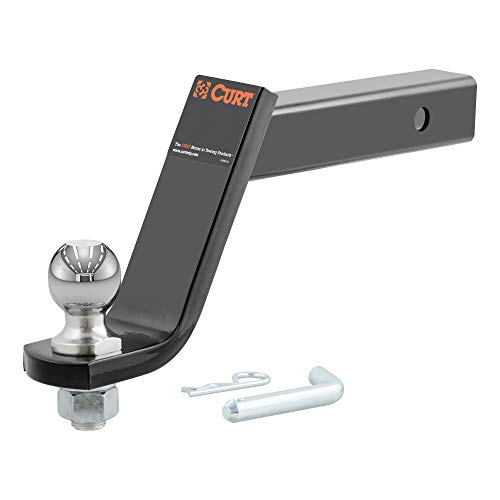
CURT’s lifted truck hitch mount is designed for raised or lifted vehicles, featuring a 6-inch drop and a 2-inch ball with a 7,500 lb rating. The shank is a standard 2×2 inch, and the assembly includes a pin and clip for immediate installation. This option is well-suited for heavy-duty pickups and vans used in larger fleets that occasionally haul midsize trailers. The tap-tightly welded steel construction provides dependable strength for everyday towing tasks, including gooseneck or utility trailers that require a consistent hitch alignment for safe operation.
Fleet-oriented notes: while not the top-end capacity, CURT’s solution offers straightforward installation with ready-to-tow convenience. It’s a practical choice for vehicles that regularly handle moderate to heavy trailers but do not regularly exceed seven or eight thousand pounds GTW. Ensure the overall towing profile aligns with your typical loads to maximize efficiency and safety.
Buying Guide: Key Purchase Considerations
When selecting a trailer hitch for a semi truck or heavy-duty vehicle, consider the following factors to ensure safe and efficient towing across varied loads and trailer configurations.
- Weight capacity and compatibility: Match the hitch’s GTW/GVWR and tongue weight with your typical trailer loads. For heavy semi trailers, prioritize models rated well above your common payloads.
- Receiver size and ball compatibility: Confirm the receiver size (2″ is common) and ball sizes (2″ or 2-5/16″) to ensure compatibility with your trailers. Dual-ball options offer flexibility for mixed equipment.
- Drop/Rise range: A larger drop/rise range simplifies alignment with tall trailers or flatbeds. Consider models with 6″ drop/rise for heavier loads and off-road scenarios.
- Construction and durability: Steel constructions with corrosion-resistant finishes and robust welds provide longer life in harsh environments. Aluminum components can reduce weight but may have different durability characteristics.
- Security features: Anti-theft pins, locks, and secure mounting hardware help protect investments in commercial fleets, especially when trailers are parked in yards or on remote sites.
- Installation and maintenance: Some hitches include anti-rattle pads to reduce noise and movement. Assess ease of installation, alignment, and ongoing maintenance needs for fleet operations.
- Fleet use-case and versatility: If you haul a mixed range of trailers, prioritize adjustable, dual-ball, or high-capacity options that minimize the need for multiple adapters and replacements.
In evaluating these options, fleets should balance upfront cost, long-term durability, and the operational impact of downtime. For semi trucks and heavy-duty applications, selecting a hitch with proven load ratings, robust construction, and reliable security features can contribute to safer tows and improved uptime across routes and jobs.