Best Portable Power Station for Car Use and on-the-Go Power
Modern portable power stations deliver reliable backup power for cars, camping, road trips, and emergencies. This guide highlights five top options that balance portability, capacity, and features for automotive use. Each product is assessed for car-ready needs like DC outputs, car-charging compatibility, and fast recharging. Below is a quick snapshot of the selected models to help you compare at a glance.
| Product | Capacity | Key Benefit for Car Use | Approx. Weight |
|---|---|---|---|
| Jackery Explorer 300 | 293Wh | Lightweight backup power with car/AC charging options | 7.1 lb |
| VTOMAN Jump 600X | 299Wh | Built-in car jump start port for emergencies | 7–8 lb (approx.) |
| Anker SOLIX C1000 Gen 2 | 1,024Wh | High output with multiple ports for devices | ~30 lb |
| ALLWEI Portable Power Station 300W | 256Wh | Long cycle life with multiple outputs | ~5–6 lb |
| ZeroKor Portable Power Station 300W | ~256Wh | Affordable, compact option with diverse ports | ~5 lb |
Jackery Portable Power Station Explorer 300
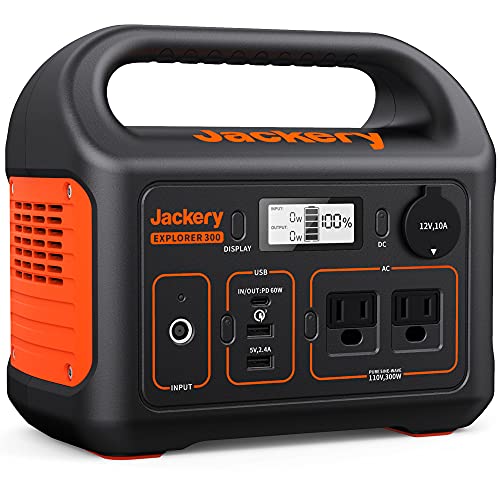
The Explorer 300 offers 293Wh of lithium battery capacity and two Pure Sine Wave outlets for stable power up to 300W. Weighing just 7.1 pounds, it is designed for portability in vehicles and outdoor contexts. It supports rapid recharging via a 60W PD USB-C port and wall outlet, with additional charging through car adapters or solar panels. Its panel of outputs includes multiple USB, DC, and AC options to run drones, laptops, cameras, and essential car devices during camping trips or outages.
Jackery Explorer 1000 v2 Portable Power Station

With 1,070Wh and a 1,500W continuous output, the Explorer 1000 v2 is a robust option for more demanding car adventures and off-grid trips. Its LiFePO4 chemistry promises long life, and a one-hour fast-charging capability accelerates replenishment via the Jackery App’s ChargeShield 2.0 technology. While heavier than smaller units, it supports larger appliances like fridges and power-hungry devices, making it ideal for longer journeys where power reliability matters.
VTOMAN Jump 600X Portable Power Station

The Jump 600X combines a 299Wh LiFePO4 battery with a 600W AC output and a 2-in-1 design that includes a car jump start port. It can be expanded to 939Wh with an extra battery, and it delivers up to 3,000 life cycles. This model is well-suited for roadside emergencies and camping, offering a reliable power source with a built-in jump-start capability to address vehicle battery issues on the go.
Anker SOLIX C1000 Gen 2 Portable Power Station

The Anker SOLIX C1000 Gen 2 is a high-capacity solution featuring 2,000W continuous output and a 1,024Wh LiFePO4 battery. It charges rapidly (HyperFlash) and supports 10 ports for simultaneous device charging. Weighing more than lighter models, it suits car homes or RV setups where more power is required for extended trips, home backup, or outdoor activities that demand multiple powered devices at once.
ALLWEI Portable Power Station 300W

The ALLWEI unit delivers 256Wh with a 300W continuous output and 600W peak. Built with LiFePO4 chemistry, it supports thousands of cycles and includes a 6-port output array. Its compact design and pass-through charging enable powering several devices in a car or campsite, including laptops, small appliances, and CPAP machines, while remaining light enough for easy transport.
ZeroKor Portable Power Station 300W

The ZeroKor 300W unit emphasizes portability with 280Wh capacity and multiple outlets, including USB-C PD. It includes three charging methods (AC, car, and DC/solar option) and a built-in LED flashlight. It’s designed for quick, on-the-road power for smartphones, tablets, and cameras, making it a practical budget-friendly choice for car trips and backup power in emergencies.
Buying Guide: Key Purchase Considerations For Car Use
- Power capacity and outlets: Match capacity (Wh) with the devices you plan to power. Check the mix of AC outlets, USB-C/USB-A ports, and car-dedicated DC ports. For cars, a unit with a DC car port is convenient for charging in-vehicle use.
- Output stability and chemistry: Pure sine wave inverters protect sensitive electronics. LiFePO4 batteries offer longer life and safety, with thousands of charge cycles compared to standard lithium-ion cells.
- Recharging options: Look for multiple charging paths—AC wall outlet, car cigarette lighter, and solar compatibility. Fast charging capabilities reduce downtime between trips.
- Weight and portability: For car use, lighter models (roughly under 10 pounds) are easier to handle when packing for trips. Heavier models often offer higher capacity but require more space.
- Durability and safety features: A robust BMS, overcharge, short-circuit, and temperature protection improve reliability in varied environments. Consider devices with intuitive indicators and safe-pass-through charging.
- Expandability: Some models offer additional batteries or external packs to extend capacity, useful for longer road trips or off-grid living.
- App integration and diagnostics: Some units offer companion apps for monitoring, charging optimization, and firmware updates, aiding maintenance and planning.
- Noise, heat, and cooling: Efficient thermal management reduces performance throttling. Review fan noise if you’ll use the unit in quiet environments or indoor spaces.
- Warranty and service: Check the warranty length and availability of spare parts. Long-term reliability matters for vehicles and outdoor use alike.
These considerations help balance portability with power needs. Depending on whether your focus is a lightweight backup for essential devices or a robust setup for longer trips, one of these models can fit a car-centric power strategy while remaining practical for outdoor adventures.