Best Solar Film for Cars: Top Window Tint Options and Tools
Choosing the right solar film for your vehicle involves balancing UV protection, heat rejection, glare reduction, and ease of installation. This guide highlights five top options and essential testing tools to help you compare performance, durability, and value. Whether you’re seeking professional-grade tints or consumer-friendly films for DIY projects, the selections below cover a range of VLT levels and installation needs.
| Product | Brand | Key Feature (VLT / Coverage) | Notes |
|---|---|---|---|
| BLACKGLASS IX 70% VLT Film Roll | BLACKGLASS IX | 70% VLT; 20ft x 2ft; 2 Ply | Light smoke; easy installation guidance included |
| BLACKGLASS IX 5% VLT Film Roll | BLACKGLASS IX | 5% VLT; 20ft x 2ft; 2 Ply | Limo black; professional-grade thickness |
| ASENDIWAY Chameleon Window Tint Film | ASENDIWAY | 65% VLT; UV/heat protection | PVC vinyl, versatile cutting, durable finish |
| AuMoHall Green Windshield Tint | AuMoHall | 66% VLT | Jack-of-all-trades tint film; UV protection |
| Labs Tint Meter Works | GOYOJO | UV, VL, IR transmission testing | Testing device for films and films-on-glass |
Note: The product selections focus on representative options for car solar film and testing tools. Availability and exact specifications may vary by seller and batch. This article provides objective comparisons based on listed features.
BLACKGLASS IX 70% VLT Window Tint Film Roll

Overview: This professional-quality tint film offers a high-coverage option with a 20ft x 2ft roll designed for multiple vehicles. The 2-ply self-adhesive laminated structure improves manageability and thermo-formability, making it suitable for DIY enthusiasts and professional tinters alike. The film is scratch-resistant and color-stable, with a durable, non-degumming adhesive that resists fading over time. The 70% VLT level balances visibility with heat rejection and glare control, making it a popular choice for urban driving and daily commuting.
Performance highlights:
– Large coverage reduces waste and helps complete several windows quickly.
– Professional-grade thickness provides reliable handling during installation.
– Durable finish minimizes color changes and degradation from heat and UV exposure.
– Provided instructions and installation guidance support successful applications.
Considerations: If privacy is a priority in addition to heat control, a lower VLT (e.g., 50% or below) may be preferred. Always verify local regulations on allowable VLT in your area before installation.
BLACKGLASS IX 5% VLT Film Roll
Overview: The 5% VLT option delivers near-opaque privacy and strong glare reduction, making it a staple for drivers seeking a bold appearance and maximum heat rejection. This film uses a 2-ply laminated structure known for durability and color stability, with a robust adhesive designed to resist fogging and detaching over time. Installation generally requires careful cutting and heat-shrinking to fit irregular shapes on vehicles.
Performance highlights:
– Substantial privacy and glare reduction ideal for daily drivers and hot climates.
– Durable, long-lasting finish with resistance to heat and sun exposure.
– Clear guidance materials facilitate professional-like results for DIY projects.
Considerations: Higher heat rejection can come with tighter visibility at night or in low-light conditions; ensure your local laws permit such levels of darkness. For best results, professional installation is recommended for this film.
ASENDIWAY Chameleon Window Tint Film

Overview: ASENDIWAY’s chameleon tint film is a versatile option designed with 1.8 mil thickness in a premium 1-ply construction. The film is water-resistant and UV-protected, with scratch-resistant properties to help maintain a pristine appearance. The 65% VLT level strikes a balance between daylight visibility, heat reduction, and cabin comfort. The film’s color stability and durable finish make it suitable for DIY projects and professional installations alike.
Performance highlights:
– UV protection helps reduce interior fading and skin exposure.
– Scratch resistance and water resistance aid longevity and ease of maintenance.
– Flexible cutting allows for various vehicle configurations and shapes.
Considerations: The 1-ply construction is lighter than double-ply options, which can influence durability in aggressive climate conditions. Proper surface preparation and installation technique remain important for a clean result.
AuMoHall Green Windshield Tint

Overview: The AuMoHall windshield tint offers a solid option for those seeking substantial heat rejection with 66% VLT. It can be cut to fit multiple applications such as windows and windshields, and is designed to block UV exposure effectively while maintaining visibility. This film emphasizes versatility and ease of use, making it a practical choice for DIY installations or quick upgrades to cabin comfort.
Performance highlights:
– UV blocking helps prevent interior fading and skin exposure.
– Flexible cutting enables adaptation to various glass shapes.
– Effective glare reduction improves driving comfort in bright conditions.
Considerations: For areas with restricted tint regulations, verify local guidelines for windshield and front-side glass before applying films with higher VLT values. Some users may prefer darker or lighter options depending on climate and privacy needs.
Labs Tint Meter Works On Side Windows
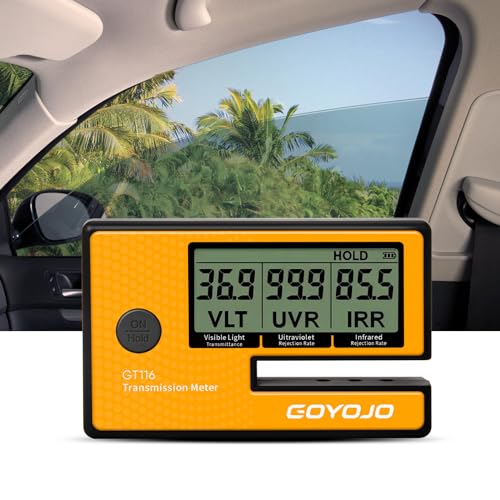
Overview: This 3-in-1 solar film meter combines UV transmission, IR transmission, and light transmittance measurement in a single device. It accepts samples up to 8 mm thick, enabling direct testing of filmed glass and car side screens. The device displays UV, VL, and IR transmission values simultaneously, providing instant feedback on material performance and enabling quick comparisons between films or batches.
Performance highlights:
– Comprehensive measurement capability across UV, visible, and IR spectra.
– Flexible testing for filmed glass and thicker samples.
– Data lock feature helps preserve results for record-keeping and analysis.
Considerations: While primarily a testing tool, this meter is valuable for garages or shops that compare multiple tint films or verify compliance with local regulations. Proper calibration and handling procedures should be followed for accurate readings.
Buying Guide: Key Purchase Considerations And Comparisons
When selecting solar film for cars, consider these factors to make an informed choice:
- Light transmission level (VLT): Higher VLT values offer better visibility but more limited privacy. Lower values provide privacy and heat rejection but can affect night driving visibility. Choose a VLT aligned with local laws and personal needs.
- Heat rejection and UV protection: Look for films designed to block infrared radiation and UV rays. This helps reduce cabin heat and protects interior materials.
- Durability and adhesive quality: Professional-grade films with durable coatings and non-degumming adhesives will resist fading, cracking, and peeling over time.
- Installation considerations: Some films are easier to install for DIY projects, while others benefit from professional installation due to complex curves and precise cutting requirements.
- Coverage and size: Large rolls can cover multiple windows efficiently, reducing waste and cost. Verify dimensions to match your vehicle’s glass area.
- Regulatory compliance: Always check local tinting laws to ensure your chosen VLT and tint type comply with regulations for front windows, windshields, and back windows.
- Testing and verification: For those evaluating multiple films, a tint meter or spectrophotometer can provide objective measurements of transmittance and rejection performance, aiding apples-to-apples comparisons.
In practice, a balanced approach often combines a visibly darker film for privacy and heat rejection (lower VLT) with lighter films for rear windows or areas requiring greater visibility. For professionals, pairing high-quality tint films with a reliable meter ensures consistent results across installations and batches.