Best EV Charging Cables for Electric Cars: Top Portable Chargers
Choosing the right charging cable or portable charger matters for daily reliability and road-ready convenience. This guide highlights five highly compatible, feature-rich options that work with SAE J1772 and offer flexible current, timer features, and durable construction for American drivers. Each selection is evaluated on safety, versatility, ease of use, and value, helping you pick a charger that fits home, travel, and guest charging needs.
Summary of selected products
- Raylix 16A Level 1/2 EV Charger — 21 ft cable, adjustable current
- Raylix 2025 Upgraded Level 1 & 2 Portable EV Charger — 21 ft, intelligent charging
- ELEGRP Level 1/2 EV Charger — 25 ft cable, IP67 rating
- EVIQO Level 2 EV Charger 40 Amp — 9.6 kW, NEMA 14-50 plug, smart app
- EVDANCE Level 1&2 EV Charger — 25 ft, dual plug options
Raylix 16A Level 1/2 EV Charger
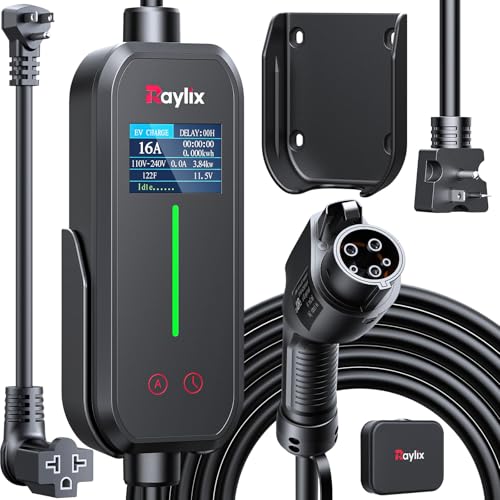
The Raylix charger features a user-friendly built-in display to monitor charging status and current settings at a glance. It supports SAE J1772 connections and is compatible with multiple vehicles, including popular American and import models. With adjustable current (16A/12A) and a delayed charging option, it helps households optimize energy use and cost shifts. A 21-foot cable provides flexible access in garages and driveways, while its portable design suits home, travel, or hosting guests.
Raylix 2025 Upgraded Level 1 & 2 Portable EV Charger

This model emphasizes intelligent charging with four-level current options (8A/10A/12A/16A) and a smart delay timer (1–12 hours). It promises faster, flexible charging across all J1772 EVs and PHEVs, helping users optimize overnight and off-peak charging. The charger is designed for home use and road trips, ensuring readiness for any journey, with a robust 21-foot cable and a portable form factor.
ELEGRP Level 1/2 EV Charger

ELEGRP combines PBE and LCR technologies to deliver enhanced safety and stable charging performance. The charger supports Level 1 (120V) and Level 2 (240V) with a 16A current and a 25-foot cable, plus a 5-15 adapter for versatility. Its weather-resistant build is rated for indoor/outdoor use, and the unit endures repeated plug-in cycles. A carry bag adds portability for travel and daily use.
EVIQO Level 2 EV Charger 40 Amp

This 40A Level 2 charger delivers up to 9.6 kW and supports up to 38 mph charging for many EVs, given a proper 240V circuit. It uses a UL/ETL certified build and includes an enhanced Wi-Fi connection with a mobile app for remote start/stop, scheduling, and energy tracking. It features an IP66-rated enclosure for weather resistance and a built-in mainboard shield for protection against surges and dust.
EVDANCE Level 1&2 EV Charger

The EVDANCE charger offers Level 1 and Level 2 operation with a 16A/240V capability and a 25-foot cable. It includes both NEMA 6-20 (for 240V) and an adapter for 5-15 (120V) outlets, expanding compatibility across home outlets and portable setups. The charger is designed for flexibility in garages or driveways and supports J1772-compatible EVs, making it suitable for home use and on-the-go charging.
Buying Guide: Key Purchase Considerations
- Current and speeds: Match charger current to your vehicle’s onboard charger and electrical capacity. Level 2 options (16A to 40A) typically offer faster charging than Level 1. Look for adjustable current if you want to optimize charging costs or fit a variety of outlets.
- Plug compatibility: Ensure SAE J1772 compatibility for most American EVs and PHEVs. If you drive a Tesla, verify adapter availability or model-specific compatibility with J1772 connectors.
- Outlet support: Check whether the charger supports 120V (NEMA 5-15) and 240V (NEMA 6-20 or 14-50) outlets. Some models include adapters; others require separate purchases.
- Cable length: A longer cable (like 21 ft) offers flexibility in garages and parking spaces, reducing the need to relocate vehicles.
- Portability and durability: Portable chargers are convenient for travel or guest charging. Look for weatherproofing (IP rating) and robust connectors to withstand outdoor use.
- Safety features: Seek chargers with surge protection, overcurrent protection, and thermal management. PBE/LCR technologies can improve conductivity and reduce heat buildup.
- Smart features: Wi-Fi or app integration, scheduling, and energy usage tracking help optimize charging times and costs. Ensure firmware updates are available and secure.
- Installation considerations: Some units require dedicated circuits and proper electrical panels (e.g., 40A 240V). Verify local codes and rebates for EVSE equipment to maximize value.
- Warranty and support: Look for a solid warranty period and accessible customer support to navigate potential issues or firmware updates.
- Multi-vehicle use: If you host guests or households with multiple EVs, prioritize universal compatibility and a charger with adjustable current to accommodate different vehicles safely.