Best Engine Scan Tool Reviews for 2026: Top Diagnostics for Any Vehicle
Whether you’re a DIYer or a professional mechanic, a reliable engine scan tool saves time, money, and guesswork. The following picks are among the most capable OBDII/CAN diagnostic devices available today, covering a range of features from basic code reading to live data streams, DTC lookups, and advanced health checks. This guide highlights five standout options and helps you compare core capabilities, compatibility, and ease of use for common American vehicles built since 1996.
| Product | Core Function | Best For | Connectivity |
|---|---|---|---|
| ANCEL AD310 | Code read/clear, live data | Budget-friendly DIYers | OBDII |
| MOTOPOWER MP69033 | Multi-protocol OBD2, data/graphs | Wider vehicle coverage | OBDII |
| ANCEL AD410 | Comprehensive OEM-style diagnostics | Advanced checks | OBDII, CAN |
| BlueDriver | In-depth codes, repair reports | Professional insights | Bluetooth |
| VDIAGTOOL VD10 | DTC lookup, freeze frame, I/M readiness | DIY diagnostics | OBDII |
These tools span basic to advanced features, with a focus on clarity, reliability, and ease of use in typical American vehicle fleets. They are designed to quickly identify why a check engine or warning light appears, provide actionable repair guidance, and enable ongoing vehicle health monitoring.
ANCEL AD310 Classic Enhanced OBD II Scanner
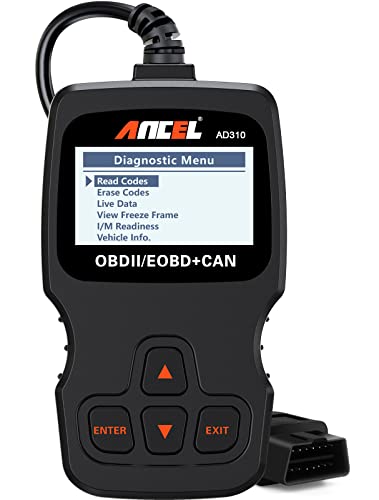
The ANCEL AD310 is a compact, popular OBD II scanner widely used to diagnose emission-related issues. It reads and clears diagnostic trouble codes, displays live data, freeze frame details, I/M readiness, and basic vehicle information. Its design emphasizes portability and straightforward operation, making it a practical choice for quick checks or on-the-spot diagnostics in a home garage or shop. It’s powered directly from the vehicle’s OBDII port, with no need for separate batteries or chargers. The device provides fast results and clearly labeled buttons, helping users determine if a fix is needed and how to verify the repair afterward.
Key strengths include a sturdy build with a long, durable cable and a readable display that presents results clearly. The AD310 is notably simple to use, delivering reliable codes and data within seconds. It’s particularly suitable for users who want a no-frills tool to identify engine trouble codes and confirm that repairs have addressed the issue without requiring a more extensive diagnostic setup.
MOTOPOWER MP69033 Car OBD2 Scanner

The MOTOPOWER MP69033 offers broad protocol support to cover most 1996 US-based, 2000 EU-based, and Asian vehicles, including newer OBDII and CAN models. It features a comprehensive set of functions: reading and erasing codes, viewing freeze frames, checking I/M readiness, accessing vehicle information, data flow, real-time graphs, and engine parameters such as speed and coolant temperature. The tool is powered via the OBDII port, so there’s no need for external power sources. Its 2.8-inch LCD provides clear backlit viewing, aiding readability in various lighting conditions.
Designed for versatility, this scanner supports multiple languages and a wide vehicle footprint, making it a practical option for households with mixed vehicle fleets or for international travelers who need consistent diagnostic capability across regions. It balances feature depth with a straightforward interface, allowing users to obtain actionable data without a steep learning curve.
ANCEL AD410 Enhanced OBD2 Scanner

The ANCEL AD410 is a broader OBD2 diagnostic tool designed to read and clear fault codes, perform advanced diagnostics, and test emissions-related systems. It includes multilingual support and broad compatibility with 1996+ vehicles that use OBDII, KWP2000, ISO9141, J1850 VPW, J1850 PWM, and CAN protocols. The AD410 can quickly identify emissions-related faults and reset the MIL after repairs, helping users confirm the success of their work. It also supports EVAP system tests and O2 sensor evaluations to optimize fuel efficiency and reduce emissions. Note that, like most code readers, it does not repair systems directly; it assists diagnosis and code management.
With a robust DTC library and a clear diagnostic path, this model is well-suited for users who need deeper system checks beyond basic engine codes, particularly when prepping a vehicle for compliance testing or more involved maintenance tasks.
BlueDriver Bluetooth Pro OBDII Scan Tool
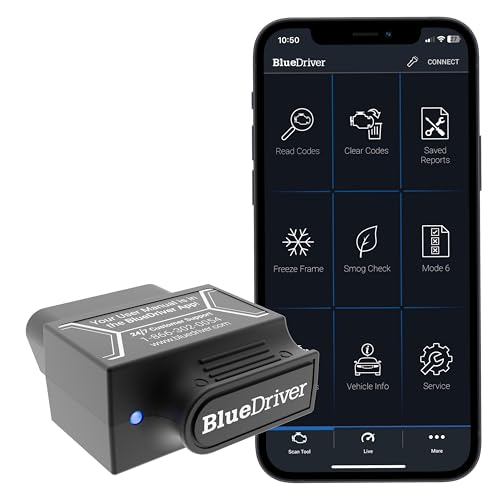
The BlueDriver system pairs a plug-in OBDII dongle with a mobile app to deliver professional-grade diagnostics for iPhone and Android devices. It reads and clears trouble codes and extends capabilities to ABS, SRS, airbags, and TPMS codes. Beyond fault code management, BlueDriver provides repair reports with potential causes and fixes, and real-time health data during operation. This model emphasizes an all-in-one mobile experience, enabling users to perform advanced diagnostics on the go and maintain ongoing vehicle health without a dedicated handheld device.
Key advantages include subscription-free use and expansive coverage of 7000+ issues, making it suitable for tech-savvy users who want detailed diagnostic insight and repair guidance in a familiar smartphone interface. It’s an excellent bridge between consumer-level ease and professional-level data depth.
VDIAGTOOL VD10 OBD2 Scanner
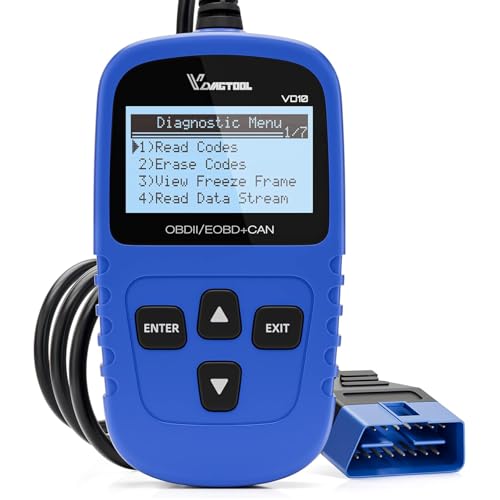
The VDIAGTOOL VD10 is positioned for DIY enthusiasts seeking a practical, feature-rich reader. It offers code reading and clearing, live data streams, freeze-frame viewing, I/M readiness checks, and vehicle information retrieval. Its built-in database of over 3,000 codes and clear DTC definitions helps users quickly interpret faults. The device retrieves standard generic and manufacturer-specific codes and supports multiple languages, making it accessible for a broad audience. It’s designed to work with most OBDII-compatible vehicles and emphasizes fast diagnosis and straightforward operation.
For users who want a balance of depth and simplicity, VD10 provides a reliable workflow: diagnose, clear, test readiness, and monitor live data in real time, all through a compact handheld tool that plugs directly into the OBDII port.
Buying Guide: Key Purchase Considerations
When choosing an engine scan tool, consider the following factors to align with your needs and vehicle fleet:
- Vehicle compatibility: Confirm that the tool supports your vehicle’s year, make, and model, plus the necessary OBDII/CAN protocols. Some tools excel for US vehicles, others for EU/Asian fleets.
- Code reading versus advanced diagnostics: Basic readers quickly identify check engine codes, while advanced tools offer live data, fuel trim, EVAP tests, and sensor diagnostics. Choose based on your repair depth and learning goals.
- Data presentation: Look for clear displays (or mobile apps) and intuitive menus. A readable screen or well-designed app reduces confusion when interpreting results.
- Power source: Most tools draw power from the vehicle’s OBDII port, but some may require batteries or external power. Ensure compatibility with your setup.
- Language and regional support: Multilingual capabilities can aid users in diverse environments and improve usability.
- Data access and repair guidance: Some tools provide repair suggestions, live data graphs, and repair reports. Consider whether you want diagnostic data alone or actionable guidance.
- Update options: DTC definitions and software updates can improve accuracy. Check whether updates are free or require a subscription.
- Portability and build quality: For frequent on-the-road diagnostics, a compact, rugged device with a durable cable is beneficial.
From a cost-performance perspective, entry-level readers deliver essential code functions at a low price, while multi-protocol or OEM-style scanners offer deeper diagnostics and broader vehicle support. For professional use or households with multiple vehicles, a model with broad protocol coverage and robust DTC libraries provides the most value, reducing the need for additional tools over time.