Best Front Suspension Forks for Fat Bikes and Mountain Rides
Choosing the right front suspension fork can enhance control, comfort, and confidence on snow, sand, or rugged trails. This guide highlights five top options that fit 20-inch and 26–29 inch fat and standard mountain bikes, focusing on travel, hub spacing, and lockout features. Each model below emphasizes lightweight design, travel performance, and versatile applications for urban or off-road adventures.
| Product | Travel | Hub Spacing | |
|---|---|---|---|
| BUCKLOS 20″ 4.0 Fat Tire Air Suspension Fork | 180 mm | 135 mm | Lightweight, 1.8 lbs lighter than oil-spring forks; suitable for snow or beach bikes |
| Exceedhub 20″ 4.0 Fat Tire Air Suspension Fork | 180 mm | 135 mm | Lightweight magnesium+aluminum; easy ride on soft surfaces |
| BUCKLOS 26/27.5/29 MTB Suspension Fork | 100 mm | 100 mm | Manual lockout; ABS adjustment; lightweight yet robust |
| Exceedhub 26″ MTB Suspension Fork | 120 mm | 100 mm | Single crown, 28.6 mm tube, 9 mm QR; versatile for multiple wheel sizes |
| ZTZ 20″ Fat Tire Air Suspension Fork | 130 mm | 135 mm | Ultralight magnesium+aluminum body; 9×135 mm QR; suitable for fat bikes |
BUCKLOS 20″ Fat Tire Air Suspension Fork — 180mm Travel

The BUCKLOS 20″ 4.0 Fat Tire Air Suspension Fork is designed for 20-inch fat bikes used in snow, sand, or beach environments. It features 180 mm of travel and a crown with lockout, along with a 135 mm hub spacing and a straight 9 mm QR axle. The fork’s low weight—about 2645 g—helps reduce unsprung mass, contributing to quicker response and easier handling on uneven terrain. While its wide compatibility suits fat-tire setups, potential buyers should confirm exact model Fit (crown lockout, QR size, and disc brake compatibility) before purchase. The fork aims to blend playful terrain handling with practical ride control, transforming rough surfaces into smooth experiences.
Key considerations include verifying compatible crown lockout operation, ensuring correct QR sizing (9 mm x 135 mm), and confirming brake type compatibility. If you ride in snow or soft sand, the 180 mm travel can absorb major impacts while preserving pedal efficiency. While the weight advantage is appealing, buyers should assess the overall bike geometry and fork offset to maintain steering feel and steering geometry. The BUCKLOS fork delivers a balance of lightweight design, travel, and rugged suitability for fat-tire enthusiasts.
BUCKLOS 20″ 4.0 Fat Tire Air Suspension Fork (Another Fat-Tire Model)
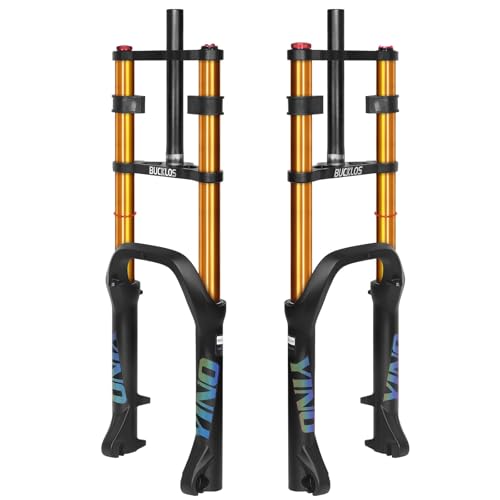
This similar BUCKLOS fork also serves 20-inch fat bikes with a 180 mm travel and 135 mm spacing, including a straight tube and lockout capability. The design emphasizes lightness similar to the first BUCKLOS option, facilitating maneuverability on snowy, sandy, or uneven surfaces. Prospective buyers should carefully validate their model’s crown lockout interface and disc brake compatibility to ensure a smooth install and operation. The focal point is to provide confident control on soft terrain while minimizing weight burdens on the front end.
BUCKLOS 26/27.5/29 MTB Suspension Fork Travel 100mm

The BUCKLOS 26/27.5/29 suspension fork offers 100 mm of travel with a 28.6 mm straight threadless steerer and a 9×100 mm QR axle. It supports crown lockout and uses a 30 mm crown race, with a 36 mm offset. Weighing roughly 2598 g, this fork includes the BUCKLOS sticker and supports manual ABS adjustment to tailor the suspension feel to varying terrains. The combination of a compact travel range with lockout and adjustable stiffness makes it a versatile choice for cross-country and trail riding. Buyers should ensure compatibility with their frame’s wheel size, rotor type, and derailleur clearance when upgrading forks.
Considerations include verifying the frame’s compatibility with a 28.6 mm steerer tube, matching hub spacing to 100 mm, and confirming the disc brake mounting arrangement. The fork’s ABS-like manual adjustment helps riders tune stiffness for climbs or descents, offering a practical approach to handling mixed terrain without sacrificing efficiency on smooth sections.
ZTZ 20″ Fat Tire Air Suspension Fork

The ZTZ 20″ fat-tire air suspension fork is engineered for lightness and performance on fat bikes. With 130 mm of travel and a 135 mm hub spacing, it uses a 9×135 mm QR design to accommodate common fat-bike front wheels. The travel is sufficient for moderate trail irregularities and soft terrain; its aerosol-structure is built from magnesium and aluminum alloys to reduce weight while maintaining strength. Prospective buyers should confirm the exact fit for their 20-inch fat bike, including compatibility with disc brakes and the frame’s kingpin or axle standards. This fork targets balance between weight savings and stable handling on snow, beach, and XC routes.
Key considerations include checking fitment for the fork’s QR dimensions, ensuring a compatible brake system, and confirming the crown lockout interface. The ultralight construction helps reduce front-end inertia, potentially improving acceleration and steering responsiveness on soft surfaces. For riders prioritizing weight reduction without sacrificing travel, the ZTZ option provides a compelling choice in the fat tire segment.
Buying Guide: Front Suspension Forks For Fat Bikes And Mountain Rides
- Wheel size compatibility: Confirm whether the fork supports 20″, 26″, 27.5″, or 29″ wheels and fat-tire widths (commonly 4.0″).
- Travel and ride feel: Higher travel (e.g., 180 mm) absorbs bigger impacts; lower travel (100–130 mm) suits cross-country and efficient climbing.
- Hub spacing and axles: Verify QR size (often 9 mm) and hub spacing (135 mm or 100 mm) to match your wheel set.
- Lockout and damping: Decide if you need crown lockout and adjustable stiffness for terrain versatility and energy efficiency on climbs.
- Weight vs. strength: Lighter forks improve handling but may trade stiffness; assess alloy composition and ride preferences.
- Brake compatibility: Confirm the fork’s compatibility with your brakes (disc type, rotor size, mounting standards).
- Installation and maintenance: Look for star nuts, compatibility with existing wheel drums, and ease of service intervals.
- Intended use: Snow, sand, and beach riding benefit from higher travel and robust seals; aggressive trail riding may demand stiffer damping.
When selecting a front suspension fork, compare core aspects like travel, weight, and compatibility to your bike’s geometry. For fat bikes and beach-snow applications, the goal is to maximize traction and comfort without compromising steering precision or pedal efficiency. Cross-check customer reviews and manufacturer specifications to ensure the model aligns with your riding style, terrain, and maintenance expectations. The right fork can transform how a bike handles rough terrain and soft surfaces, providing controllable, confident rides in varied American terrain.