Best 4-in Car Speakers for Crisp in-Car Sound Quality
Upgrading to 4-inch car speakers can dramatically improve your vehicle’s audio clarity, especially on factory systems. This guide highlights five top options, covering a range of budgets and sound signatures. Each pick balances ease of install with reliable performance, helping you choose a 4″ coaxial speaker that fits common dash slots and delivers solid midrange, crisp highs, and satisfying bass for daily driving.
| Product | Brand | Impedance | Power Handling | Notes |
|---|---|---|---|---|
| Pyle 4″ Car Sound Speaker (Pair) – PL42BL | Pyle | 4 Ohm | Peak 180W | Blue poly cone, ASV voice coil |
| ORION Cobalt CB42 | ORION | 4 Ohm | Peak 160W / 40W RMS | Butyl surround, PP cone, strong midbass |
| PIONEER F-Series TS-F1035R | PIONEER | 4 Ohm | Peak 150W | Balanced sound, OEM-friendly |
| PIONEER A-Series TS-A1081F | PIONEER | 4 Ohm | Peak 230W | Enhanced bass, smooth treble |
| KICKER CS-Series CSC4 | KICKER | 4 Ohm | Noted for strong bass | Deep lows, compact depth |
Pyle 4″ Car Sound Speaker PL42BL (Pair)
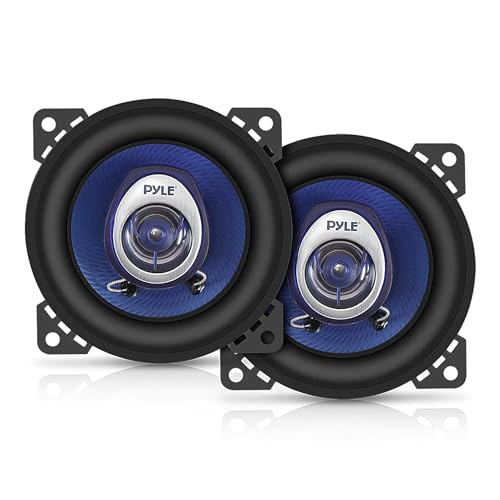
The Pyle PL42BL is a 4-inch two-way speaker designed for compact installations. It features a 20 oz magnet structure, a 1/2″ neodymium dome tweeter, and a 4-ohm impedance for compatibility with a wide range of head units. Sensitivity is rated around 88 dB (1W/1m), offering clear output at typical car listening levels. The blue poly injection cone is both visually appealing and durable, allowing the system to reproduce midrange and high frequencies with reasonable extension. Its 3/4″ ASV voice coil supports higher operating temperatures and improved efficiency for longer listening sessions.
These speakers are well-suited for shallow mounting depths and straightforward bolt-in replacements. They perform best when paired with a capable aftermarket head unit or an amplifier that can drive the 4-ohm load without distortion. If your vehicle’s original wiring is short, consider upgrading wiring or using a high-quality harness to maximize bass response and minimize voltage drop.
ORION Cobalt CB42 4” 2-Way Coaxial
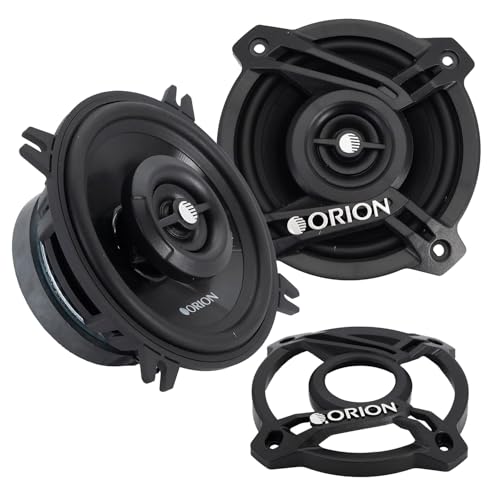
The ORION CB42 delivers up to 160W peak power with a 4-ohm impedance. Its 2-way design uses a dedicated woofer for robust bass and a separate tweeter for crisp highs, providing a balanced overall sound. The speaker employs a premium build, including a Butyl rubber surround and a polypropylene cone for durability and reduced distortion. This setup aims to deliver clearer vocal articulation and more pronounced midrange without requiring a high-power amplifier.
For installations where space is limited, the CB42’s compact frame makes it a versatile choice. It pairs well with standard head units and can benefit from an aftermarket amp if you crave louder playback. Properly sealing the mounting area and ensuring a solid ground connection will help achieve maximum efficiency in smaller cabin volumes.
PIONEER F-Series TS-F1035R 4” 2-Way

The Pioneer F-Series TS-F1035R offers a 4-ohm, 150W peak power 4″ two-way coaxial design. It emphasizes a balanced sound profile with smooth treble and controlled midrange, making it suitable as a stock replacement that improves clarity without demanding extra headroom. The efficiency, combined with the 4-ohm impedance, helps maintain performance on OEM electrical systems while providing a broader frequency response for everyday music.
Installation is straightforward for many factory slots, and the TS-F1035R tends to preserve a natural vocal presence and decent stage width. When upgrading, verify that the mounting depth fits your dash cavity and that the grille clearance remains adequate to avoid contact with the cone during operation. Wiring quality and a stable power source further influence perceived loudness and fidelity at high volumes.
PIONEER A-Series TS-A1081F 4” 2-Way

The TS-A1081F from Pioneer’s A-Series is a 4″ two-way speaker offering up to 230W peak power. This model emphasizes a broader frequency response and a robust bass presence while maintaining smooth treble. With a claimed 82 Hz to 40 kHz response range, it’s designed to reproduce a wide spectrum of musical content. The 4-ohm impedance aligns with common head units and aftermarket amps for a balanced load, which helps minimize distortion at higher listening levels.
In practice, the TS-A1081F can serve as an excellent upgrade for those seeking greater depth in the lower midrange and improved high-frequency extension. Ensure the installation depth is compatible with the dash or door cavity and consider dampening materials around the mounting area to reduce panel resonance and improve sonic clarity in the cabin space.
KICKER CS-Series CSC4 4-Inch Coaxial

The KICKER CS-Series CSC4 is a compact 4-inch coaxial option noted for strong bass response and efficient performance. The CS-Series employs a rigid polypropylene cone, a stamped-steel framework, and a zero-protrusion PEI tweeter to minimize depth and maximize install fit. The design prioritizes low distortion and reinforced magnet structures, enabling clear midrange and controlled highs at moderate volume levels. The pair configuration provides a balanced stereo image for small dashboards or doors.
When selecting the CSC4, consider the vehicle’s electrical system and potential amplification needs. Although rated for solid performance on factory head units, adding a modest aftermarket amplifier can unlock more dynamic range and cleaner bass without straining the factory wiring. Proper sealing and gasket use help prevent air leaks that could degrade midbass clarity in cramped spaces.
Buying Guide: Key Purchase Considerations For 4-In Car Speakers
- Vehicle fit and mounting depth: Many 4″ speakers are designed for compact spaces. Check your dash or door cavity depth and grille clearance to avoid contact with wiring or the window mechanism.
- Impedance and head-unit compatibility: 4-ohm speakers are common and pair well with most head units. If you plan to use an aftermarket amp, verify compatibility with your power budget and the speaker’s RMS rating.
- Power handling and efficiency: Peak power numbers can be misleading. Focus on RMS ratings to gauge real-world performance and how loud the system can play without distortion.
- Coaxial vs. component design: Coaxial speakers (woofer and tweeter integrated) are easier to install and suitable for stock slots. Components offer potentially better sound but require more installation work.
- Material and build quality: Look for durable cones ( polypropylene or treated fiber), sturdy surrounds (Butyl rubber is common and durable), and robust mounting hardware for long-term reliability.
- Sound signature and listening goals: If you want crisp highs and detailed midrange for rock or pop, prioritize speakers with a better tweeter, while if you prefer stronger bass, choose models with larger magnet structures and stiffer cones.
- Installation considerations: Some vehicles require adapters or harnesses. Sound dampening materials can reduce panel rattling and improve overall clarity, especially in cabins with high resonance.
- Upgrade path: For noticeable gains, pair new 4″ speakers with a quality head unit or modest amplifier. This helps unlock the full potential of the speakers without overtaxing the electrical system.