Best Car Audio RCA Cables for Clear Sound and Strong Connection
When wiring a car stereo, the quality of your RCA interconnects can influence clarity, noise, and overall listening enjoyment. This guide highlights five top-rated RCA cables designed to minimize static, reduce interference, and preserve signal integrity. We evaluate length, copper quality, shielding, and twisted-pair construction to help you choose cables that suit your setup and budget.
Summary of Selected Products:
| Product | Brand | Length | Key Benefit |
|---|---|---|---|
| RECOIL RCI417 | RECOIL | 17 ft | 99.99% OFC, twisted pair, low noise |
| Skar Audio SKAR2CH-RCA17 | Skar Audio | 17 ft | Audiophile grade, oxygen-free copper |
| DS18 R12 Ultra Flex RCA | DS18 | 12 ft | EMI/RFI shielding, dual male connectors |
| Elite Audio PRM15 | Elite Audio | 15 ft | Double shielded, OFC, low distortion |
| RECOIL RCI217-2 | RECOIL | 17 ft | Two-pack, twisted pair, minimal noise |
RECOIL RCI417 17ft 4-Channel RCA Cable

Product overview: 4-Channel Echo Series interconnect cable, 17 feet in length, crafted with 99.99% oxygen-free multi-strand copper. Twisted pair technology is designed to maximize signal transfer while minimizing static and popping noises. Ideal for users seeking clearer multi-channel routing from head units to processors or amplifiers.
Key considerations: The long 17-foot length helps with versatile car layouts, though longer runs can introduce slight signal loss if shielding is compromised. This model’s twisted pair approach helps preserve stereo integrity across channels, making it suitable for systems with multiple outputs.
Skar Audio SKAR2CH-RCA17 17-Foot Interconnect
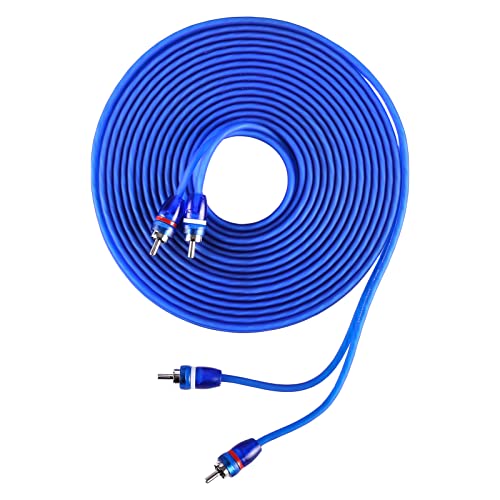
Product overview: 17-foot, 2-channel audiophile-grade RCA cable built with 99.99% oxygen-free copper and twisted-pair construction. The design emphasizes maximum signal transfer with reduced susceptibility to noise, making it a strong choice for mid-to-high-end car audio systems that demand clean, precise channel separation.
Key considerations: The longer length offers flexibility for trunk-mounted amps or processors. Twisted pair and high-grade copper can help minimize hum and interference, but users should ensure proper shielding on nearby power lines to maintain performance.
RECOIL RCI23 3ft 2-Channel RCA Cable

Product overview: A shorter 3-foot option in the Echo Series, featuring 100% oxygen-free copper with twisted-pair construction. This cable focuses on minimizing noise for compact setups or close-proximity component connections, ensuring stable signal transfer with minimal interference.
Key considerations: Shorter runs reduce potential signal loss and simplify routing in tight dashboards. It is well-suited for compact head-unit to amp connections where space is constrained and signal integrity must remain high.
DS18 R12 Ultra Flex RCA Cable (12 ft)

Product overview: Oxygen-free copper core shielded audio cable designed to minimize EMI and RFI interference. The DS18 R12 model emphasizes robust shielding and a copper core to maintain high-fidelity audio with minimal signal loss, featuring dual male connectors for flexible installation.
Key considerations: Shielding and copper quality are central to performance in environments with noisy electrical systems. The 12-foot length balances flexibility and signal integrity for typical vehicle layouts, while ensuring compatibility with most head units and amplifiers.
Elite Audio Premium Series 15ft 2-Channel RCA Cable
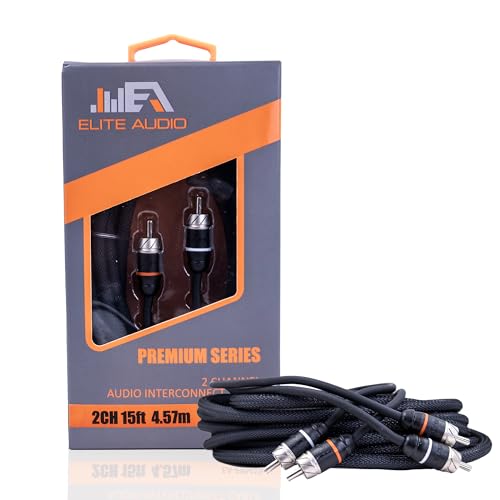
Product overview: Double-shielded, oxygen-free copper cable designed for car audio applications. The Premium Series emphasizes noise reduction, stable signal integrity, and compatibility with amplifiers, subwoofers, processors, and other audio devices. Tinned copper shielding adds extra protection against interference.
Key considerations: The longer 15-foot run is versatile for installs where components are spread out, but shielding quality is essential to prevent any noise pickup. A robust build helps protect delicate signals in demanding environments.
RECOIL RCI217-2 17ft 2-Channel Cable (2-Pack)

Product overview: Two 17-foot RCA interconnects in a twin-pack, each cable built with 100% OFC copper and twisted-pair technology. The package is designed to deliver extended runs with reduced noise, suitable for dual-channel connections from head units to amplifiers or processors.
Key considerations: A two-pack offers convenience for multi-connection setups or replacing aging cables without seeking additional purchases. Ensure your routing path avoids power wires to maximize the advantages of twisted-pair design.
Buying Guide: Key Purchase Considerations For Car Audio RCA Cables
Signal quality and interference resistance: Look for oxygen-free copper (OFC) conductors and twisted-pair construction. OFC minimizes signal loss and offers better conductivity, while twisted pairs reduce crosstalk and electromagnetic interference from nearby power cables.
Shielding and insulation: Double or triple shielding, along with a durable outer jacket, helps block EMI and RFI, especially in metal-bodied cars with dense wiring. Shielding materials and connectors should resist corrosion and maintain steady contact over time.
Length and routing flexibility: Choose cable length that fits your installation without excess slack that can snag or create interference. Longer runs benefit complex installs but require robust shielding to preserve signal integrity.
Connector quality and compatibility: Ensure gold-plated or corrosion-resistant connectors provide reliable contacts. Universal RCA connectors are common, but some cables offer color-coded housings for easy channel identification and safer connections.
Durability and flexibility: A flexible jacket helps in tight dashboards, wheel wells, or trunk spaces. Look for cables rated for automotive environments, with strong strain relief at connectors to endure vibrations.
Price-to-performance balance: Higher-priced cables typically offer lower noise and better shielding, but mid-range options often provide substantial improvements over stock cables. Consider your system’s sensitivity to noise and your budget when evaluating options.
System compatibility: If you are pairing with high-end amplifiers, processors, or subwoofers, select cables designed to preserve dynamic range and preserve low-level signals. For basic installations, robust yet affordable cables can suffice.
Install considerations: Route cables away from power wires and alternator lines where possible. Use cable clamps or loom to prevent movement, and label runs for easier future maintenance or upgrades.