Best Small Block Chevy Fuel Injection Kits: Top Picks for SBC Upgrades
Choosing the right fuel injection kit for a Chevy small block can dramatically improve performance, reliability, and efficiency. This guide highlights five compatible options, spanning multi-port and single-plane manifolds, fuel pump and regulator kits, and essential injector seal replacements. Each selection is evaluated for compatibility with common SBC engines from 1957 through 1986 and modern EFI applications. The following products are featured for their design quality, RPM range support, and install practicality for street or light performance builds.
| Product | Brand | Engine Fit | Type | ACS |
|---|---|---|---|---|
| JGhyperX 7137 Intake Manifold | JGhyperX | Chevy Small Block SBC 1957-86 | Multi-Port EFI | 1500–6500 rpm |
| 300-260 Intake Manifold | JGhyperX | Chevy Small Block SBC 1957-86 | Single Plane EFI | 2,500–7,500 rpm |
| Dasbecan GSL392 255LPH Kit | Dasbecan | Chevy LS swap & EFI conversions | Fuel Pump & Regulator | 58 psi |
| MOTOKU Fuel Injector Seal Kit | MOTOKU | Chevy/GMC V8 1999–2007 | Injector Seals & Filters | Micro filters included |
| Htostar Racing Fuel Line Kit | Htostar Racing | Chevy Small Block EFI setups | Line Fittings & Regulator | 58 psi |
JGhyperX 7137 Intake Manifold — Chevy Small Block

The JGhyperX 7137 intake manifold is engineered for multi-port EFI on Chevy small block V8 engines from 1957 to 1986. It features a large plenum and long tapered runners to maximize horsepower and broaden the torque curve across a broad RPM range (1,500–6,500). The 90mm throttle body bore supports robust airflow, making it suitable for naturally aspirated and boosted SBC builds. This manifold is designed for non-EGR configurations and aligns with SBC engine layouts that demand strong plenum air distribution. Basic data includes a height of 9.09 inches at the end seal and 8.20 inches at the rear.
Key specifications include: Multi-port EFI, 1500–6,500 rpm operating range, and a compatible SBC lineup including 262, 265, 283, 302, 305, 307, 327, 350, and 400 V8 engines. This model is positioned for performance-oriented street and strip applications where airflow and fuel delivery must be efficient across mid to high RPMs. Installation should consider vehicle clearance and bolt pattern matching to ensure proper mounting and seal integrity.
300-260 Intake Manifold — Single Plane EFI

The 300-260 intake manifold is a single-plane EFI manifold designed for SBC engines from 1957–86. It features port-matched upper and lower runners to minimize flow restrictions and relocates EGR passages outside the manifold to allow larger intake ports, supporting higher air capacity. This is particularly advantageous for boosted applications or engines requiring strong top-end performance. The design accommodates a 90mm or similar throttle body bore and is optimized for a broader RPM range (2,500–7,500). This manifold is well-suited for enthusiasts seeking improved high-RPM power with EFI systems.
Considerations include ram-air effects, fuel distribution efficiency, and compatibility with your current fuel rail and sensor arrangement. Ensure the chosen EFI installation aligns with your engine’s intake runner length and port size for optimal throttle response and torque delivery.
Dasbecan GSL392 255LPH Fuel Pump & Regulator Kit

This kit provides a high-pressure external fuel pump and regulator suitable for LS-based EFI conversions and other returnless systems. It includes fittings and mounting hardware and offers a rated flow of 255 LPH with an operating pressure around 58 PSI, compatible with a wide range of EFI applications, including turbocharged and supercharged builds. The set is designed to work with common LS V8 configurations from 1999–2014 and can adapt to various GM engine platforms. The kit’s emphasis is reliable fuel delivery under higher demand conditions and easier system integration for retrofits.
Important considerations include compatibility with your fuel piping layout (6AN fittings, return lines), vehicle fuel supply strategy (return vs. returnless), and ensuring correct wiring and pump control for EFI sensors. This kit is suitable for enthusiasts pursuing improved fuel stability and EFI reliability during high-load operation.
MOTOKU 8-Set Injector Seal Kit
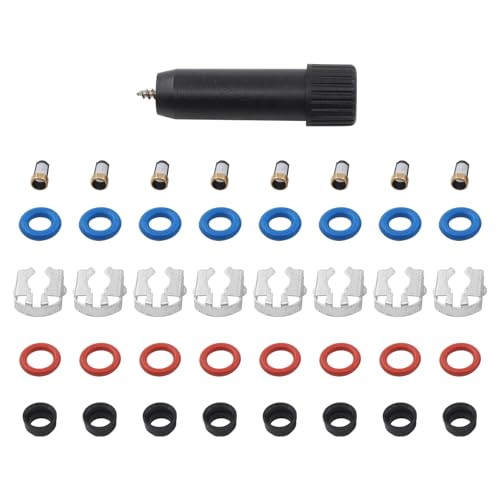
The MOTOKU 8-set fuel injector repair seal kit provides a complete assortment of seals and a micro-filter removal tool designed for Chevy and GMC V8 engines from 1999 to 2007. This kit supports maintaining injector integrity by replacing O-rings, seals, and related micro filters, reducing leakage and maintaining proper spray patterns. It’s intended to assist in keeping EFI systems running smoothly, reducing misfires and ensuring consistent fuel atomization. The included micro filters help trap contaminants that could degrade injector performance over time.
Considerations include ensuring the kit matches your injector model numbers and application years. Proper torque on seals and careful disassembly are essential to avoid injector damage. For owners performing regular EFI maintenance, this kit can help extend injector life and maintain consistent fuel delivery in SBC applications.
Htostar Racing Fuel Line Fitting Kit — 58 PSI

The Htostar Racing line fitting kit provides a comprehensive set for EFI fuel systems, including a 58 PSI regulator, 25 feet of high-pressure hose, and a broad range of AN fittings and adapters. The kit includes multiple 6AN fittings, straight and 45-degree connectors, and 3/8″ and 5/16″ line options. Built with premium aluminum fittings and durable NBR rubber hose, this kit emphasizes reliability and a clean engine bay appearance. It’s designed for LS-based or SBC EFI setups requiring robust fuel routing with proper regulator pressure control.
Key considerations include compatibility with your fuel pump output, desired return or returnless configuration, and ensuring hose routing avoids heat sources or sharp bends. The kit is valuable for builders seeking a complete, ready-to-install fuel line solution with professional-grade hardware.
Buying Guide: Key Considerations For Small Block Chevy EFI Upgrades
- Engine compatibility: Confirm the manifold design matches SBC displacements and year ranges (1957–86 for many SBCs). Check intake port sizes and bolt patterns to ensure a proper seal and throttle body compatibility.
- EFI vs. carbureted path: EFI offers better throttle response and efficiency, but may require additional sensors, wiring, and an EFI controller or ECU. Decide if you’re upgrading from carburetion or converting an LS-based EFI setup to SBC components.
- Airflow and RPM range: Multi-port manifolds favor broad torque, while single-plane manifolds excel at high-RPM power. Align the choice with intended usage: daily drivability vs. track or high-performance street driving.
- Fuel delivery: Select pumps and regulators that match your engine’s fuel requirements, ensuring correct pressure (commonly 58 psi in many EFI systems) and adequate fuel flow to avoid lean conditions at higher RPMs.
- Fittings and hoses: Verify compatibility of AN fittings, hose sizes, and mounting hardware with your existing fuel rails and tank pickup. Consider heat resistance, routing, and potential vibrations that could affect line integrity.
- Maintenance and parts availability: Injector seals, filters, and regulators should be readily available, especially for older builds. Keeping a stock of OEM-friendly seals reduces downtime and maintainability.
- Wiring and sensors: EFI systems rely on accurate sensor inputs (MAP, MAF, O2, TPS). Plan wiring routing, shielded harnesses, and secure sensor mounting for stable readings during torque changes and boosting scenarios.
- Performance balance: Cam choices, intake design, and exhaust compatibility should be coordinated. Mismatched components can limit the expected gains from an EFI upgrade.
- Installation complexity: Some kits require professional tuning, engine management calibration, and dyno testing to maximize performance and avoid drivability issues. Budget time and resources accordingly.
- Warranty and support: Check manufacturer warranties and available technical support. EFI components often require firmware updates and tuning guidance to sustain reliability across climates and fuel quality.