Best Fault Code Reader Buyers Guide: Top OBD2 Scanners for 2026
Finding the right fault code reader helps you quickly identify and clear engine codes, read live data, and monitor emissions readiness. This guide highlights five trusted OBD2 scanners, including models from ANCEL, VDIAGTOOL, MOTOPOWER, FOXWELL, and others. Each section provides a concise overview, key features, and practical use notes to help American readers choose a tool that fits DIY needs, on-the-road checks, or professional-style diagnostics.
Quick comparison of chosen models:
| Product | Brand | Key Strength |
|---|---|---|
| AD310 Classic Enhanced | ANCEL | Fast reads, clear display, compact design |
| VD10 OBD2 Scanner | VDIAGTOOL | Wide code support, quick DTC lookup |
| MP69033 Car OBD2 Scanner | MOTOPOWER | Multi-function data, broad protocol support |
| NT301 OBD2 Scanner | FOXWELL | Live data, MIL reset, mechanic-level features |
| BlueDriver Bluetooth Pro | BlueDriver | Wireless, extensive repair guidance, mobile app |
These options cover entry-level usability, live data visualization, and more advanced diagnostic capabilities. The choices emphasize ease of use, broad compatibility with OBDII protocols, and clear code definitions to help you determine repairs quickly and accurately.
ANCEL AD310 Classic Enhanced Universal OBD II Scanner
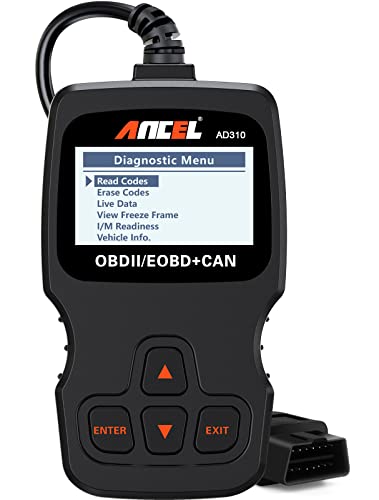
The ANCEL AD310 is a compact, sturdy OBDII scanner designed to read and clear emission-related codes quickly. It supports vehicles from 1996 onward and delivers live data, freeze frame information, I/M readiness, and vehicle information. Its 2.5-foot cable and clearly labeled buttons enhance usability in tight engine bays. Users can power the device directly from the vehicle’s OBDII port without batteries or chargers, enabling fast on-the-spot diagnostics. The tool is widely recommended for its reliability and straightforward operation.
Key capabilities include rapid fault code identification, code clearing after repairs, and accessible data presentation. The AD310’s compact build makes it easy to transport in a glove box and use during routine maintenance or roadside checks. This model is well-suited for DIY enthusiasts and professionals seeking a dependable, no-fruss tool to verify repairs and monitor engine systems.
VDIAGTOOL VD10 OBD2 Scanner
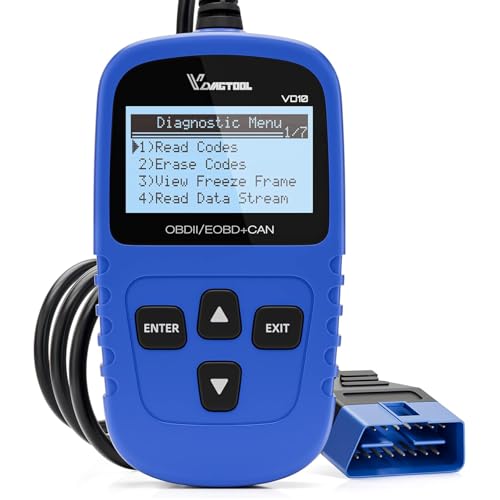
VDIAGTOOL VD10 presents a DIY-friendly diagnostic option with quick code reading, clearing, and live data viewing. It supports all OBDII protocol cars and provides DTC lookup with definitions displayed on its screen. The tool emphasizes ease of use—just plug into the OBDII port to diagnose problems, read engine fault codes, and erase codes after repairs. Its built-in database covers thousands of codes, helping users identify root causes without excessive online searching.
Additional strengths include I/M readiness checks, freeze frame data, and vehicle information retrieval. With a straightforward interface and a TFT display, the VD10 is suitable for casual car owners who want reliable fault-code feedback and immediate feedback on the vehicle’s health before smog tests or service visits.
MOTOPOWER MP69033 Car OBD2 Scanner

The MOTOPOWER MP69033 is a feature-rich OBDII scanner designed for a wide range of vehicles manufactured since 1996. It offers multi-function support, including reading and erasing codes, viewing freeze frame data, checking I/M readiness, and providing vehicle information. The device operates without an external battery, drawing power directly from the OBDII port. It supports the common 9 OBDII protocols and offers a clear display with user-friendly navigation, making it a practical choice for DIYers and professional technicians who need rapid diagnostics and comprehensive data presentation on a single screen.
With its broad protocol compatibility and real-time data capabilities, MP69033 helps users assess engine health, monitor sensor data, and verify repairs. The device’s robust feature set makes it a versatile option for home garages, small repair shops, and roadside diagnostics where reliable, on-device interpretation matters.
FOXWELL NT301 OBD2 Scanner

The FOXWELL NT301 is designed for professional-level diagnostics with a strong emphasis on CEL management and live data access. It provides the ability to read DTCs, view emissions readiness, reset the MIL, and retrieve VIN information. Live data streaming and graphing help technicians identify trends and anomalies in sensor signals. Note that NT301 focuses on standard OBDII systems and supports basic functions suitable for general repairs; it does not offer ABS, SRS, or advanced bi-directional features, but remains a solid choice for quick checks, readiness status, and fault-code interpretation in most worldwide cars, SUVs, and light trucks.
Users benefit from clear code definitions, straightforward navigation, and reliable performance in on-the-spot diagnostics. The NT301’s balance of essential features and portability makes it a dependable option for hobbyists and professional technicians who value simplicity with practical data insight.
BlueDriver Bluetooth Pro OBDII Scan Tool
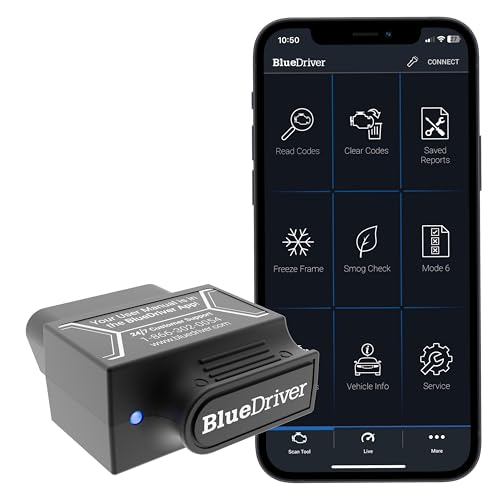
The BlueDriver Bluetooth Pro offers wireless diagnostics for iPhone and Android devices, delivering professional-level code reading and clearing with a subscription-free approach. It extends beyond basic codes to read ABS, SRS, Airbag and TPMS issues, and supplies unlimited repair reports with potential causes and fixes. The real-time live data feature provides ongoing vehicle health monitoring while you drive, enabling proactive maintenance planning. BlueDriver’s app-centric design is ideal for users who prefer mobile diagnostics, remote access, and ongoing repair guidance without relying solely on a handheld screen.
With broad coverage for 1996 and newer vehicles, the BlueDriver is a standout option for tech-savvy owners who want a modern, connected diagnostic experience. It emphasizes ongoing support, ease of use, and a robust data library that helps users interpret and address most common and many less common fault codes.
Buying Guide: Key Purchase Considerations
- Vehicle compatibility and protocols: Ensure the scanner supports OBDII and the brands or regions you drive (US, EU, or Asian vehicles). Some models list 9–16 protocols; broader support reduces the chance of missing codes.
- Code reading, clearing, and definitions: Look for tools that read generic and manufacturer-specific codes, offer built-in code lookups, and provide straightforward definitions to speed repairs.
- Live data and freeze frame: Real-time data and freeze-frame capture help diagnose intermittent issues and verify fixes after maintenance or repairs.
- Readiness and emissions features: I/M readiness and MIL (check engine light) management are helpful for smog tests and assessing the vehicle’s readiness for inspection.
- User interface and display: A clear screen, readable text, and intuitive menus save time, especially for DIY users who don’t have formal training.
- Power source and portability: Some devices draw power from the OBDII port and require no batteries, which is convenient for on-the-go diagnostics. Others include wireless connectivity, adding convenience for mobile use.
- Data access and sharing: Wireless tools or apps can provide repair reports, data logs, and potential fixes, which is useful for maintaining a vehicle history or seeking remote assistance.
- Multilingual support: If you work with multiple languages or households, consider scanners offering several language options for easier interpretation of DTCs and definitions.
- Upgrade and support: Consider models with frequent firmware updates and accessible customer support to keep up with evolving vehicle technologies.
- Budget and ease of use: Entry-level tools are typically simpler, while more advanced models offer deeper diagnostics. Align your choice with your mechanical comfort level and intended use.
In summary, for straightforward fault-code reading and on-the-spot repairs, the ANCEL AD310 and MOTOPOWER MP69033 provide robust core functionality. For broader code databases, live data, and mobile convenience, the VD10, FOXWELL NT301, and BlueDriver present compelling options. Prospective buyers should balance protocol coverage, ease of use, and whether wireless connectivity aligns with their diagnostic workflow.