Best Go Kart Racing Clutches for Quick, Smooth Shifts
The right go kart racing clutch can dramatically improve acceleration, smoothness, and reliability on the track. This guide highlights five top clutches that fit common 3/4″ shaft setups and are designed for 2- to 6.5-horsepower engines. Each option offers solid engagement, wear resistance, and compatibility with popular chains (#35, #40/41/420). Read on to compare features, performance traits, and installation considerations to choose a clutch that matches your go kart’s powertrain and racing goals.
| Product | Brand | Tooth Count / Bore | Chain Type | Engagement Notes |
|---|---|---|---|---|
| Motovecor Centrifugal Clutch | Motovecor | 12T / 3/4″ | #35 Chain | Suitable for 2-6.5 HP engines; 2300 PRM engagement; broad engine compatibility |
| GYMMEDS Go Kart Clutch | GYMMEDS | 10T / 3/4″ | #40/41/420 Chain | Single wheel drive, 212cc Predator and 2-6.5 HP engines; durable steel |
| Noram Cheetah Go-Kart Clutch | Generic | 15T / 3/4″ | #35 Chain | High-performance friction disc design; smooth engagement |
| TEANTECH Go Kart Clutch | TEANTECH | 12T / 3/4″ | #35 Chain | 2-7 HP engines; 2300±300 RPM engagement |
| Bravex Centrifugal Clutch | Bravex | 10T / 3/4″ | #40/41/420 Chain | 50% longer lifetime; suited for small go karts and mini bikes |
Note: Each product targets common go kart setups with 3/4″ shafts and sprockets in the 35 or 40/41/420 range. When selecting a clutch, consider engine horsepower, RPM engagement range, chain compatibility, and mounting options to ensure reliable performance on the track.
Motovecor Centrifugal Clutch With 12T 3/4″ Bore

- Centrifugal Clutch, 3/4” bore, 12-tooth for #35 chain
- Designed for engines 2-6.5 HP; 2300 RPM engagement
- Compatible with Honda GX series, Harbor Freight Predator, and other 3/4″ shaft engines
GYMMEDS Go Kart Clutch 3/4″ Bore 10T

- 10-tooth centrifugal clutch for #40/41/420 chain
- Compatible with Predator 212 and 2-6.5 HP engines
- Made for single-wheel drive karts; durable steel construction
Noram Cheetah Go-Kart Clutch

- 15-tooth driver for #35 chain
- High-performance friction disc design for smooth engagement
- Engineered for reliable power transfer in racing conditions
Go Kart Clutch 3/4″ Bore 12T By TEANTECH

- 12T, 3/4″ bore, 4 feet of #35 chain included
- Engagement around 2300±300 RPM
- Compatible with 2-7 HP engines and common brands
Bravex Centrifugal Clutch For Go Kart
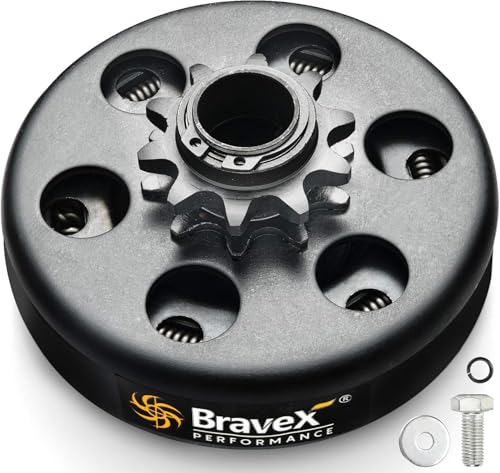
- 10-tooth, 3/4″ bore for #40/41/420 chain
- Constructed from high-impact wear-resistant steel
- Reported longer lifetime; suited for 6.5 HP engines
Buying Guide
Key purchase considerations for go kart racing clutches include torque handling, engagement RPM, chain compatibility, shaft size, and mounting options. For competitive use, prioritize clutches with precise engagement ranges (around 2100–2400 RPM) to match typical 2- to 6.5 HP engines. Consider chain type: #35 is common on smaller karts, while #40/41/420 is used on larger setups. Ensure the bore is 3/4″ to fit your crankshaft, and verify keyway compatibility to avoid slippage. Material quality, heat dissipation, and wear resistance impact longevity under race conditions. Finally, check installation clearances and whether the clutch includes sprockets or chains to simplify setup.
Performance perspectives:
- For quick throttle response and instant engagement, choose a clutch with a tight engagement window and low slip characteristics, such as the Noram Cheetah or GYMMEDS options.
- For durability and longer race life, prioritize clutches built from high-impact steel with heat-dissipation features, like Bravex or TEANTECH models.
- For compatibility with a broad engine lineup (Honda clones, Predator, Briggs & Stratton), verify engine fitment lists and verify that the shaft size and keyway are correct before purchase.
- Maintenance considerations: inspect friction discs for glazing, ensure fasteners stay torqued, and replace worn chains or drive belts to prevent slippage during a race.