Best Catalytic Converter Cutter: Top Exhaust Pipe Cutters for Easy Work
Whether you’re replacing a clogged catalytic converter or performing routine exhaust work, a reliable exhaust pipe cutter makes the job faster and cleaner. This guide highlights five highly capable cutters designed for cutting exhaust pipes and related tubing. Each option emphasizes ease of use, durability, and suitability for tight spaces, so you can pick the right tool for your vehicle or project.
| Product | Brand | Key Feature |
|---|---|---|
| Exhaust Tube Chain Cutter | Zhupoub | 0.6″ to 3.3″ pipes, 14 rolling blades, chain wrap, adjustable for tight cuts |
| OEMTOOLS 27045 Exhaust Cutter | OEMTOOLS | One-handed rotation, compact chain cutter for tight spaces |
| MacWork Exhaust Pipe Cutter | MacWork | Rolling blades, 0.6″ to 3.3″ range, suitable for exhaust and copper |
| Powerbuilt Tail Pipe Cutter | Powerbuilt | 6″ diameter capability, 12 cutting teeth for clean squares |
| Exhaust Pipe Cutter Tool Muffler Cutter | ZJMCAJY | Nonslip handle, one-handed operation, tight-space design |
Below are five carefully chosen products tailored to cutting exhaust pipes and related components, with practical features to help during installations, repairs, or upgrades. Each entry includes a concise overview, how it can be used, and notable strengths for different scenarios.
Zhupoub Exhaust Tube Chain Cutter
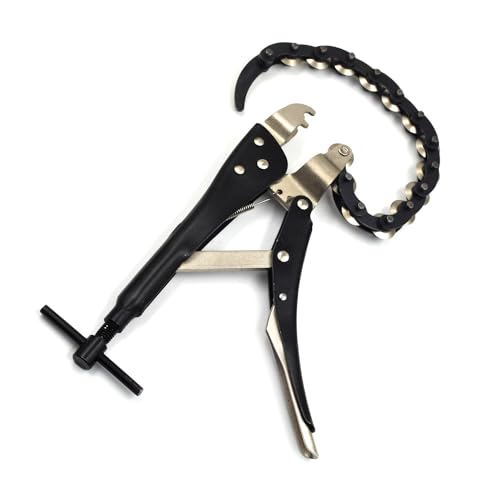
The Zhupoub Exhaust Tube Chain Cutter features 14 rolling blades arranged across a long cutting span, enabling efficient cutting of 0.6″ to 3.3″ pipes with a maximum thickness of 0.1″ (2.5 mm). It is designed to handle exhaust pipes, tailpipes, PPR, low-carbon steel, and copper. The tool uses a wrap-around chain that tightens around the pipe and a simple adjustment knob to control tension. To operate, wrap the chain around the pipe, lock the chain into the handle, and rotate the handle back and forth until the cut progresses. This method is particularly useful for longer exhaust runs or sections where a traditional clamp cutter would be impractical. The device emphasizes a straightforward, manual approach that works well in constrained spaces.
Usage considerations include ensuring the pipe material is compatible with cutting blades and confirming pipe thickness stays within the stated range. For best results, apply steady, controlled rotations and re-tighten as needed to advance the cut. The number of blades contributes to a smoother cut and helps reduce the chance of pinching. This model is well-suited for DIY enthusiasts and professionals dealing with a variety of metal pipes in automotive exhaust tasks.
OEMTOOLS 27045 Exhaust Cutter

The OEMTOOLS 27045 Exhaust Cutter is built around a robust chain cutter design that offers easy one-handed operation in tight spaces. It’s described as a compact, efficient tool ideal for muffler and tailpipe cuts. The cushion-grip handles provide comfortable control, reducing hand fatigue during longer cutting sessions. The setup process involves wrapping the cutter around the exhaust pipe, hooking the chain onto the plier jaw, then drawing the jaw tight and rotating the chain to progress the cut. This model focuses on straightforward, reliable performance in constrained work areas where precision matters.
Key considerations include fit for the pipe diameter and the ease of operation with one hand. The design aligns with professional shop use and home projects where space limitations can hinder more complex tools. If you value ergonomic handling and a simple workflow, this cutter offers a dependable balance of performance and comfort.
MacWork Exhaust Pipe Cutter
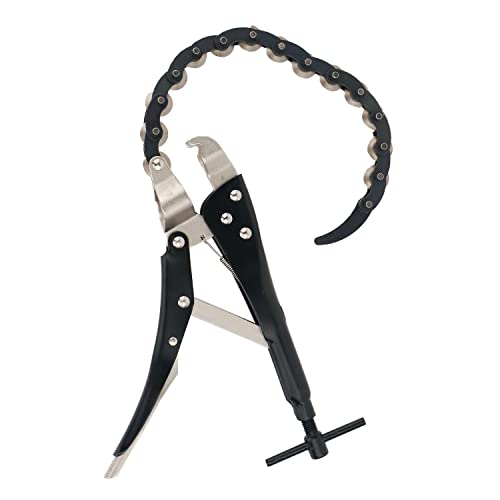
The MacWork Exhaust Pipe Cutter is a chain-style cutter with 14 rolling blades (about 11.8 inches in length) designed to cut 0.6″ to 3.3″ pipes with up to 0.1″ thickness. It’s described as effective for exhaust pipes, tailpipes, PPR, low-carbon steel, and copper, but not suitable for stainless steel. The tool features a corrosion-resistant coated handle for comfort and is designed to access tight spaces where larger tools can’t reach. Its rolling blade design aims to provide smooth, even cuts, reducing the effort needed to finish the job.
When selecting this cutter, consider material compatibility (especially avoiding stainless steel if that’s a possibility in your exhaust system) and the space you’ll work in. The combination of a long blade path and a robust chain makes it a solid choice for DIY exhaust work where space is a constraint and a clean cut is crucial for proper pipe fitting.
Powerbuilt Tail Pipe Cutter
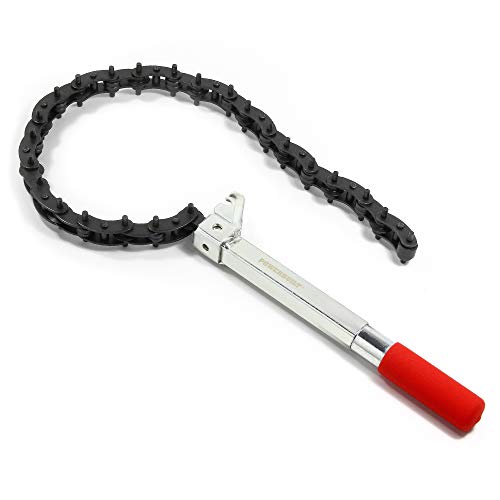
The Powerbuilt Tail Pipe Cutter is designed for cutting exhaust pipes with diameters ranging from 3.5 to 6 inches, offering use in limited clearance settings where saws won’t fit. It utilizes 12 cutting teeth to create clean, square cuts with ease. This tool is tailored to larger pipe work or situations where space is particularly restricted and a robust cutter is needed to make a precise cut without extensive repositioning.
Key considerations include whether your project involves larger diameter pipes and whether you need smooth, squared cuts in hard-to-reach areas. This cutter’s strength lies in its capacity to handle bigger exhaust run segments where a standard cutter would struggle, making it a strong option for more complex or heavy-duty automotive exhaust tasks.
Exhaust Pipe Cutter Tool Muffler Cutter with Nonslip Handle

This cutter emphasizes a nonslip handle for secure control during use, which helps reduce fatigue during longer sessions. It is designed for 3/4″ to 3-1/4″ pipe cutting with one-handed operation and a compact, tight-space friendly design. The mechanism involves wrapping the chain around the tubing, hooking, tightening, and rotating to complete the cut. The tool’s ergonomic grip and compact form factor suit enthusiasts working in cramped motor bays or under vehicles.
When choosing this model, consider balance between blade quality and overall tool reach. The nonslip grip augments control on slippery surfaces, while the compact size allows operation in confined spaces typical of automotive exhaust work. It’s a practical pick for DIYers who require reliable performance without bulky equipment.
Buying Guide: Key Purchase Considerations
- Pipe diameter and material: Confirm the cutter’s compatible pipe range (inches and millimeters) and whether it supports common exhaust materials like copper, steel, or PPR. Some tools specify not suitable for stainless steel, which is important for certain exhaust components.
- Cutting method and space: Chain-style cutters excel in tight spaces, while rolling-blade designs may offer faster progress on longer sections. Consider your workspace and whether you’ll routinely work under a vehicle or in a cramped engine bay.
- Durability and blade life: Look for corrosion-resistant handles, robust construction, and blade design that promotes straight, square cuts. A longer tool may be advantageous for deeper access in stubborn exhaust setups.
- Ergonomics and user comfort: Cushioned or nonslip handles can reduce fatigue during extended use. This matters if you perform many cuts in a single session or over several days.
- One-handed operation: Tools that support one-handed rotations simplify work in restricted spaces and can help with stability when working solo.
- Versatility vs. specialization: Some cutters are designed to cover a broad range of pipes (copper, PPR, etc.), while others are tailored to exhaust systems. Assess whether you need a single tool for multiple tasks or a dedicated exhaust cutter.
- Maintenance: Consider ease of cleaning and storage, especially if you operate in dirty environments. A supported warranty or replacement parts can also extend tool life.
In sum, choosing the right catalytic converter cutter depends on pipe size, material compatibility, and the workspace you typically encounter. For tight spaces, chain-type cutters with ergonomic grips provide dependable performance. For larger exhaust sections, a longer tool with multiple teeth can speed up cuts while maintaining accuracy. By evaluating these factors, you can select a cutter that delivers consistent, clean results across typical automotive exhaust tasks.