Best Oxygen Sensor Socket Tools for Easy Exhaust Work and Safe Wiring
Finding the right oxygen sensor socket can save time and protect wiring during sensor removal and installation. This guide reviews five popular options, highlighting design features like offset gates, side wire cutouts, and durable materials. Each product targets common vehicle makes and wheelhouse access challenges, from tight spaces to high-torque demands. Read on to compare capabilities and choose the tool that fits your shop or DIY needs.
| Product | Brand | Key Feature | Drive Size | Size |
|---|---|---|---|---|
| Offset Oxygen Sensor Socket | YOGEIER | Wire-side offset for harness protection | 3/8″ | 7/8″ (22mm) |
| DURATECH 5PCS O2 Socket Set | DURATECH | Includes thread chasers and long/offset sockets | 3/8″ / 1/2″ | 7/8″ (22mm) |
| 5PCS O2 Sensor Socket Set | Dobur | Thread chasers + offset wrenches for tight spaces | 3/8″ | 7/8″ (22mm) |
| Oxygen Sensor Socket 22mm | Dobur | Heavy-duty CR-V construction with side wire cutout | 1/2″ | 7/8″ (22mm) |
| GIroiyai 5PCS O2 Socket Set | GIroiyai | Offset low profile with thread repair options | 3/8″ / 1/2″ | 7/8″ (22mm) |
Offset Oxygen Sensor Socket With Wire Gate Access

YOGEIER’s offset oxygen sensor socket features a 3/8″ drive and a 7/8″ (22mm) hex size, designed to slide sensor removal while keeping the harness connected. The unique wire gate helps prevent wire damage by guiding the harness away from the socket during turning. Made from chrome molybdenum steel, it aims to deliver high torque with good durability and alignment. The slotted design aids anti-slip performance and secure ratchet engagement in cramped engine bays. This tool is suitable for most cars where the O2 sensor sits close to the exhaust manifold.
DURATECH 5PCS O2 Sensor Socket Set
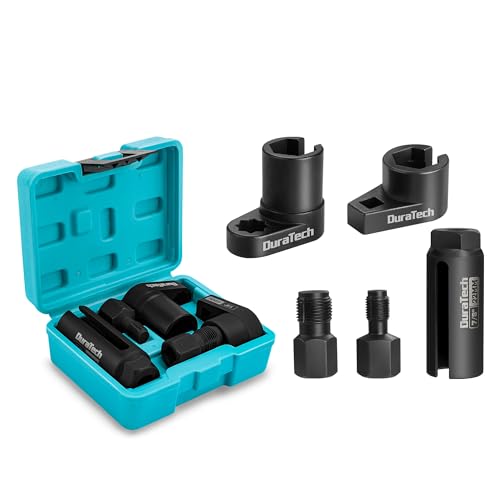
The DURATECH kit provides multiple drive options including 3/8″ and 1/2″ sockets, all offset to reach sensors tucked in tight spots. It includes two thread chasers to restore damaged threads and improve sealing, plus short and long sockets for varied clearance. The build uses high-quality alloy steel with surface treatment to resist wear and corrosion. The wire gate design is broad, reducing wire contact and giving users a safer removal process, especially on modern exhaust assemblies with tight routing.
Dobur 5PCS O2 Sensor Socket Set

This 5-piece Dobur set covers removal, installation, and maintenance of oxygen sensors across many vehicles. It includes a 7/8″ (22mm) socket, thread chasers for cleaning threads, and offset wrenches for accessing sensors in crowded engine bays. Carbon steel construction with suitable heat treatment ensures durability under torque-heavy operations, while the included tools simplify thread repair and alignment during sensor replacement tasks.
Dobur Oxygen Sensor Socket With Side Wire Cutout

This 22mm tool is designed for easy removal and installation with a 1/2″ drive compatibility. The side wire cutout protects harnesses while providing robust leverage. It’s built from chrome vanadium steel to withstand torque and resist bending or wear over time, making it suitable for frequent service work on exhaust sensors across different vehicle makes.
Apeixoto Oxygen Sensor Socket With Side Wire Cutout

Designed for 3/8″ drive use with a 7/8″ (22mm) hex size, this tool features a practical side wire cutout to minimize wire damage in tight spaces. It is constructed with CR-V (chrome-vanadium) steel and features a black phosphate finish to resist corrosion. The hex design helps prevent slipping under torque, aligning with standard oxygen sensor nuts to ensure clean removal and reinstallation in a range of vehicle platforms.
GIroiyai 5PCS O2 Socket Set

GIroiyai’s kit emphasizes rugged Cr-V construction for resistance to deformation and wear. It includes 6-point sockets for strong torque transfer without slipping, and the offset design helps access sensors in low-clearance areas. The set is tailored for both professional mechanics and car enthusiasts focused on reliable O2 sensor removal and installation across various makes.
Sguuuwt Oxygen Sensor Socket With Offset Design

Durable 50BV30 alloy steel with a black oxide finish protects against corrosion and wear. The 7/8″ (22mm) hex size fits most oxygen sensors, and the 3/8″ drive works with standard ratchets. The design includes a wire channel to shield the wiring harness during removal, helping prevent harness damage and reducing risk of electrical issues after service. The compact, offset form supports work in restricted spaces commonly found under back-to-back exhaust components.
Buying Guide: Key Purchase Considerations
- Drive size compatibility: Most O2 sockets use 3/8″ or 1/2″ drives. Confirm your ratchet or torque wrench matches the drive size offered by the kit.
- Sensor nut size: The standard O2 sensor uses a 7/8″ (22mm) hex. Ensure the socket set includes this size for broad vehicle compatibility.
- Offset and profile: Offset designs extend reach into tight spaces. Low-profile and open-side features shield wiring while maintaining leverage.
- Wire protection: Look for side wire cutouts or wire gate features that prevent damage to harnesses during removal.
- Thread chasers included: For permanent or semi-permanent sensor replacements, thread chasers help restore damaged threads and improve sealing.
- Material and durability: Chrome molybdenum steel or chrome vanadium steel with protective finishes offer higher torque tolerance and corrosion resistance.
- Kit variety: Sets with multiple sockets (offset, long, and short) plus thread chasers provide flexibility across vehicles from different regions.
- Ease of use: Tools with secure fit (slotted holes, anti-slip design) reduce slippage, especially when working with tight exhaust hardware.
- Intended users: Professional shops may benefit from complete sets; DIY enthusiasts might prefer compact kits focused on common sensor spacing.
When selecting an oxygen sensor socket, consider vehicle variety, space constraints under the hood, and whether you anticipate needing thread repair in the future. A well-chosen kit can simplify removal, minimize wire damage, and extend the service life of sensors and exhaust connections. The five sets reviewed here cover a spectrum of needs, from dense, high-torque scenarios to lighter-duty at-home maintenance.