Best Check Engine Light Code Readers for DIY Diagnostics
For American drivers facing a mysterious check engine light, an OBD-II code reader can quickly pinpoint issues, save trips to the shop, and help you decide whether a repair is needed. The following selections cover popular options that read and clear codes, view live data, and check readiness for smog tests. Each product is compatible with most 1996+ vehicles and offers different strengths—from fast, compact designs to more comprehensive diagnostic capabilities. Use this guide to compare features and find a fit for your garage.
| Product | Brand | Key Benefit |
|---|---|---|
| ANCEL AD310 Classic Enhanced Universal OBD II Scanner | ANCEL | Fast codes, live data, and clear MIL with compact design |
| VDIAGTOOL VD10 OBD2 Scanner | VDIAGTOOL | Affordable, easy DIY diagnostics with extensive DTC library |
| MOTOPOWER MP69033 Car OBD2 Scanner | MOTOPOWER | Wide protocol support and easy-to-read TFT display |
| ANCEL AD410 Enhanced OBD2 Scanner | ANCEL | Comprehensive checks, MIL reset, and EVAP testing |
| FOXWELL NT301 OBD2 Scanner | FOXWELL | Live data graphs, VIN retrieval, and reliable code reading |
The following sections highlight five widely used models, focusing on what each tool does best, its ease of use, and how it supports ongoing maintenance. Each description follows a consistent format: a clickable title linking to the Amazon listing, a visual reference, a concise feature summary, and a practical usage note for everyday car care.
ANCEL AD310 Classic Enhanced Universal OBD II Scanner
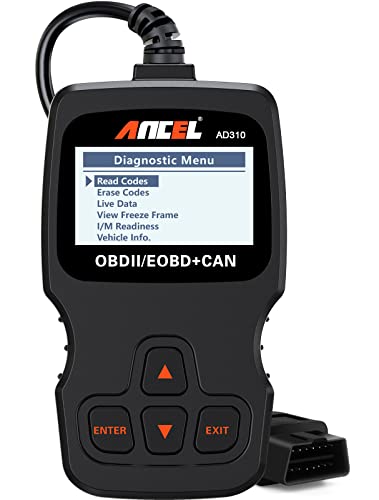
The ANCEL AD310 is a best-selling, compact OBD-II scanner designed to quickly identify the cause of a check engine light. It reads and clears diagnostic trouble codes for emission systems, displays live data, and provides freeze-frame information, I/M readiness, and basic vehicle data. Its 2.5-foot cable and rugged build support reliable in-field use, and the large display delivers clear, fast results. The device powers directly from the vehicle’s OBD-II port—no external battery or charger required. This balance of speed, simplicity, and essential checks makes it a practical choice for DIY repairs and routine diagnostics.
VDIAGTOOL VD10 OBD2 Scanner
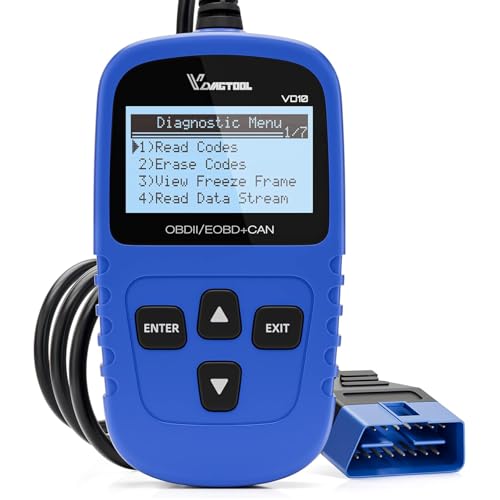
The VD10 is pitched as a must-have tool for DIYers. It attaches to the OBD-II port, then reads and clears codes, shows live data, and displays I/M readiness. The built-in database covers more than 3,000 generic and manufacturer-specific codes, enabling quick troubleshooting without online searches. It provides clear code definitions on-screen and supports data viewing to help isolate root causes. This model emphasizes user-friendly operation and a straightforward diagnostic workflow, making it ideal for home maintenance and troubleshooting minor engine issues.
MOTOPOWER MP69033 Car OBD2 Scanner

The MP69033 offers broad OBD-II compatibility for 1996 and newer vehicles. It features a practical 2.8-inch LCD with backlight, presenting real-time data, vehicle information, and fault codes clearly. Key functions include read and erase codes, view freeze-frame data, monitor I/M readiness, and display engine load, temperature, speed, and RPM—helping users interpret driving conditions and repair progress. Powered by the car’s own OBD-II port, it requires no batteries and is noted for its straightforward interface that supports quick diagnostics during routine maintenance or pre-smog checks.
ANCEL AD410 Enhanced OBD2 Scanner

The AD410 is an enhanced OBD-II scanner designed for broader diagnostic tasks and quicker fault codes interpretation. It supports all OBD-II vehicles from 1996 onward and adds capabilities for EVAP testing and battery-related assessments. It can read and clear emissions-related codes, monitor readiness, and reset the MIL. While it provides extensive internals like O2 sensor testing and EVAP checks, it does not support ABS, SRS, or transmission diagnostics. This makes it a strong option for focused engine and emissions diagnostics with a clear emphasis on battery health and charging considerations.
FOXWELL NT301 OBD2 Scanner

The FOXWELL NT301 is a professional-grade OBD-II scanner focused on core diagnostic needs: reading DTCs, checking emissions readiness, and turning off the MIL. It provides live data streaming and graphing to visualize sensor trends, which helps identify intermittent issues. It retrieves the VIN on compatible vehicles, illustrating its usefulness for quick vehicle identification during repairs or resale checks. The NT301 is designed for general practitioners and hobbyists who require reliable code reading and live data features without advanced bi-directional controls.
Buying Guide
When choosing a check engine light code reader, consider several key factors to align with your needs:
- Vehicle compatibility: Ensure the device supports your car’s year, make, and model, especially if you drive a newer vehicle or a European/Asian model with CAN protocols.
- Code reading and clearing: Most readers show DTCs and definitions; some also clear codes. If you want to reset the MIL after repairs, confirm this function is included and note any caveats about reset permissions.
- Live data and freeze-frame: Real-time data helps diagnose intermittent issues. A device with graphing can reveal patterns that static codes may miss.
- Readiness and emissions: Compatibility with I/M readiness checks is valuable for smog testing in many states. EVAP testing can also indicate fuel-system health.
- Display quality and usability: A clear display with a responsive menu simplifies usage, especially for beginners in car maintenance.
- Power source: Most readers draw power from the vehicle via the OBD-II port; some require separate batteries. Confirm your preferred design.
- Durability and form factor: A compact, well-constructed tool reduces the risk of damage in a toolbox or garage setting.
- Data library: A larger code database helps in diagnosing obscure issues, but may come with a higher price. Consider whether you need manufacturer-specific codes in addition to generic ones.
- Future-proofing: If you want ongoing value, look for products with broad protocol support and regular firmware updates to handle new vehicles.
Practical considerations for selecting among the options include budget, whether you primarily diagnose engine issues or also want broader battery and EVAP tests, and whether you value a fast, compact device versus a more feature-rich scanner. For most DIYers, a balance of straightforward code reading, clear live data, and reliability is a strong predictor of long-term satisfaction. Always verify the latest compatibility notes from the manufacturer before purchasing, especially if you own a special edition or newer model vehicle.