Best Rated RV Batteries for 2026: Top 5 Choices for Reliable Off-Grid Power
For RV enthusiasts, dependable power is essential. This guide highlights five top-rated RV batteries that balance safety, longevity, and performance. Each option suits different needs—from lithium for deep cycles to AGM for maintenance-free reliability. Use the buying guide below to compare chemistry, cycle life, weight, and compatibility with your solar or shore-power setup.
| Product | Brand | Type | Approx. Weight | Key Benefit |
|---|---|---|---|---|
| GRNOE 12V 100Ah LiFePO4 | GRNOE | LiFePO4 | 22.5 lb | Long lifespan, low-temp protection |
| Renogy 12V 100Ah AGM | Renogy | AGM | approx. 24-29 lb | Safety, maintenance-free, trusted brand |
| Interstate 12V 70Ah AGM | Interstate Batteries | AGM | ≈ 40 lb | Dual-purpose, rugged build |
| WEIZE 12V 100Ah AGM | WEIZE | AGM | ≈ 42 lb | Maintenance-free, strong discharge |
| SUPER EMPOWER 12V 100Ah LiFePO4 | SUPER EMPOWER | LiFePO4 | ≈ 21-22 lb | High cycle life, drop-in replacement |
GRNOE 12V 100Ah LiFePO4 Battery

Product overview: A compact 12V 100Ah LiFePO4 battery designed for RVs, marine use, solar systems, vans, and home energy storage. It features a built-in 100A BMS with low-temperature protection and a weight of about 22.5 pounds. The battery offers high energy density and an expected lifespan exceeding traditional lead-acid options, with protection against overheating, overcurrent, overcharge, and short circuits. Note the BMS requires a charger compatible with 14.6V ± 0.2V for full charging efficiency.
Key considerations: LiFePO4 chemistry for longer cycle life (up to 15,000 cycles at partial depth of discharge), compatibility with cold environments due to low-temperature cut-off, and the need for an appropriate charger that matches the specified charging voltage. This choice is well-suited for RVing in varied climates where longevity and weight savings matter.
Renogy Deep Cycle AGM 12V 100Ah

Product overview: A maintenance-free AGM battery designed for RVs, camping, cabins, marine, and off-grid systems. Renogy emphasizes safety, minimal self-discharge, and robust performance for series and parallel configurations (up to 4P). This widely trusted option has a strong track record with hundreds of thousands of units sold, making it a dependable choice for long-term RV power needs.
Key considerations: AGM chemistry provides leak-resistance and lower maintenance, but self-discharge and weight should be considered for mobile setups. Its safety profile makes it a favorable pick for users new to battery upgrades or those seeking a familiar substitute for legacy lead-acid systems.
Interstate Batteries Marine/RV AGM 70Ah

Product overview: A dual-purpose AGM battery designed for marine and RV use. This model functions as both a starting and deep-cycle power source, offering rugged reliability and strong recharging performance. It’s built to withstand rugged conditions and deliver dependable power for motor starts and auxiliary loads like lighting and pumps.
Key considerations: If you need a compact, rugged, all-around unit with robust cranking ability, this option is suitable. However, for deeper cycling needs or longer off-grid runs, pairing with larger capacity or lithium options may be advantageous.
WEIZE 12V 100Ah AGM Battery
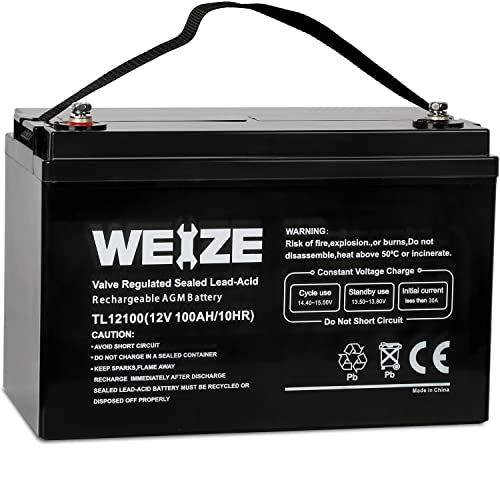
Product overview: A maintenance-free AGM battery designed for RVs, solar setups, trolling motors, and off-grid systems. It features a compact size, sealed construction, and low self-discharge. Its operating range suits moderate climates and everyday RV applications, with a focus on reliable, long-term use without routine maintenance.
Key considerations: AGM is a good balance of cost and performance for many RV users. Ensure charge equipment is compatible with AGM characteristics and monitor temperature to maximize lifespan in extreme environments.
SUPER EMPOWER 12V 100Ah LiFePO4

Product overview: A LiFePO4 12V 100Ah battery with integrated BMS, designed for RVs, boats, trolling motors, and solar systems. It emphasizes a long cycle lifespan and drop-in compatibility with standard BCI group sizes. The unit is lighter than lead-acid equivalents and supports a substantial number of full-charge and discharge cycles with proper management.
Key considerations: Lithium options provide higher energy density and longer lifespans but require compatible charging profiles and protection mechanisms. Check compatibility with existing battery boxes and ensure proper BMS operation to avoid issues in extreme temperatures.
Buying Guide: Key Purchase Considerations And Comparisons
- Chemistry overview: Lithium Iron Phosphate (LiFePO4) offers longer cycle life, lighter weight, and better deep-discharge tolerance compared to traditional AGM. AGM is maintenance-free and robust, while flooded lead-acid options are cheaper upfront but require more care and heavier weight.
- Cycle life and depth of discharge: LiFePO4 batteries commonly deliver thousands of cycles at higher DOD. AGM batteries provide solid cycles but generally fewer than LiFePO4 under heavy use. Plan for your typical off-grid duration and recharging opportunities.
- Weight and space: LiFePO4 packs are lighter for similar capacity, freeing space in compact RV compartments. If you have limited storage, a lighter lithium option can improve overall usability.
- Charger compatibility: Some LiFePO4 batteries require specific charging voltages (for example around 14.6V) and may not fully charge from a standard 12V charger. Verify your charger’s profile and consider a dedicated BMS-integrated unit for lithium.
- Temperature performance: Low-temperature protection is crucial for cold-weather RV use. Some LiFePO4 models include active low-temp cutoffs to prevent charging at unsafe temperatures, protecting battery health in winter trips.
- Maintenance and safety: AGM batteries require less maintenance than flooded lead-acid. LiFePO4 units are inherently safer chemistry with stable voltage and low risk of thermal runaway, though proper handling and monitoring remain essential.
- System integration: Consider how many batteries you need for your RV electrical system, whether you plan on series or parallel configurations, and if you’ll integrate with solar or shore power. Battery management systems (BMS) and wiring compatibility are important for smooth operation.
- Warranty and support: Choose brands with clear warranty terms and accessible customer support. A long warranty often indicates confidence in cycle life and safety testing.