Best OBD II Code Reader for Cars in 2026 Guide
Finding a reliable OBD II code reader helps diagnose engine issues quickly, read live data, and clear check engine lights. This guide highlights five leading models, including ANCEL, FOXWELL, BlueDriver, and Autel, with objective comparisons to help American drivers choose the right tool for DIY maintenance or professional use. Use the quick-reference table below to compare core capabilities at a glance.
| Product | Key Benefit | Typical Use | Power Source | Regions Supported |
|---|---|---|---|---|
| ANCEL AD310 | Easy diagnostics and clearing of codes | DIY car owners | From vehicle’s OBDII port | USA, global compatible |
| ANCEL AD410 | Broad compatibility with OBDII vehicles | Professional and hobbyist use | OBDII port power | Global |
| FOXWELL NT301 | Live data, basic code reading, VIN retrieval | General diagnostics | OBDII port power | Worldwide |
| BlueDriver | Advanced diagnostics with repair reports | Professional-grade insights | Bluetooth to mobile device | Global |
| Autel AL319 | Turn off CEL and read multiple DTCs | Home DIY and quick checks | OBDII port power | Worldwide |
Below are five in-depth product sections to help you pick the right OBD II code reader for your needs, from basic DTC reading to advanced live data capabilities and VIN retrieval.
ANCEL AD310 Classic Enhanced OBD II Scanner
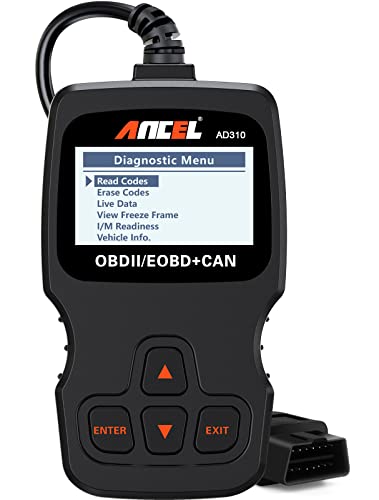
The ANCEL AD310 is a popular, compact OBD II scanner that supports vehicles 1996 and newer. It quickly reads and clears diagnostic trouble codes (DTCs) from the emission system and provides live data, freeze frame, I/M readiness, and vehicle information. It is designed for ease of use and reliability, making it suitable for DIY repairs and quick checks by professionals. The device is powered through the vehicle’s OBDII connector, eliminating the need for batteries or external chargers. A sturdy 2.5-foot cable and clearly labeled buttons enhance usability in tight engine compartments.
ANCEL AD410 Enhanced OBD2 Scanner

The AD410 offers wide compatibility across 1996+ vehicles, including numerous regional standards and CAN-equipped cars. It supports multilingual use and provides quick fault code reading and clearing with access to a large DTC lookup library (over 42,000 codes). It can reset the MIL, check monitor readiness, and diagnose emissions-related issues. Note that this model is an engine-centric tool and does not claim support for ABS, SRS, or transmission modules. It is powered directly from the vehicle’s OBDII port, with no external power source required.
FOXWELL NT301 OBD2 Scanner

The FOXWELL NT301 focuses on core OBD II functions with live data, fault code reading, and VIN retrieval. It offers graphing for live sensor data and is suitable for most worldwide cars, SUVs, and light trucks that are OBD II compliant. It does not support some advanced functions like ABS or TPMS resets, and it requires ignition-on state for reading codes. This makes it a solid choice for hobbyists who want a straightforward, reliable diagnostic tool without complex features.
BlueDriver Bluetooth Pro OBDII Scan Tool
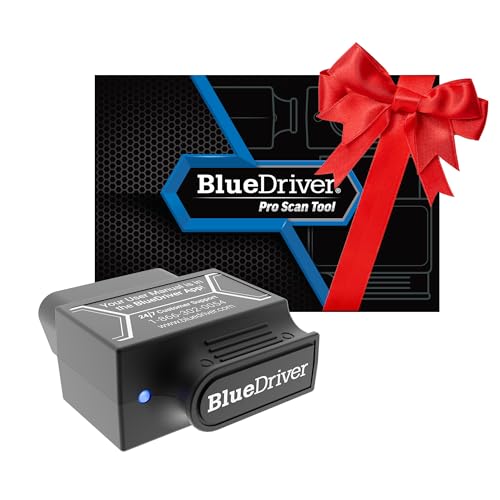
BlueDriver is a premium OBD II reader that connects via Bluetooth to iPhone or Android devices. It offers comprehensive diagnostics, including CAN, ABS, SRS, Airbag, and TPMS codes, along with unlimited repair reports and live data. The platform emphasizes user-friendly interpretation of complex data, making it suitable for both DIY enthusiasts and professional mechanics who want detailed insights and ongoing monitoring without a subscription beyond the app’s standard features.
Autel AL319 OBD2 Scanner
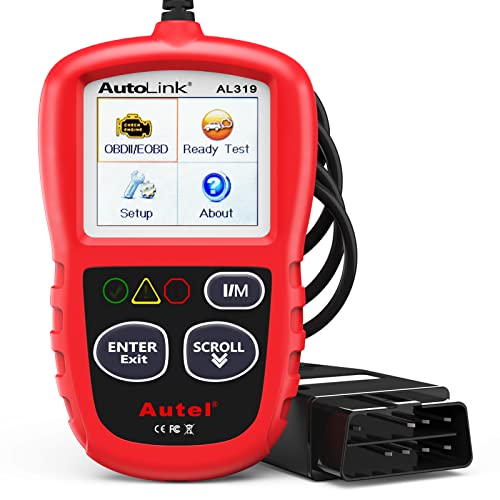
Autel AL319 is designed for universal OBD II diagnostics with a plug-and-play interface. It reads DTCs, displays live data and freeze frame information, and helps identify the root causes of CELs. It supports multiple languages and a broad range of post-1996 vehicles. The AL319 is well-suited for home users who want an easy-to-use, affordable scanner that provides quick results and straightforward troubleshooting guidance.
Buying Guide
Key purchase considerations help calibrate choice to your needs and budget:
- Vehicle compatibility: Ensure the scanner supports your make, model year, and OBD II protocol (CAN, ISO, KWP2000, etc.).
- Code reading vs. advanced diagnostics: Basic models read/clear codes and view freeze frame; higher-end devices offer live data graphs, VIN retrieval, advanced system tests, and EVAP/O2 sensor checks.
- Power source and portability: Some models power directly from the vehicle, others connect to mobile devices via Bluetooth or Wi‑Fi; consider your preference for cable length and battery independence.
- User interface: Look for clear menus, readable screens, and intuitive controls. DIY users benefit from simple “plug and read” designs, while professionals may prefer richer data displays.
- Data access and updates: DTC libraries and free vs. paid software updates impact long-term value. Some tools offer extensive code databases and repair guidance.
- Multi-language support: Helpful for international users or multilingual households; check available languages.
Depth of data varies across models. For quick checks and basic repair readiness, entry-level scanners are typically sufficient. For ongoing maintenance, vehicle fleets, or diagnostic work, tools with live data, wide DTC coverage, and repair guidance deliver greater value. Battery-free operation via vehicle power and robust build quality also influence long-term reliability in busy workshop settings.