Best Sound Deadening Material for Car Audio: Top DIY Kits and Tips
Selecting the right sound deadening material can dramatically reduce road noise, vibrations, and outside chatter in your vehicle. This article highlights five popular car audio insulation options, comparing thickness, coverage, and installation practicality to help you make an informed choice for better in-car acoustics.
Summary of chosen products
| Product | Brand | Coverage | Thickness | Notes |
|---|---|---|---|---|
| KILMAT 80 mil 36 sqft | KILMAT | 36 sqft | 80 mil (2 mm) | High-stickness, DIY-friendly |
| Amazon Basics Car Sound Deadening Mat | Amazon Basics | 10 pieces | Not specified on packet | Budget-friendly kit |
| Siless 80 mil 36 sqft | Siless | 36 sqft | 80 mil (2 mm) | Cost-effective, strong performance |
| VOISNE Sound Deading Material 31 sqft | VOISEN | 31 sqft | 197 mil (5 mm) | Thicker, excellent heat and noise control |
| KOIKEY Car Sound Deadening Mat 8.7 sqft | KOIKEY | 8.72 ft² | 197 mil (5 mm) | Compact, high-density insulation |
KILMAT 80 mil 36 sqft Car Sound Deadening Mat

The KILMAT 80 mil mat uses a butyl and foil composition designed for high adhesion and durable installation. With a thicker profile, it aims to deliver stronger vibration dampening and improved acoustic performance. The material is described as lightweight for easy handling and suitable for DIY installation, making it a popular choice for enthusiasts who want noticeable improvements without professional labor costs. Its self-adhesive backing simplifies application to uneven surfaces commonly found in vehicle panels.
KILMAT 80 mil 10 sqft Car Sound Deadening Mat

This KILMAT option mirrors the 80 mil thickness and butyl-foil construction, but in a smaller area. It remains user-friendly for DIY installations and maintains the same goal of boosting insulation performance with a 1.5x thickness advantage. The compact size is convenient for targeted treatment of specific panels or areas where noise is most noticeable, such as doors or floors.
Amazon Basics Car Sound Deadening Mat

The Amazon Basics kit provides a cost-conscious option with 10 self-adhesive pieces designed to reduce vibrations and external noise. The kit combines a butyl rubber backing with a reflective aluminum front for thermal insulation. The self-adhesive backing offers secure placement, and the setup is intended to create a quieter interior and a more comfortable ride by dampening road and engine noise.
CUKWUYBY 80 mil Sound Deadening Mat

CUKWUYBY offers an 80 mil, 3-layer construction featuring 8-wire aluminum foil, butyl rubber, and a strong adhesive. The 36 square feet of coverage makes it suitable for larger areas like doors, trunks, and floors. The product emphasizes waterproofing and durability, with the goal of blocking road and engine noise while contributing to an overall quieter cabin environment.
Siless 80 mil 36 sqft Car Sound Deadening Mat

Siless 80 mil is positioned as a high-value option, combining a robust 80 mil thickness with a focus on reducing both noise and vibration. Its formulation aims to deliver effective sound dampening without a prohibitive price tag, making it appealing for budget-conscious car enthusiasts who still demand solid performance in everyday driving conditions.
VOISNE Sound Deading Material For Cars
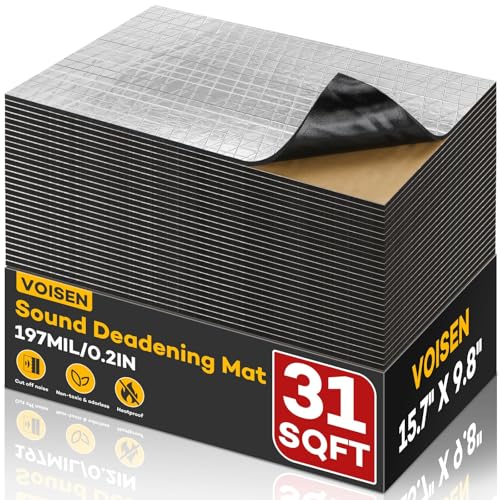
VOISNE offers a 197 mil (5 mm) thickness across 31 square feet, indicating a focus on significant vibration damping and heat insulation. The package includes multiple panels to facilitate larger installations and DIY-friendly cutting. The product emphasizes blocking heat transfer and reducing engine and road noise, potentially improving fuel efficiency and interior comfort by minimizing thermal and acoustic intrusion.
KOIKEY Car Sound Deadening Mat

KOIKEY’s 197 mil (5 mm) insulation comprises closed-cell foam with waterproof adhesive, offering substantial dampening in a compact package. The 8.7 square foot coverage is suited for isolated areas or vehicles with limited space for larger mats. The combination of heat resistance and sound suppression makes it a viable option for drivers seeking noticeable interior quietness without adding excessive materials.
Buying Guide: Key Purchase Considerations
- Thickness and density: Thicker mats generally provide better vibration dampening and heat insulation, especially for high-traffic areas like doors and floors. However, heavier mats require careful handling and more surface preparation.
- Coverage area: Plan the total area you want to treat (doors, floor, trunk). Larger coverage delivers more uniform quietness, but may involve more material and time during installation.
- Material composition: Most products use a butyl rubber core with aluminum foil. Some feature additional multi-layer constructions for enhanced heat reflection and moisture resistance. Choose based on climate, vehicle type, and installation location.
- Adhesion and surface prep: A strong self-adhesive backing simplifies installation but requires clean, dry surfaces. For trucks or humid climates, consider products rated for waterproofing and robust bonding.
- DIY feasibility: Consider your comfort level with cutting, shaping, and adhering mats to curved panels. Thicker mats can be trickier to fit into tight spaces, so plan ahead and use the right tools.
- Heat management: In hot climates or vehicles with high engine heat, select mats with higher heat resistance. Layering or combining products with reflective foil can help minimize radiant heat transfer.
- Sound performance expectations: These materials primarily reduce road, wind, and engine noises. While performance varies by product and vehicle, most options provide noticeable interior quieting and improved listening conditions for audio systems.
- Durability and water resistance: If you expect exposure to moisture or splash zones, prioritize waterproof and corrosion-resistant materials to maintain long-term performance.
When choosing among the listed options, consider the area you plan to cover, your budget, and whether you prioritize maximum damping versus installation simplicity. For larger, more consistent noise reduction, thicker, multi-layer mats are typically more effective. For smaller projects or budget-friendly builds, compact kits or mid-thickness mats can still deliver meaningful improvements in comfort and acoustics.